Bottom line for 100K-token workloads
Bottom Line: For most production retrieval workloads, RAG is the correct default architecture — not long context. At OpenAI API pricing, GPT-4.1 is priced at $2.00 per million input tokens and $8.00 per million output tokens, so a single 100K-token prompt costs roughly $0.20 in input spend alone; scale that to 1M tokens and you pay $2.00 per input call, with TianPan's 2026 production decision framework reporting 30–60× slower latency than a comparable RAG pipeline and roughly 1,250× higher per-query costs. Long context earns its place only when the answer depends on relationships distributed across the entire corpus — global document understanding, implicit cross-document reasoning, or workloads where chunked retrieval structurally fails.
As TianPan's 2026 production decision framework bluntly states: "Long-context models are a powerful tool. They're just not the right tool for most production retrieval workloads." The economics are not marginal — they are an order-of-magnitude difference that compounds with traffic volume.
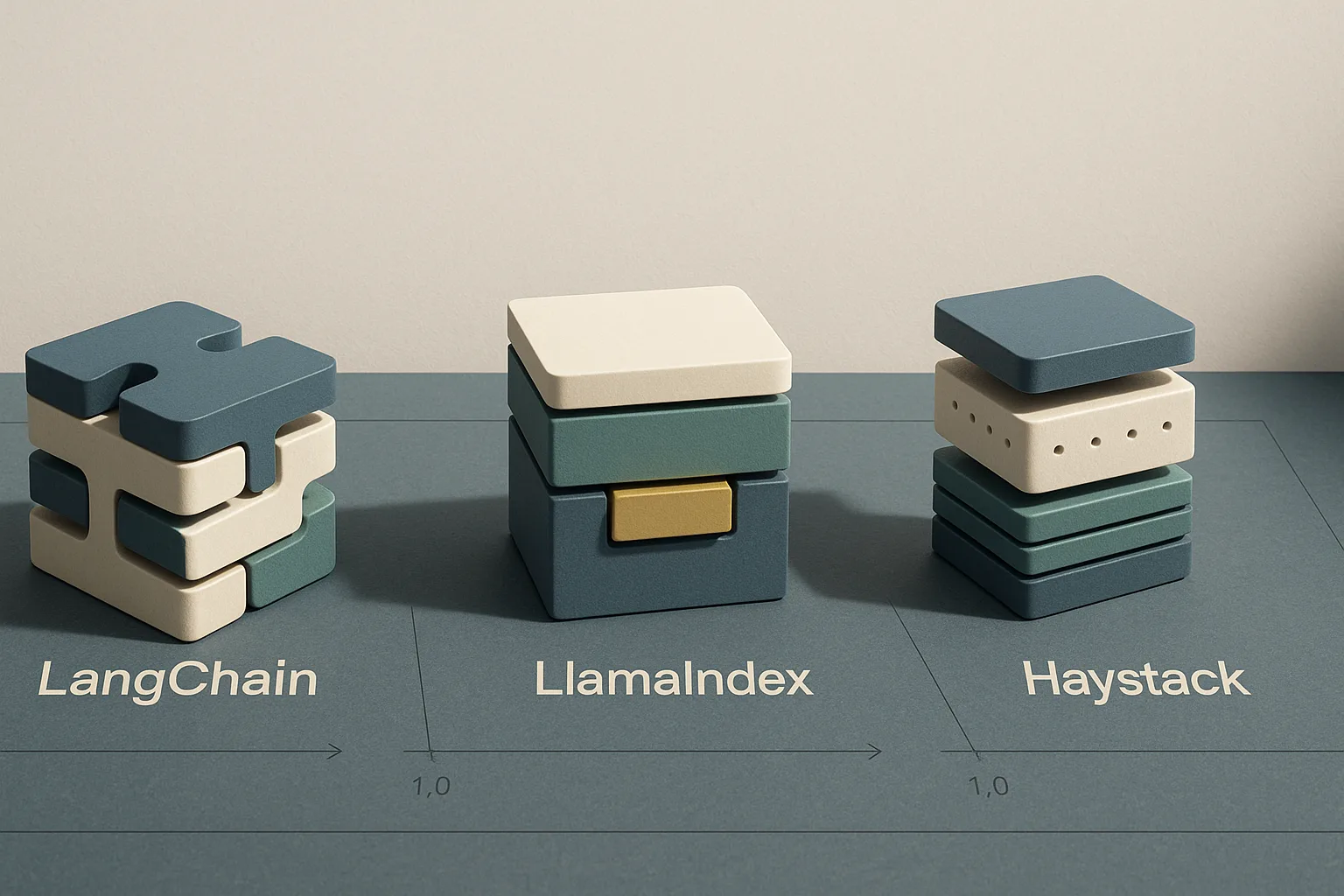
The operative question for long context vs RAG at 100K tokens is not "can the model handle this?" — Gemini 1.5 Pro, GPT-4.1, Claude 3.5 Sonnet, and Llama 3.1 fine-tuned variants all support windows at or beyond this size. The question is whether your query type justifies the cost and latency penalty, or whether a vector store backed by Qdrant, a Haystack pipeline, or a LangChain retrieval chain can do the same job at a fraction of the spend.
Workload traits that decide the architecture
The architecture decision is workload-shaped, not window-shaped. The maximum context a model accepts is irrelevant if the query is a targeted factual lookup — that use case favors retrieval. Conversely, if the task requires synthesizing themes or contradictions distributed across a 200-page legal brief, RAG chunking creates structural gaps that long context fills.
| Workload Trait | Long Context | RAG |
|---|---|---|
| Answer shape | Corpus-wide synthesis, implicit relationships | Localized evidence, specific fact retrieval |
| Corpus volatility | Low — static or infrequent updates | High — daily or real-time updates |
| Latency tolerance | High — batch, async, one-off | Low — interactive, SLA-bound |
| Query specificity | Vague or global ("summarize tensions across chapters") | Precise ("what was the Q3 revenue figure?") |
| Corpus size | Small to medium static sets | Arbitrarily large, indexed |
The TianPan framework recommends reserving long context for global document understanding, implicit queries, small static corpora, one-off analytical tasks, and cases where chunked retrieval structurally fails — and defaulting to RAG everywhere else.
Global understanding versus targeted lookup
RAG handles 100K-token corpora well when queries are targeted: "find the clause about indemnification," "return the three papers citing method X." Where it breaks down is when the question has no single retrievable anchor. A query like "which themes recur inconsistently across all chapters?" requires reading the whole corpus simultaneously — no retrieved chunk set reliably reconstructs that signal.
Pro Tip: Default to long context only when the answer structurally requires relationships across the whole corpus. If you can phrase the query as a retrieval task — "find documents matching criterion Y" — RAG will be faster, cheaper, and more controllable.
Static corpora versus frequently changing corpora
Static corpora are a necessary condition for long-context viability, not a sufficient one. A 90-page legal contract that never changes fits the profile; a knowledge base updated weekly does not, because re-embedding the entire prompt on each update is operationally fragile and expensive.
Watch Out: "Static corpus" does not mean "easy corpus." A static document set that is also large, dense with facts, or requires multi-hop reasoning still hits the recall degradation ceiling described below. Corpus volatility eliminates long context as an option; corpus staticness alone does not validate it.
What the live 2026 market is actually saying
Most ranked articles on this topic treat long context vs RAG as an ideological debate — they describe capability at a high level, list model context window sizes, and stop short of quantifying the production operating thresholds that actually drive the decision.
| Source Pattern | What It Covers | What It Misses |
|---|---|---|
| Vendor documentation (OpenAI, Anthropic, Google) | Model capability, pricing per token | Per-query economics at scale, recall degradation curves |
| Generic comparison blog posts | Feature lists, qualitative trade-offs | Cost thresholds, latency penalties, archetype-to-architecture mapping |
| Engineering decision frameworks (e.g., TianPan 2026) | Production economics, recall failure modes, workload archetypes | Implementation code (intentionally — it's a strategy document) |
| Stack Overflow / forum threads | Anecdotal configurations | Not a reliable production evidence base |
The competitive gap is that most readers searching this query are making a build-or-operate decision, not researching model capabilities. They need cost and latency thresholds mapped to their workload type — not another table of maximum context window sizes.
Where the canonical references are coming from
The authoritative production evidence for this decision comes from two source types: pricing pages and engineering-blog decision frameworks. The OpenAI API pricing page provides the definitive dollar-per-token figures. Google's Gemini update, May 2024 confirmed that, "We’re bringing Gemini 1.5 Pro … with a 1 million token context window," which signaled that the capability ceiling was no longer the bottleneck — economics were. And TianPan's 2026 framework is the clearest source-backed synthesis of production operating thresholds surfaced in current search results.
Pro Tip: When evaluating long context vs RAG claims, anchor to pricing pages and battle-tested engineering blog posts with quantified thresholds. Articles that argue from model capability alone — without cost, latency, or recall numbers — are not making the production case.
Why the generic articles miss the production question
The missing thresholds are specific: cost per query at scale, latency wall-clock impact, and the point at which recall degrades in the model's context window. As the TianPan framework identifies, "Decision-making criteria should be cost, latency, and authority, not precision," yet most ranking pages stop at ideological positioning and never quantify operating thresholds.
Watch Out: Most generic long context vs RAG comparisons describe what models can do, not what they cost to operate or where their recall becomes unreliable. A framework built on capability comparisons alone will steer you toward the wrong architecture when OpenAI API pricing compounds with query volume.
Cost per query from 100K tokens to 1M tokens
The per-query economics of long context become punishing at scale, and the gap versus RAG widens non-linearly as prompt size grows.
| Context Size | Input Token Cost (GPT-4.1) | Relative Cost vs RAG | Latency vs RAG | Practical Use Case |
|---|---|---|---|---|
| 100K tokens | ~$0.20 per query | ~10–50× higher | ~3–10× slower | Borderline — viable for batch-only, low-volume analysis |
| 250K tokens | ~$0.50 per query | ~100–200× higher | ~10–20× slower | High risk for interactive; only defensible for one-off analytics |
| 1M tokens | ~$2.00 per query (input only) | ~1,250× higher | 30–60× slower | Economically unjustifiable except for specific global-reasoning tasks |
These figures use GPT-4.1 input pricing at $2.00 per million tokens. Output tokens are charged separately at $8.00 per million tokens and are not included in the input-only estimates above. RAG pipeline cost per query — covering embedding lookup, vector store retrieval via a system like Qdrant, and a smaller targeted prompt — runs a fraction of a cent at typical retrieval configurations.
The 1,250× cost delta reported by the TianPan framework is not a theoretical worst case. It reflects the compounding of large prompt size against the economics of targeted retrieval pipelines operating at production scale.
Token spend at GPT-4.1 pricing
At $2.00 per million input tokens, the per-query token cost scales linearly with prompt size. A 100K-token prompt costs $0.20 in input spend; a 250K prompt costs $0.50; a 1M prompt costs $2.00. Add output tokens at $8.00 per million and a 2,000-token response adds $0.016 — modest per call, but meaningful at volume.
Pro Tip: Run the math at your expected query volume before committing to a long-context architecture. At 10,000 queries per day with 1M-token prompts, input token cost alone reaches $20,000 per day — $600,000 per month — before output charges, infrastructure, or retry overhead. RAG at comparable volume typically runs 2–3 orders of magnitude lower. Build a cost model with your actual P50 and P99 prompt sizes, not just the architectural maximum.
Latency and wall-clock penalties
Latency compounds the economic problem. A 1M-token request runs 30–60× slower than a RAG pipeline, according to the TianPan production framework. This is not just a user-experience concern — it directly affects concurrency, throughput, and infrastructure utilization.
| Scenario | Typical RAG Latency | Long-Context Latency (1M tokens) | Slowdown Factor |
|---|---|---|---|
| Interactive query (P50) | 200–500ms | 10–30 seconds | 30–60× |
| Batch analytical task | 1–3 seconds | 60–180 seconds | ~60× |
| Parallel request burst | Near-linear with concurrency | Queue-bound, capacity-constrained | Throughput collapses |
For interactive applications, a 10–30 second response time is disqualifying regardless of token cost. For batch workflows where the user is not waiting synchronously, latency is more tolerable — but it still caps how many tasks the system processes per unit time, which affects both infrastructure sizing and total spend.
Recall degradation and accuracy thresholds
The main structural disadvantage of long-context models is that recall degrades before the context window fills. The TianPan framework identifies multi-fact recall as far below ideal in long-context settings, and notes that "The 'Lost in the Middle' Problem Is Real and Measurable." Model accuracy drops well before the advertised maximum context window is reached — meaning the vendor headline number describes a capacity ceiling, not a guaranteed-accuracy operating point.
| Context Depth | Expected Behavior | Known Failure Mode |
|---|---|---|
| 0–30K tokens | Near-full recall across most models | Minimal degradation for well-structured prompts |
| 30K–100K tokens | Moderate degradation begins | Facts buried mid-context are missed or misattributed |
| 100K–500K tokens | Significant recall drop | Multi-fact retrieval fails; single salient facts may still surface |
| 500K–1M tokens | Severe degradation | Only highly salient, recency-biased, or position-biased facts reliably retrieved |
These patterns hold across Gemini 1.5 Pro, Claude 3.5 Sonnet, and GPT-4.1 class models — no current production model provides linear recall across its full advertised window.
When multi-fact recall breaks down
A model that accepts a 1M-token prompt does not reliably use every fact inside it. Successful ingestion — no context-length error, valid response returned — is not the same as reliable recall across the entire prompt. For tasks requiring synthesis of multiple facts distributed throughout the context, degradation can produce confident but wrong answers, a failure mode that is more dangerous than an explicit error.
Watch Out: Apparent 1M-token context support does not equal reliable retrieval across the whole prompt. Multi-fact recall degrades significantly in the middle and later sections of very large contexts. If your use case requires accurate synthesis of more than 3–5 independently scattered facts, do not assume a large context window solves the problem — benchmark your specific workload with your actual documents before relying on long context in production.
Why advertised context length is not the same as usable context
Vendor headline context windows define how many tokens the model will accept without throwing an error. They do not define the range over which the model produces reliable answers. As the TianPan framework summarizes, "model accuracy degrades well before advertised maximum context windows." The gap between the capacity ceiling and the accuracy-reliable operating range varies by model architecture, training methodology, and document structure — none of which are visible in the headline number.
Pro Tip: Do not plan production architecture around vendor headline context window sizes. Benchmark your specific document corpus with your actual query distribution before drawing accuracy conclusions. Use needle-in-a-haystack tests and multi-fact recall evaluations at the prompt lengths you actually intend to use. The OpenAI API pricing page tells you what it costs; only your own evaluation tells you whether it works reliably at that cost.
Decision matrix by workload archetype
| Workload Archetype | Corpus Freshness | Query Type | Recommended Architecture | Rationale |
|---|---|---|---|---|
| Global document QA (legal brief, research review) | Static | Implicit, cross-document | Long context | Answer requires whole-corpus relationships; chunking loses signal |
| One-off analytical tasks | Static or snapshot | Synthesis, trend analysis | Long context | One-time cost acceptable; interactive latency not required |
| Small static corpora (<50 documents) | Static | Mixed | Long context viable | Prompt bloat manageable; consider RAG if queries are targeted |
| Customer support search | Dynamic | Targeted lookup | RAG | High query volume, low latency requirement, freshness essential |
| Fast-changing knowledge base (news, docs) | High | Factual retrieval | RAG | Re-prompting with updated full corpus is operationally untenable |
| Enterprise search (large doc stores) | Medium | Mixed | RAG + hybrid | Scale and freshness favor retrieval; long context for edge cases only |
When long context beats RAG
Long context outperforms RAG in a narrow but real set of scenarios, as the TianPan framework acknowledges: "Long-context models are a powerful tool." The caveat is that these scenarios are the exception.
Bottom Line — Ideal-Use Checklist for Long Context: - ✅ The query requires synthesis of relationships distributed across the full corpus (not extractable by any chunk retrieval) - ✅ The corpus is static or changes infrequently (no continuous re-prompting cost) - ✅ Query volume is low (batch, one-off, or analytical — not interactive at scale) - ✅ Latency tolerance is high (seconds to minutes acceptable) - ✅ The corpus is small enough that the prompt stays below the model's reliable operating range (~30–100K tokens depending on model and task) - ❌ If any of the above conditions fail, default to RAG
When RAG remains the production default
RAG is the right default for any workload characterized by high query volume, freshness requirements, or interactive latency budgets. The TianPan framework is unambiguous: long-context models are "just not the right tool for most production retrieval workloads."
| Condition | Choose RAG |
|---|---|
| Corpus updates daily or faster | Yes — long-context re-prompting is not operationally viable |
| Query volume > 1,000/day | Yes — OpenAI API pricing at 100K+ tokens per query becomes budget-prohibitive |
| Response latency SLA < 2 seconds | Yes — TianPan's 2026 production decision framework shows 1M-token prompts cannot meet this threshold |
| Query is a targeted fact lookup | Yes — vector retrieval via Qdrant, Haystack, or LangChain is sufficient and faster |
| Corpus exceeds 500K tokens and queries are specific | Yes — full-prompt ingestion at that size hits severe recall degradation |
Operational risks and counterarguments
The token-cost projections above assume prompt sizes stay predictable. In practice, they do not. Systems that start with 50K-token prompts accumulate context through conversation history, tool call outputs, and document additions — and without explicit budget controls, every session can drift toward 1M-token territory.
Watch Out: The hidden token tax is prompt growth over time. A system designed for 100K-token prompts can quietly drift to 500K+ tokens per session through conversation accumulation, injected retrieved context, and intermediate reasoning traces. At OpenAI API pricing rates, a 10× prompt growth multiplies your per-session cost by 10× — and a 1M-token request is not just 10× more expensive than a 100K request, it is also 30–60× slower, which compounds queue depth and infrastructure load simultaneously.
Infrastructure cost ranges beyond token pricing
Token pricing is the visible cost. The total bill also includes serving infrastructure — compute allocation for prefill and decoding at large context lengths, queueing overhead when large requests block smaller ones, and utilization penalties when a few massive prompts occupy capacity that could serve hundreds of RAG queries.
Pro Tip: When sizing infrastructure for any workload that includes 1M-token context requests, account for queueing and utilization separately from token pricing. A single 1M-token request that occupies a GPU for 30–60× longer than a RAG query effectively blocks that capacity from serving other traffic. At high utilization, this produces queue depth spikes that degrade the entire system's P99 latency — not just the latency of the long-context request itself.
Counterarguments from hybrid architectures
Hybrid architectures — where a RAG retrieval step narrows the candidate set and a long-context pass synthesizes the retrieved chunks — partially address both the recall failure and the cost problem. Anthropic's contextual retrieval positions itself as a bridge between these approaches, using contextual chunk enrichment to improve the semantic fidelity of what gets retrieved before synthesis.
| Architecture | Cost per Query | Latency | Recall Quality | Operational Complexity |
|---|---|---|---|---|
| Pure RAG | Low (~fractions of a cent) | Low (sub-second) | Good for targeted; weak for implicit | Moderate — index maintenance required |
| Pure long context (1M tokens) | High (~$2+ input only) | High (30–60× RAG) | Degrades significantly past ~100K | Low — no index; high prompt discipline required |
| Hybrid (RAG + focused long context) | Medium — depends on retrieved size | Medium (2–10× RAG) | Better than pure RAG on cross-chunk tasks | High — two-stage pipeline, more failure points |
Hybrid architectures reduce but do not erase the token-volume and latency penalties of large prompts. A hybrid that retrieves 50K tokens and synthesizes them with a focused long-context call is cheaper and faster than a 1M-token brute-force pass — but it adds retrieval pipeline complexity and still costs more per query than a pure retrieval answer. The case for hybrid is strongest when cross-chunk synthesis is required but the corpus is large enough to make a full-corpus prompt impractical.
FAQ for production decision makers
Is long context better than RAG? For most production retrieval workloads, no. Long context is better only when the answer structurally requires corpus-wide reasoning that chunked retrieval cannot reconstruct. For targeted lookups, freshness-sensitive corpora, high-query-volume systems, and interactive applications, RAG is the correct default — lower cost, lower latency, and more operationally controllable.
When should you use long context instead of RAG? When all of the following hold: the corpus is static, query volume is low, latency tolerance is high, and the answer depends on relationships distributed across the entire document set. One-off legal analysis, research synthesis, and document-wide theme extraction are the canonical positive cases.
How much does 100K tokens cost on OpenAI API? At GPT-4.1 input pricing of $2.00 per million tokens, a 100K-token input prompt costs approximately $0.20. Output tokens are charged separately at $8.00 per million tokens — a 2,000-token response adds roughly $0.016. These figures exclude caching discounts, retry overhead, and any RAG pipeline embedding costs.
What is the main disadvantage of long-context models? Recall degrades well before the advertised context window limit. The "Lost in the Middle" failure mode is measurable: facts positioned in the middle sections of long prompts are underweighted or missed, multi-fact retrieval accuracy drops significantly past 100K tokens, and models produce confident incorrect answers rather than explicit failures. The advertised window size is a capacity ceiling, not a reliability guarantee.
Can RAG handle 100K-token workloads? Yes — RAG handles arbitrarily large corpora by indexing and retrieving targeted chunks rather than ingesting the full corpus per query. The constraint is query type: RAG handles targeted retrieval well but underperforms on implicit cross-document reasoning tasks. For 100K-token corpora with specific, factual queries, RAG with a vector store like Qdrant outperforms long context on cost, latency, and operational reliability.
Sources and references
- TianPan — Long-Context Models vs. RAG: When the 1M-Token Window Is the Wrong Tool (2026) — Primary production decision framework; source for 1,250× cost delta, 30–60× latency penalty, recall degradation observations, and workload archetype mapping
- OpenAI API Pricing — Official source for GPT-4.1 token pricing ($2.00/M input, $8.00/M output); canonical reference for per-query cost calculations
- Google — Gemini Update, May 2024 — Official announcement of Gemini 1.5 Pro 1M-token context window; establishes that context capacity is no longer the primary differentiator
Keywords: GPT-4.1, OpenAI API pricing, RAG, 1M-token context, 100K-token context window, Llama 3.1, Claude 3.5 Sonnet, Gemini 1.5 Pro, ring attention, FlashAttention 2, NCCL, H100, Qdrant, Haystack, LangChain