AI & ML
Mamba’s core advantage is operational: it scales linearly with sequence length and uses constant-size recurrent state instead of a transformer KV cache, so long-context serving can materially reduce memory pressure and throughput cost, but the trade-off is weaker fit for tasks that still benefit from explicit retrieval or hybrid attention, and open questions remain around forgetting behavior at longer training horizons.
20 min read
AI & ML
SGLang’s OpenAI-compatible server can be launched on NVIDIA GPUs with structured outputs and quantization enabled, and NVIDIA’s guide shows a containerized launch flow using `python3 -m sglang.launch_server` with `--quantization modelopt_fp4` — but some models require `--disable-piecewise-cuda-graph` to avoid runtime errors.
18 min read
AI & ML
Ring Attention uses blockwise attention and feedforward computation to distribute long sequences across devices while fully overlapping key-value communication with computation — enabling sequences up to device-count times longer than prior memory-efficient Transformers — but it still inherits distributed communication constraints and works best when the network and device topology can sustain that overlap.
25 min read
AI & ML
A diversified model portfolio usually beats single-vendor dependence: hosted frontier models win when marginal capability matters, open-weights win on volume and sovereignty, and the break-even is driven by usage volume, platform FTE cost, and vendor price/capability drift — not ideology.
20 min read
AI & ML
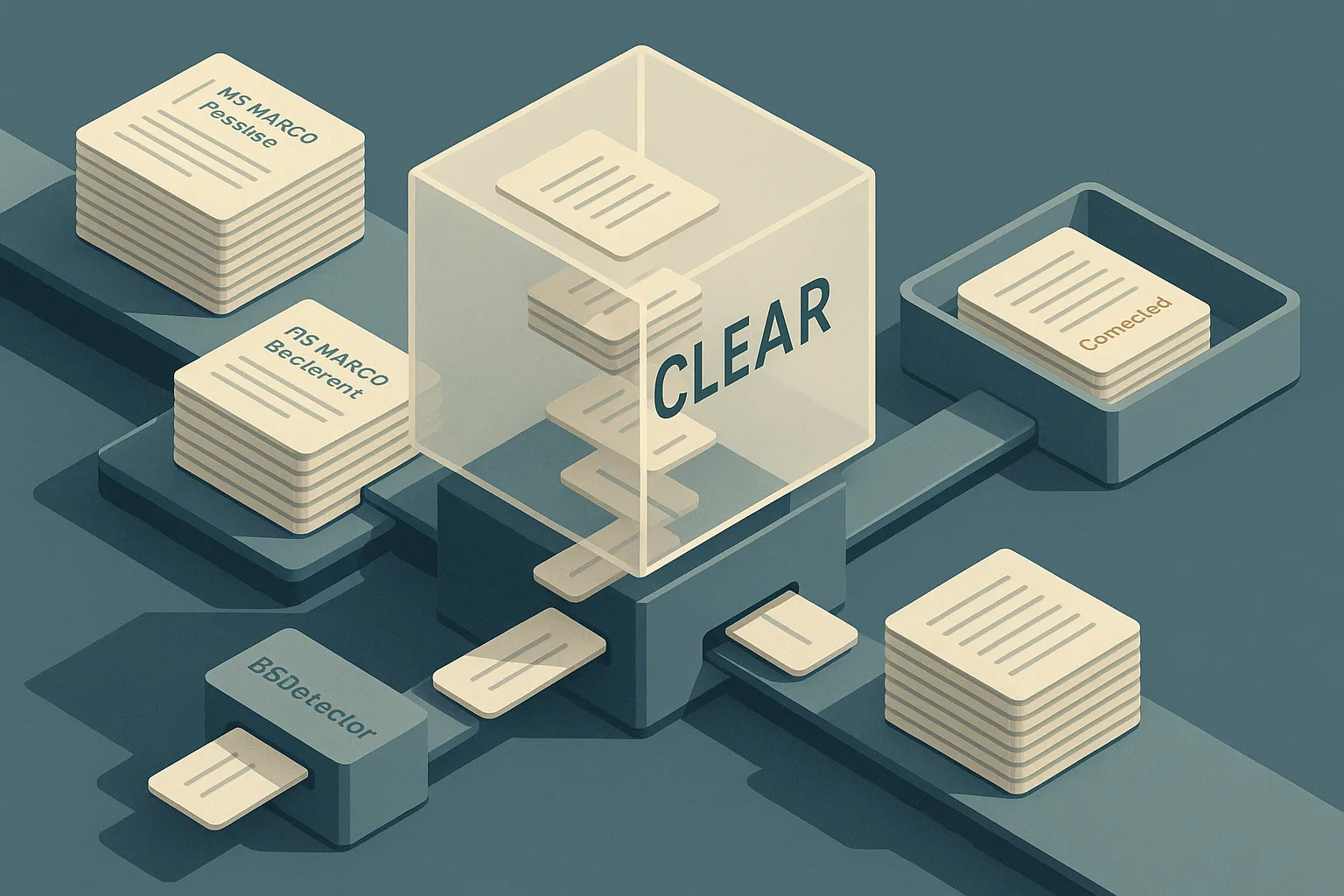
CLEAR’s load-bearing idea is LLM-driven relabeling: it estimates annotation reliability, corrects likely label errors, and recovers true-positive documents to improve retrieval training — but the method is constrained by the quality of the underlying annotation signals and was validated on IR benchmarks rather than general-purpose SFT corpora.
23 min read
AI & ML
vLLM explicitly supports FP8, MXFP8/MXFP4, NVFP4, INT8/INT4 and MoE serving for models like DeepSeek-V3 — which lets teams trade accuracy against memory footprint and throughput, but the real constraint is hardware compatibility and kernel support rather than model size alone.
17 min read
AI & ML
By 2026 the practical gap is narrow on many everyday generation tasks, but closed frontier models still lead on hard long-context reasoning, tool use under ambiguity, and agentic reliability; the right comparison is therefore benchmark-specific rather than a blanket open-vs-closed verdict.
22 min read
AI & ML
FineWeb-style corpora can reduce the burden of bespoke web cleaning by shipping documented filters, dedup logic, and reproducible artifacts — but migration only pays off if your current mixture is expensive to maintain, your team values transparency and reproducibility, and the quality lift outweighs the effort to retool your data pipeline.
22 min read
AI & ML
RedPajama-V2 pairs 100B+ raw documents from 84 Common Crawl dumps with 40+ precomputed quality annotations and duplicate IDs, letting teams build filtered subsets without starting from scratch — but it remains a raw corpus that still requires policy decisions about which signals to trust and how aggressively to deduplicate.
19 min read
AI & ML
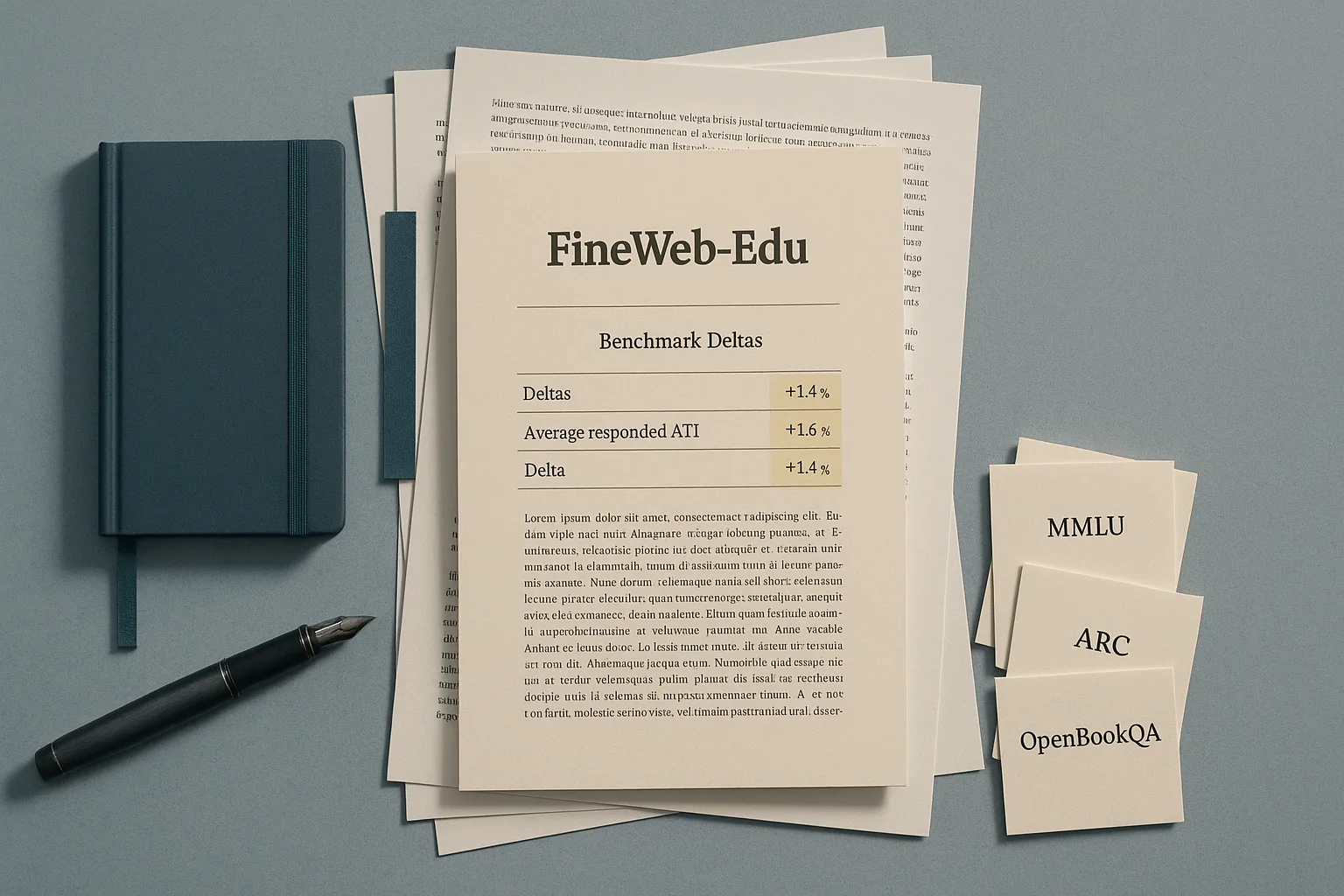
FineWeb-Edu is a 1.3T-token educational subset of FineWeb whose paper reports large gains on knowledge- and reasoning-heavy evaluations, including higher MMLU and ARC scores than the base FineWeb subset — but the lift comes from a carefully filtered educational slice, not from adding more generic web text.
20 min read
AI & ML
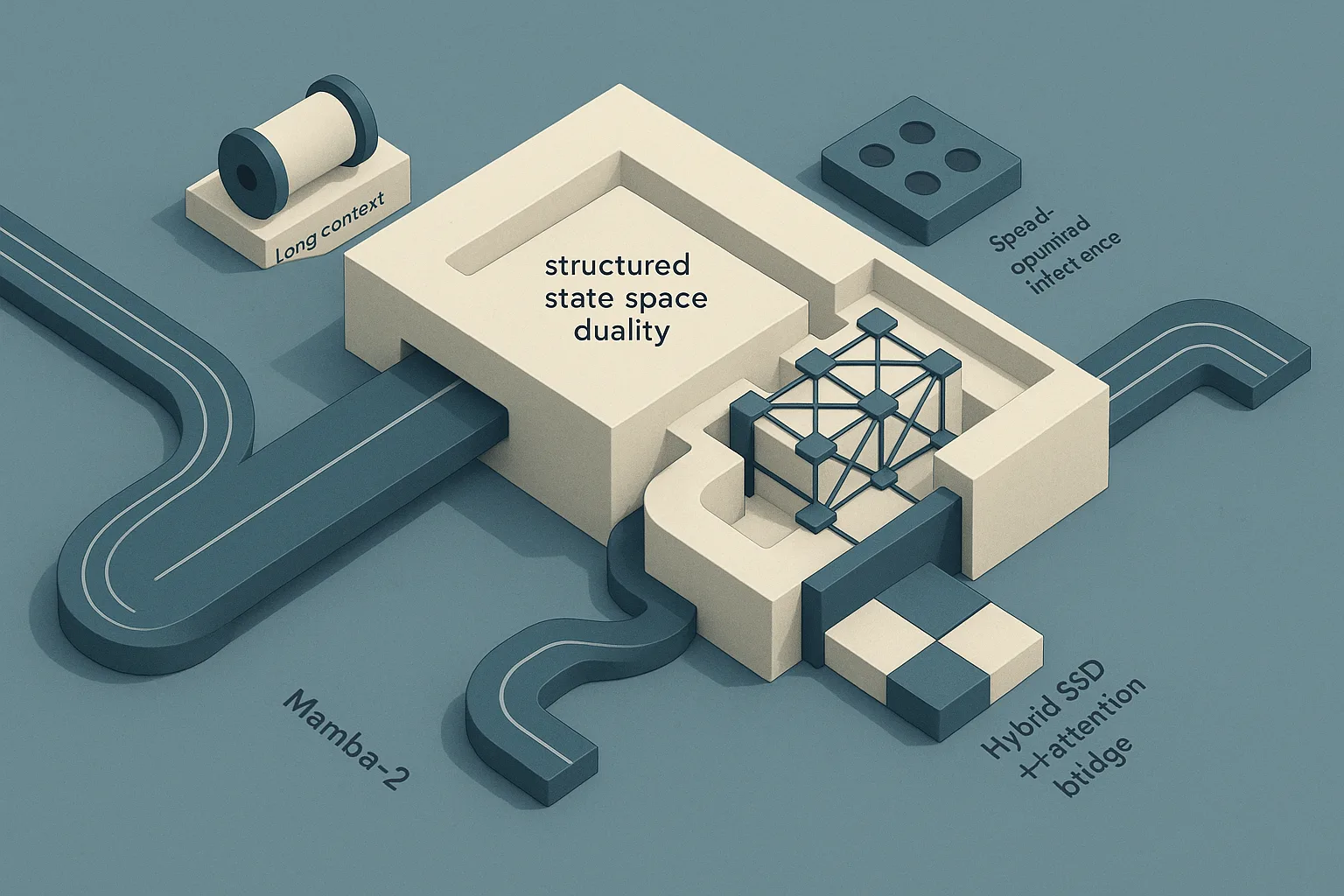
Structured State Space Duality shows Mamba-2 and masked attention are two contraction orders over the same semiseparable structure — yielding a core layer that is 2–8× faster than Mamba’s fused scan and competitive with Transformers, but the gains are most compelling for long sequences and the paper still shows better quality when a few attention layers are mixed in.
23 min read