AI & ML
PyTorch Context Parallel shards long sequences across devices so each rank only holds a context slice for attention and KV handling — this makes 1M-token training feasible in the PyTorch/Torchtitan workflow — but it is still a distributed training feature that depends on correct process-group setup, NCCL communication, and long-context-aware model partitioning.
20 min read
AI & ML
RULER demonstrates that needle-in-a-haystack is a superficial long-context test because models can score near-perfectly there and still collapse on multi-hop tracing and aggregation as sequence length grows, while LongBench v2 shows that realistic long-context multitasks still defeat most models — the best direct-answer system only reaches 50.1% and even human experts sit at 53.7% under time pressure.
18 min read
AI & ML
RULER shows that many models look near-perfect on vanilla needle-in-a-haystack yet suffer large drops as context length and task complexity rise, while LongBench v2 shows the best direct-answer model still reaches only 50.1% accuracy and o1-preview reaches 57.7% — but that gap does not automatically justify retraining, because the right choice depends on whether your workload needs deeper reasoning, not just longer windows.
21 min read
AI & ML
For 100K-token workloads, long context can be the right tool for global document understanding or implicit queries, but production economics are often brutal: the cited 2026 decision framework says 1M-token requests can run 30–60x slower and roughly 1,250x more expensive per query than RAG — with the main caveat that long context still wins when the answer depends on relationships across the whole corpus.
17 min read
AI & ML
RULER shows that near-perfect needle-in-a-haystack scores can mask steep degradation on harder long-context tasks — the paper evaluates 17 models across 13 tasks and finds that almost all drop sharply as context length increases, with only half maintaining satisfactory performance at 32K — but synthetic benchmark success still does not guarantee real-world long-context reliability.
17 min read
AI & ML
Google’s deduplicate-text-datasets provides exact substring deduplication in Rust plus near-duplicate clustering for large corpora, while Ambrosia is a lightweight package aimed at ergonomics — but the deciding constraint is scale and rigor, because Google’s repo is built for research-grade dataset deduplication with very large-memory jobs, whereas simpler tools trade accuracy and reproducibility for convenience.
19 min read
AI & ML
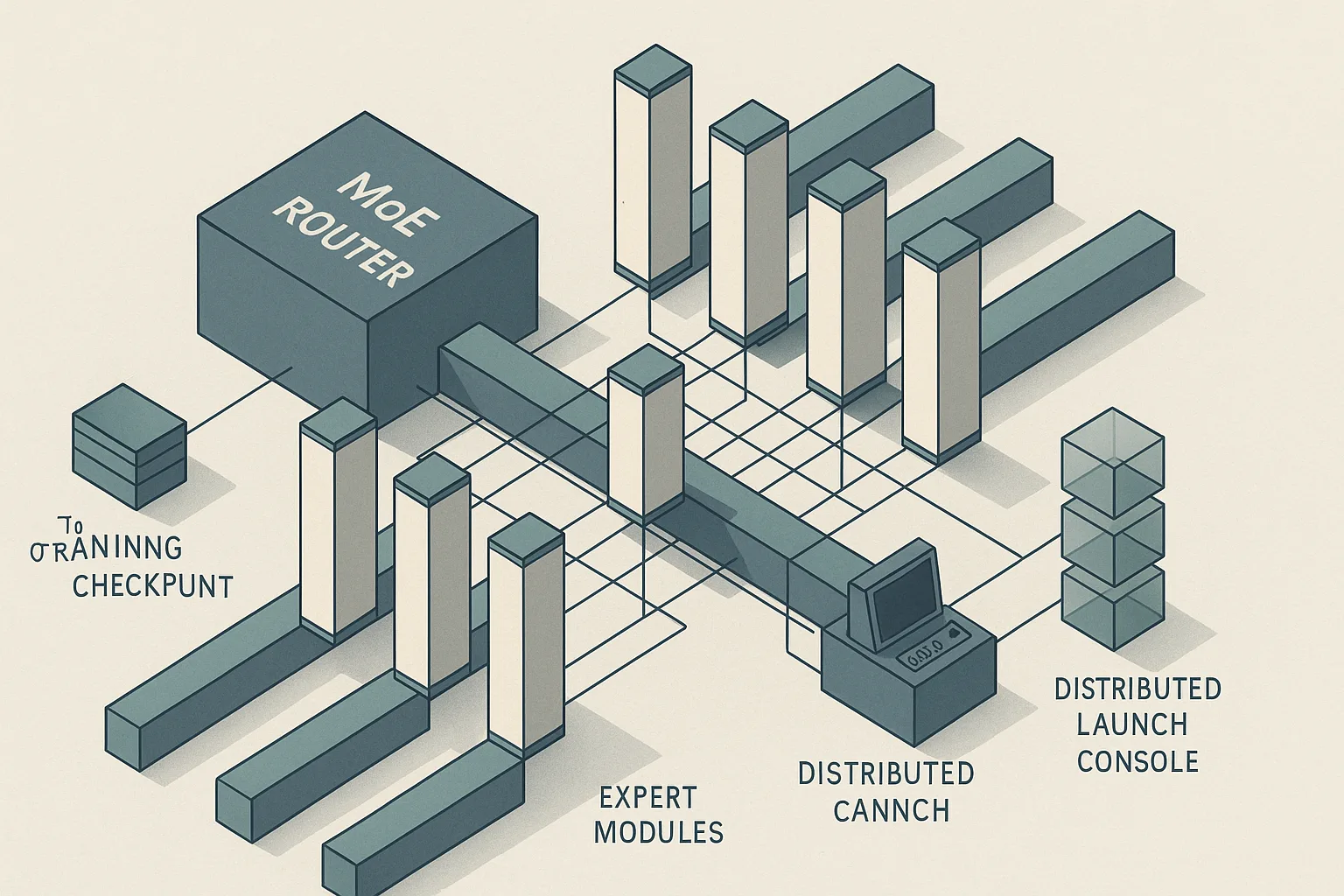
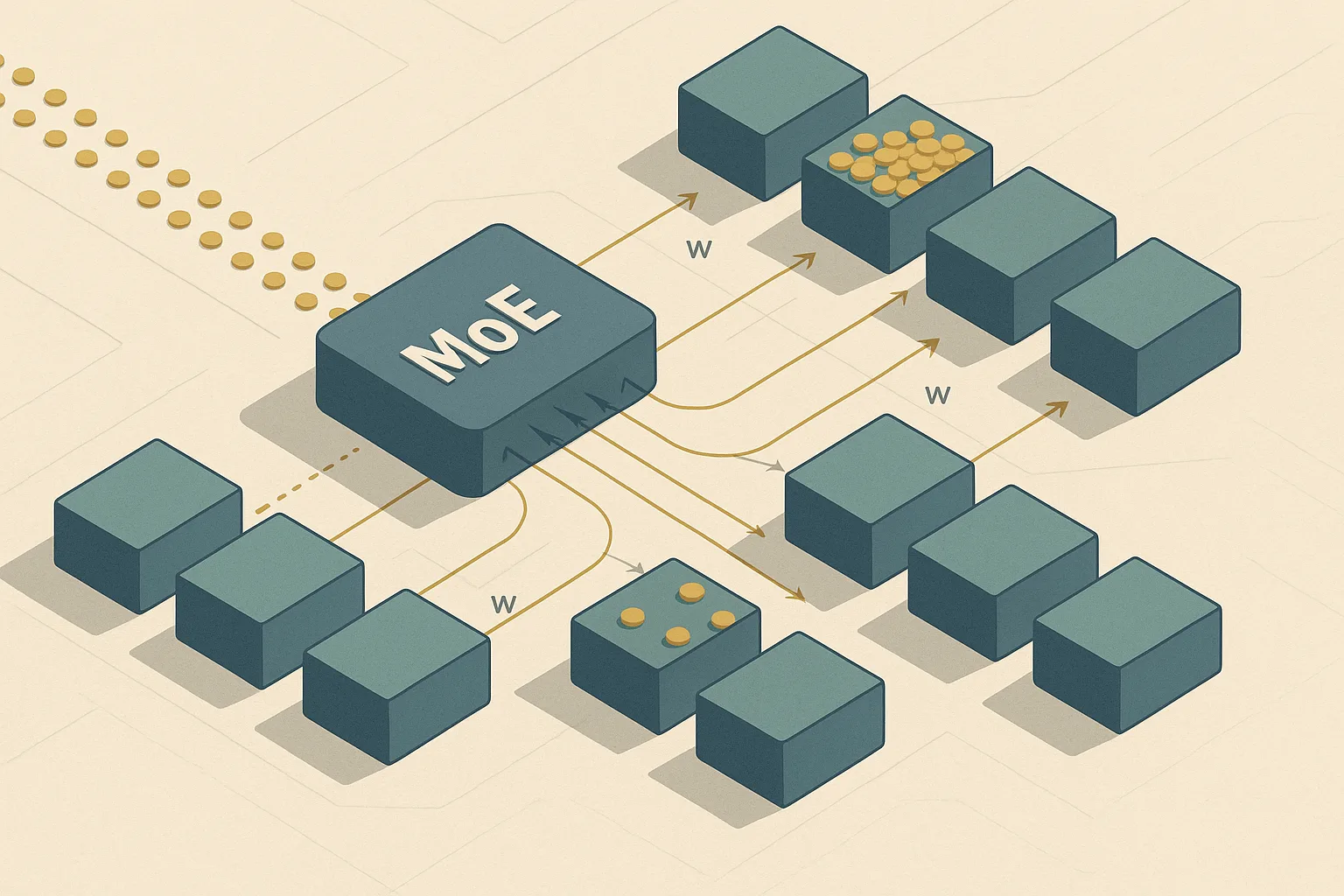
Megatron-Core’s MoE stack is production-ready for large-scale MoE training and exposes routing, expert-parallel, and capacity controls that matter when fine-tuning Mixtral — but the official docs emphasize that the exact behavior depends on parallelism layout, router configuration, and capacity settings rather than a one-size-fits-all recipe.
15 min read
AI & ML
DeepSeek-V3 is benchmark-relevant not just because it is large, but because it combines auxiliary-loss-free load balancing, multi-token prediction, and FP8 training at scale — and MLCommons is now using it as a pretraining benchmark with a 671B/37B MoE reference setup, making it a meaningful test of modern sparse-training infrastructure rather than just another model card.
22 min read
AI & ML
LongRoPE exploits two non-uniformities in RoPE interpolation — across RoPE dimensions and token positions — and uses an evolutionary search to find per-dimension, per-position rescaling factors, which enables an 8× non-finetuning extension and then a progressive 256k→2048k extension path — but it still needs short-context readjustment to recover original-window performance.
20 min read
AI & ML
DeepSeek-V3 replaces the usual router auxiliary loss with a dynamically adjusted per-expert bias term for load balancing — preserving the load-balancing goal while avoiding the performance degradation the paper attributes to heavy auxiliary losses, but the benefit is tied to sequence-wise balance and node-limited routing rather than eliminating imbalance entirely.
22 min read
AI & ML
LongRoPE pushes the ceiling to 2M tokens with a more complex search-and-progressive-extension pipeline, YaRN is validated in vLLM/Qwen deployment paths for practical length extrapolation, and dynamic NTK scaling is simpler to wire up — but the real trade-off is not raw maximum length alone; it is how much short-context regression, finetuning, and framework-specific friction you are willing to accept.
23 min read
AI & ML
At small scale, SLERP is clean for two-model interpolation and TIES/DARE handle multi-model interference better, while mergekit is the orchestration layer that exposes them all — but the best choice changes with model count, compatibility, and whether you want a simple blend or sign-aware pruning.
17 min read