AI & ML
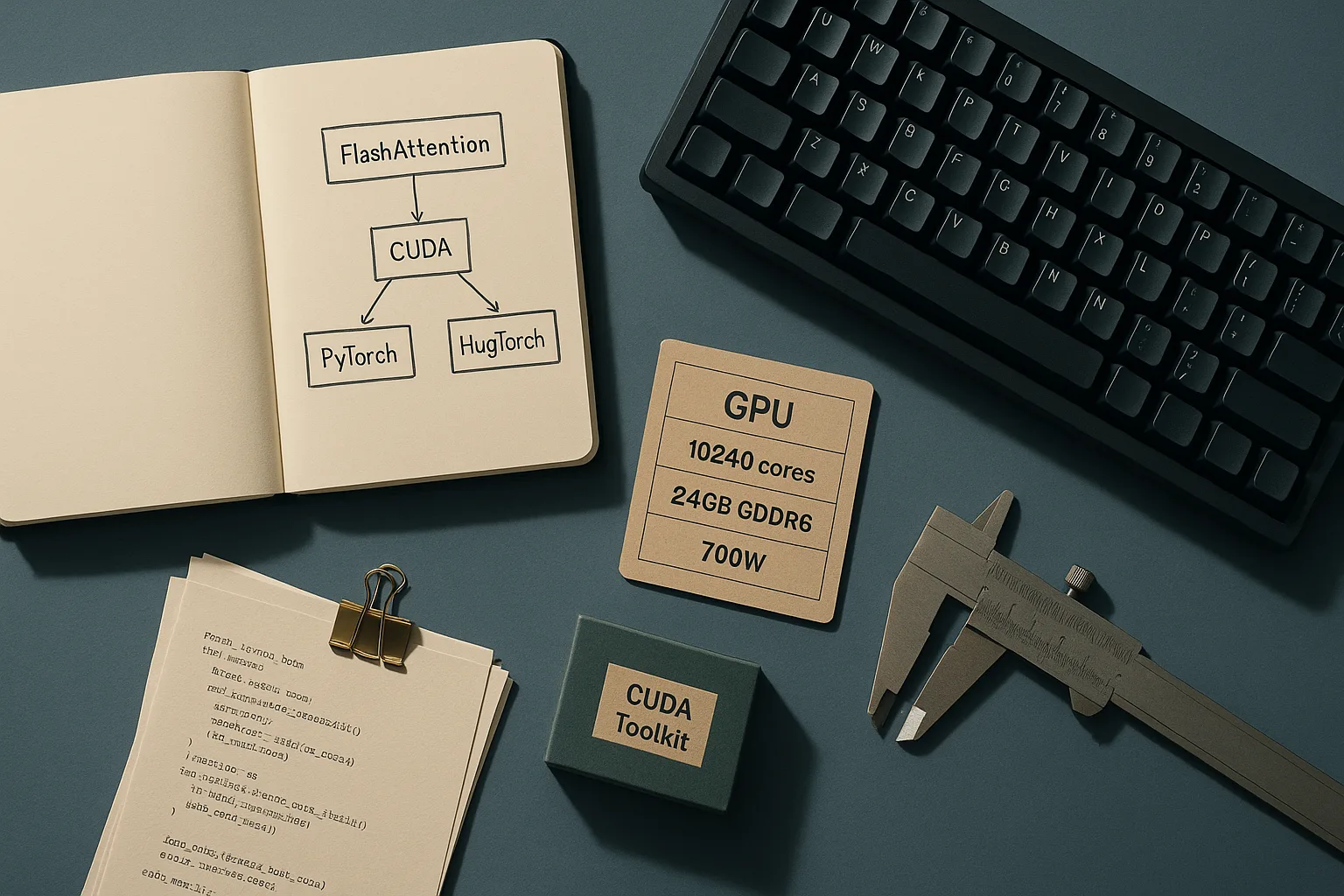
FlashAttention installation is constrained by CUDA, PyTorch, Ninja, and GPU architecture support — and benchmark results are only trustworthy when head-dim limits, dtype support, and backend compatibility are matched to the target GPU, otherwise users hit build failures or misleading speed numbers.
22 min read
AI & ML
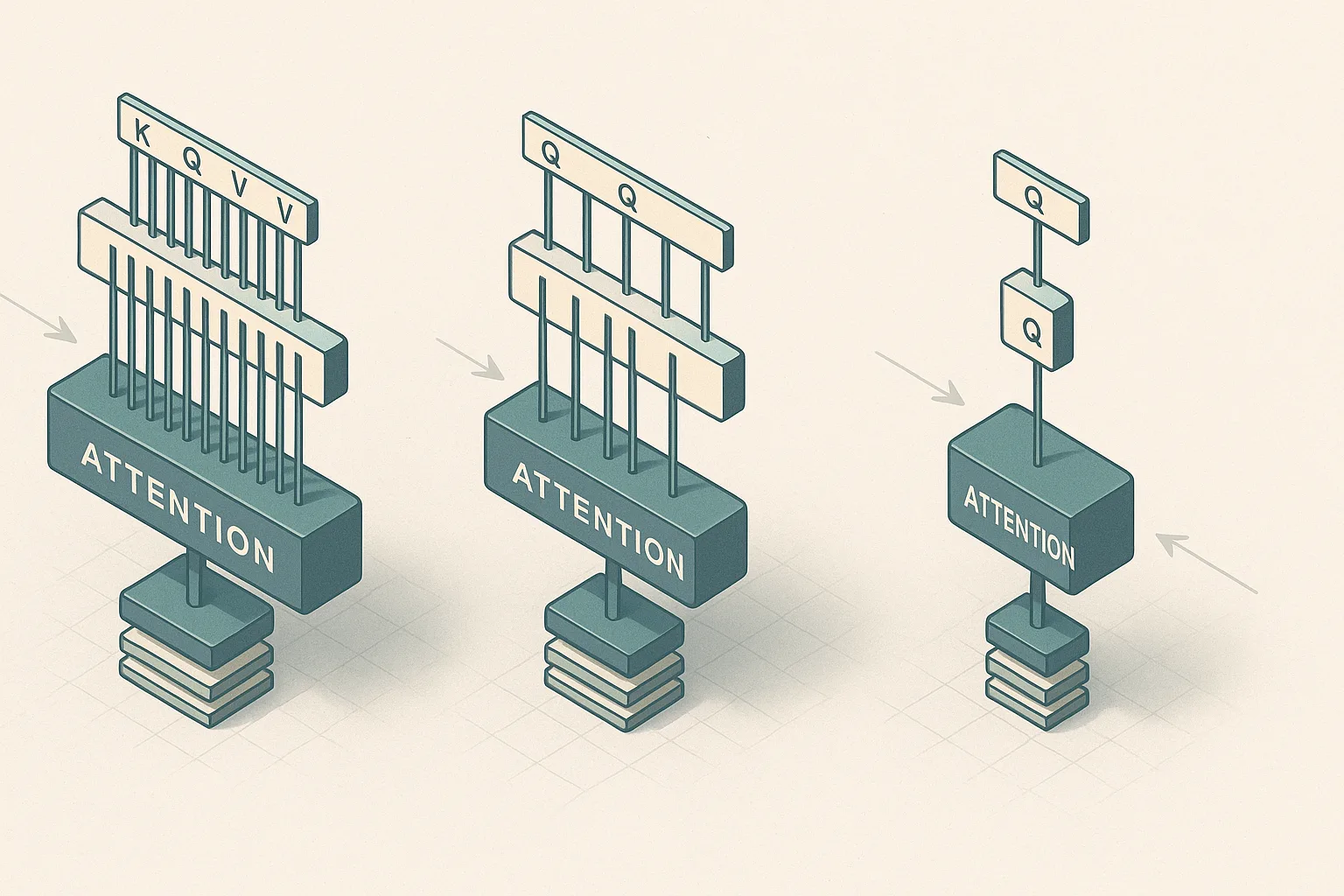
GQA reduces KV-cache size by sharing K/V across query groups, which cuts inference memory bandwidth versus MHA while preserving more quality than MQA — but the right group size depends on the latency budget, context length, and whether the model must stay close to full multi-head capacity.
25 min read
AI & ML
Accelerate maps FSDP FULL_SHARD to DeepSpeed ZeRO stage 3, but the two stacks diverge on offload and checkpointing: FSDP is all-or-nothing for offload, while DeepSpeed can split parameter and optimizer offload and even target NVMe — but FSDP can checkpoint sharded state directly, whereas ZeRO-3 often needs a consolidation or post-conversion step, which changes the operational cost of saving 70B fine-tunes.
20 min read
AI & ML
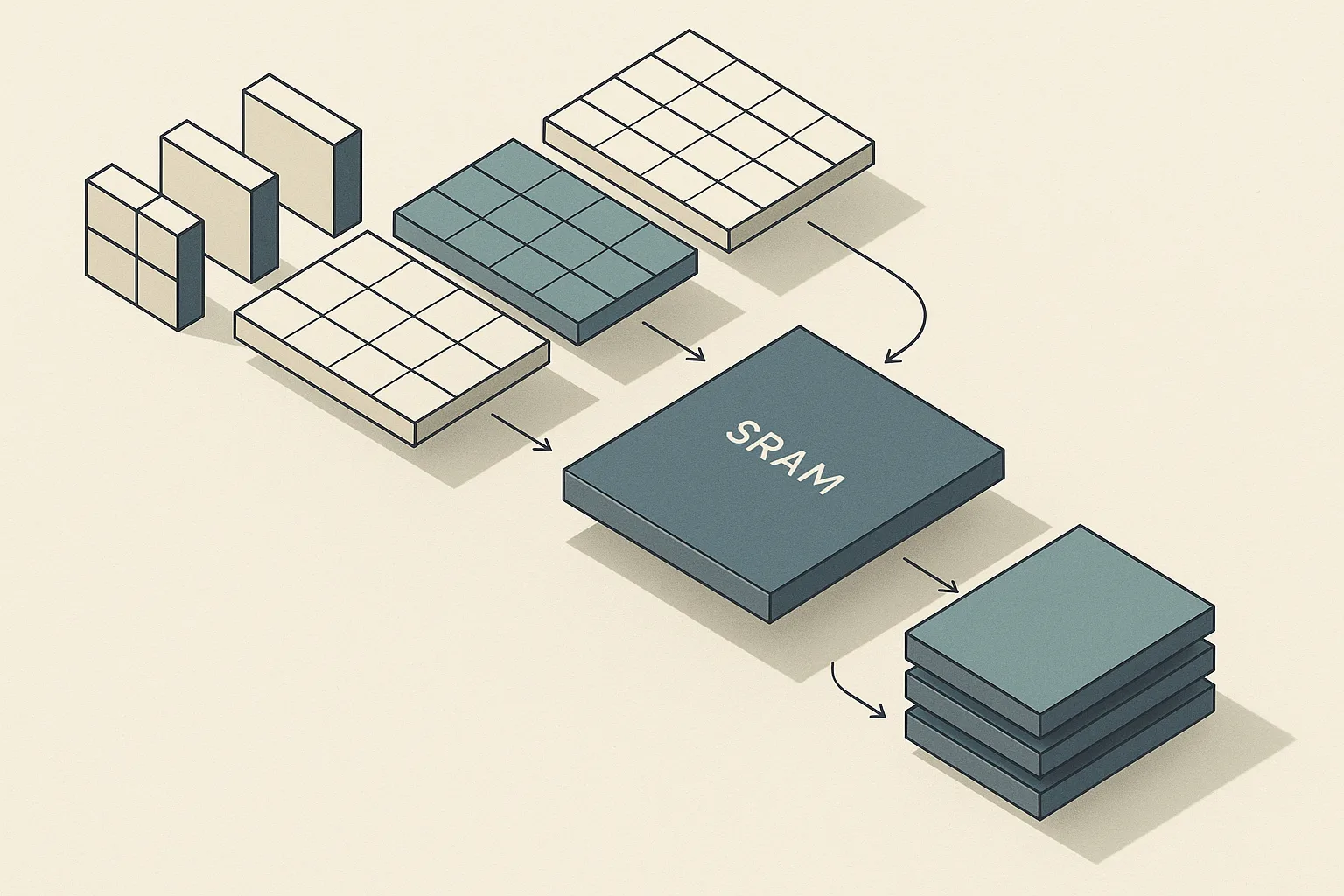
FlashAttention keeps attention exact while reducing HBM traffic by tiling Q/K/V into SRAM and recomputing rather than materializing the N×N attention matrix — yielding linear-memory behavior and major wall-clock gains, but only when the GPU memory hierarchy and tile sizes are exploited correctly.
18 min read
AI & ML
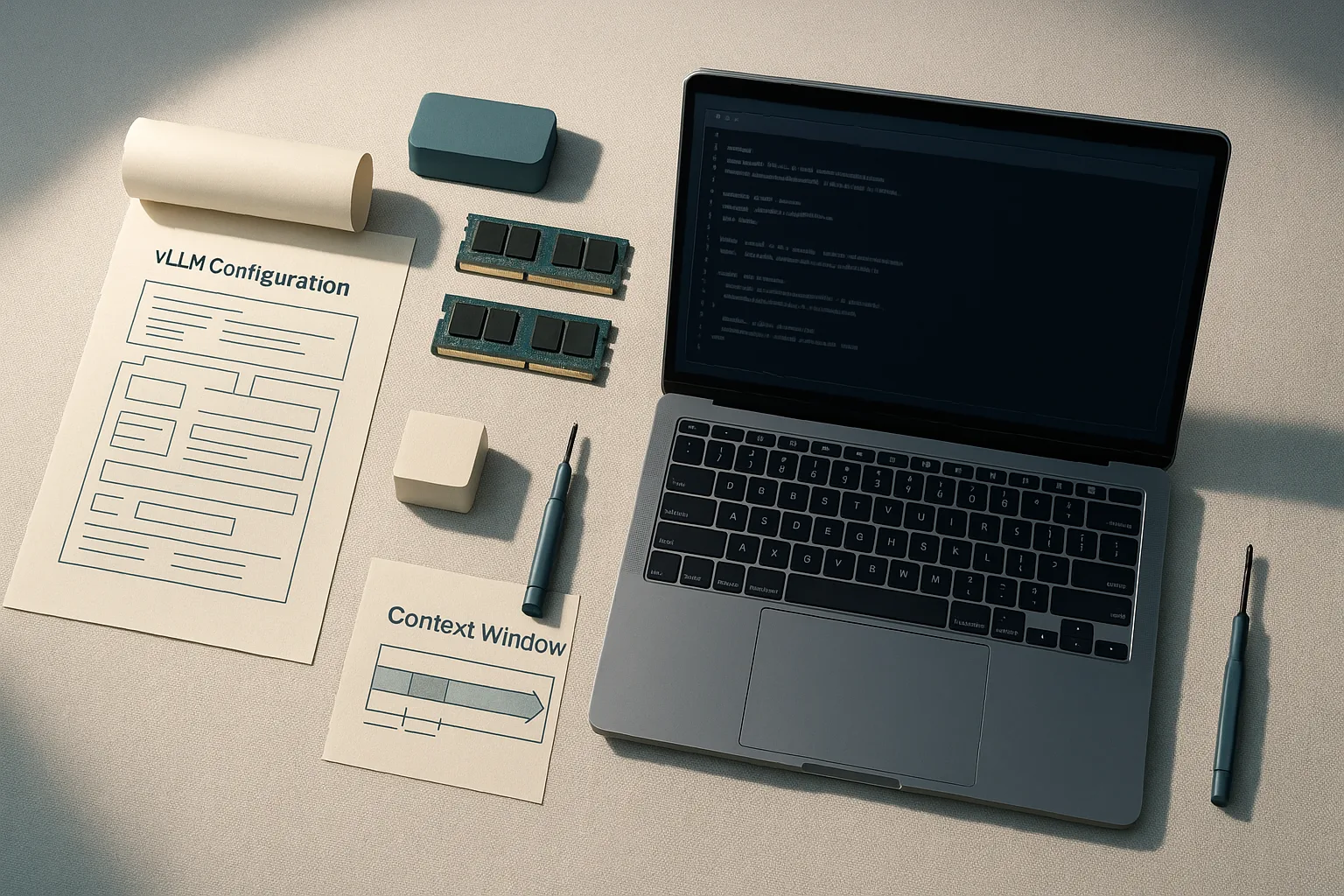
vLLM’s Qwen deployment docs explicitly recommend RoPE scaling for context lengths beyond the pretrained 32,768-token limit and validate YaRN for length extrapolation — but the exact scaling knobs must be matched to the model’s original max position embeddings and sampling/runtime settings, or the model can silently degrade even if it accepts longer prompts.
18 min read
AI & ML
QLoRA makes 8B-class models practical on 24GB cards by combining 4-bit NF4 quantization with LoRA adapters, but the memory win comes with slower training than plain LoRA and tighter sensitivity to sequence length, batch size, and target module choice.
22 min read
AI & ML
S-LoRA is optimized for high-scale multi-adapter serving through unified paging and heterogeneous batching, LoRAX is designed for thousands of adapters with dynamic loading and production features, and vLLM PEFT is the lighter-weight option when you want vLLM’s serving stack with adapter support but not the most aggressive multi-adapter specialization.
20 min read
AI & ML
Buying curated preference data reduces internal labeling and curation labor, but the trade-off is vendor dependency and less control over sampling and rubric design — in practice, teams should expect the cheapest path to be purchase for experimentation and the best path to be build when they need domain-specific preference signals, auditability, or iterative rubric changes.
24 min read
AI & ML
FlashAttention-3 can deliver 1.5-2.0x Hopper-only speedups and much higher FP8 throughput, but the migration only pays off if your workload runs on H100/H800-class GPUs and you can absorb beta-risk, validation effort, and rollout complexity versus staying on the stable FlashAttention-2 path.
15 min read
AI & ML
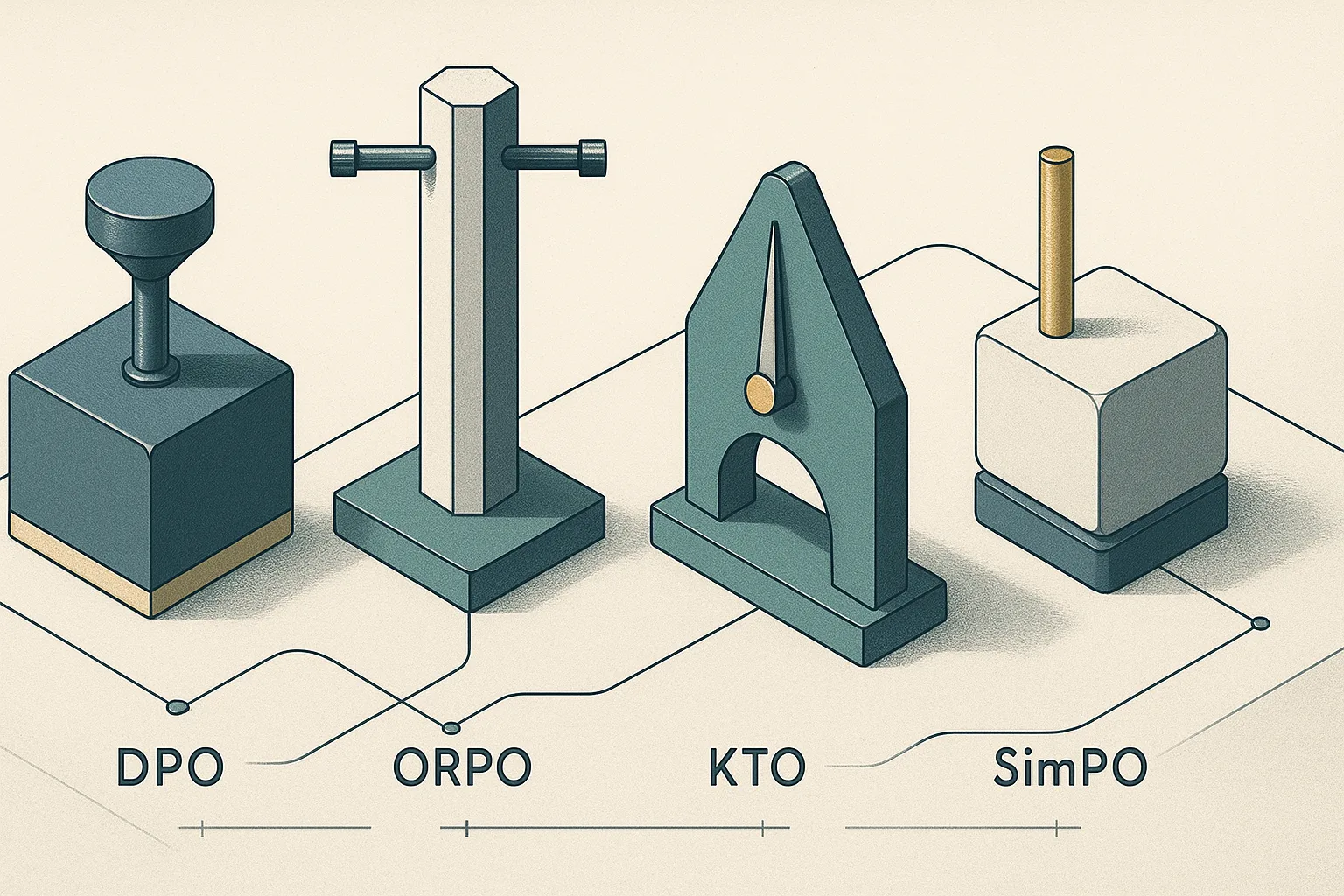
SimPO removes the reference-model/log-ratio dependency and the SimPO README reports it can outperform DPO and its latest variants on AlpacaEval 2, MT-Bench, and Arena-Hard — but the gains are hyperparameter-sensitive, especially learning rate, beta, and gamma/beta tuning.
24 min read
AI & ML
DeconIEP shifts decontamination from dataset filtering to inference-time embedding perturbation — preserving the benchmark while reducing leakage-driven inflation — but its effectiveness is bounded by the perturbation budget and it trades off against benign utility, so it is not a free fix for contaminated evaluation.
24 min read
AI & ML
mergekit can run entirely on CPU or with as little as 8 GB VRAM and still perform multi-model merges out of core — this makes low-cost experimentation feasible — but quality still depends on choosing compatible checkpoints and the right merge method, not just averaging weights.
19 min read