Moving into a new place generates a long mental list fast — furniture, décor, kitchen gadgets, storage. Most of that can wait. What cannot wait is having the tools to handle a loose hinge on move-in day, the cleaning supplies to scrub a bathroom before your toiletries go in, and the safety devices that protect everyone sleeping under that roof on night one. This checklist cuts straight to those three categories, tells you when to buy each item, and flags what you can skip entirely if the home already provides it.
First home essentials checklist for move-in day
The goal on day one is simple: be able to clean, make minor repairs, and sleep safely. Everything else — décor, specialty appliances, extra storage — can be ordered after you have lived in the space for a week and know what you actually need.
Before you spend a dollar, walk through the home and verify what is already there. Many homes and apartments come with smoke alarms, CO alarms, a broom in the closet, or appliance packages that make several checklist items redundant. The NFPA recommends smoke alarms inside each bedroom, outside each sleeping area, and on every level including the basement — if those are already installed and functioning, you do not need to buy new ones on day one.
Move-in day verification checklist (check before you buy):
- Smoke alarms present and testable on every level and in every bedroom
- CO alarms present and testable on each level and outside sleeping areas
- Fire extinguisher accessible (kitchen is the common location)
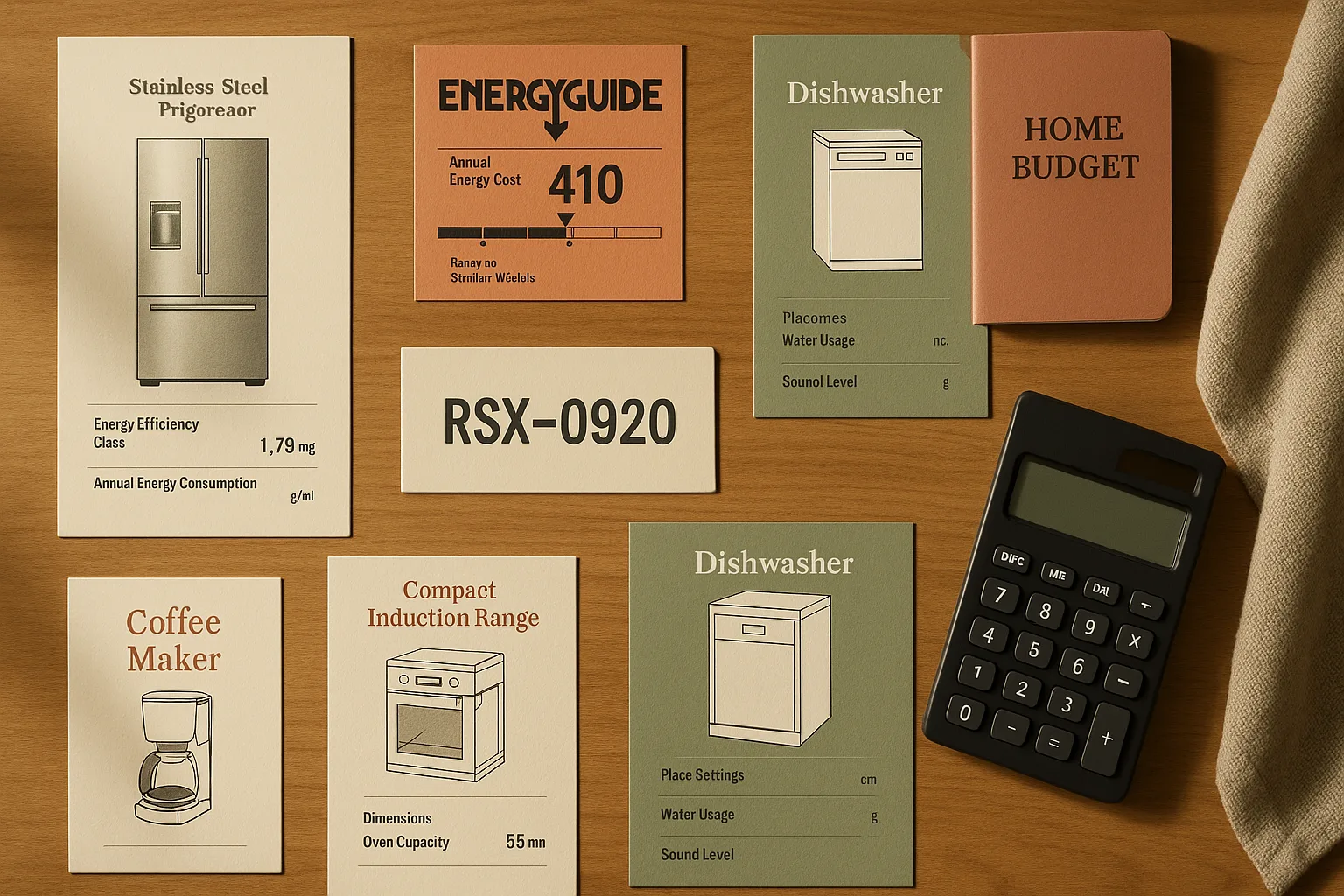
- Refrigerator, stove, and dishwasher included and working
- Broom, mop, or cleaning supplies left by previous occupant
- Basic light bulbs in all fixtures
Only buy what is missing or broken. That discipline alone will save you $200 or more on duplicate purchases.
What to buy first for a new home: tools, cleaning supplies, and safety items
The three categories that matter on day one are tools, cleaning supplies, and safety items. Every other category — kitchen gadgets, extra linens, organizational bins — can be staged across the first 30 days once you know how the space actually works.
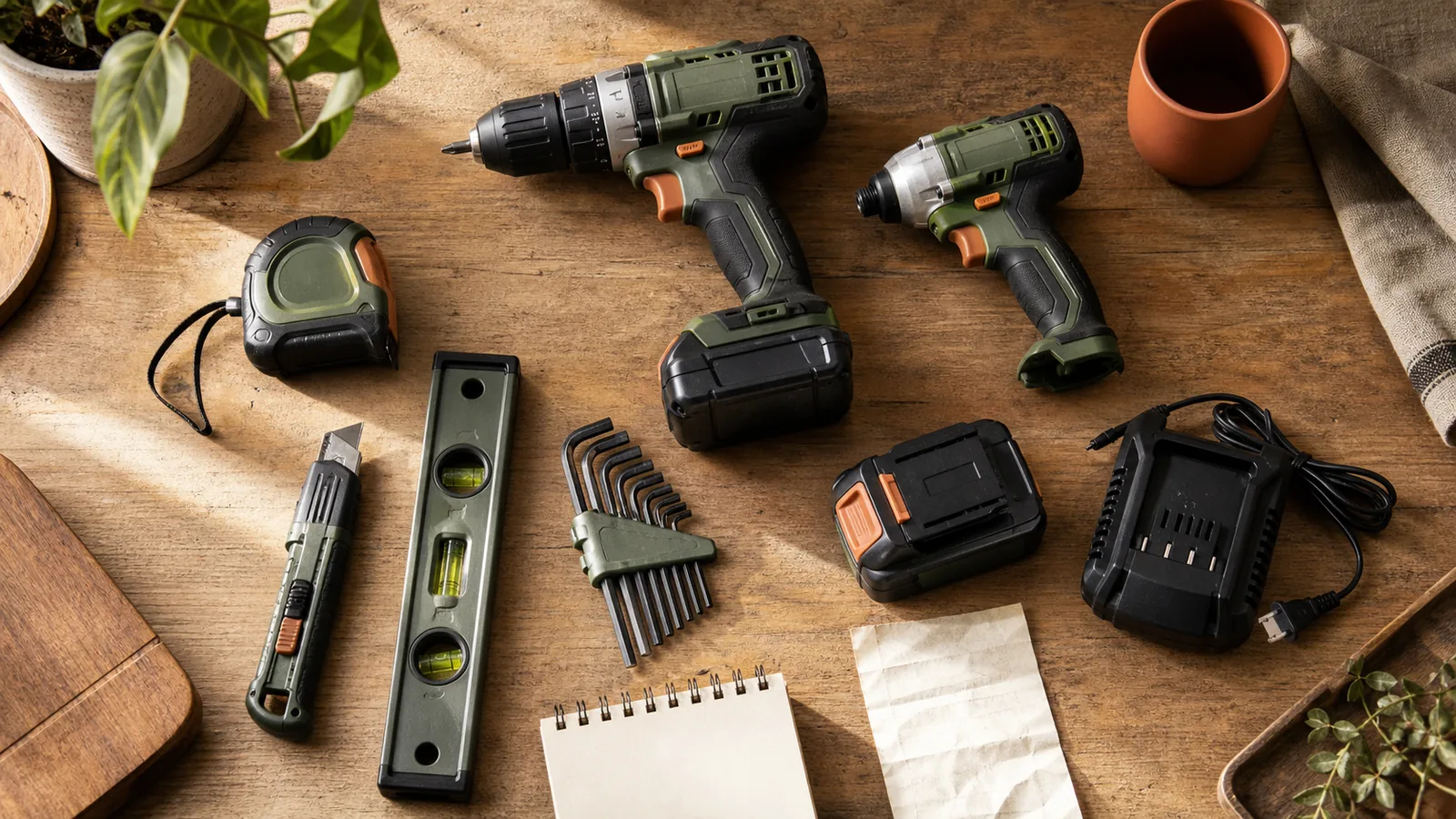
Home Depot's homeowner tool guide identifies the core hand tools most homeowners need, including a ball peen hammer, screwdriver, adjustable wrench, utility knife, torpedo level, hex keys, socket wrench set, and personal protective equipment, while Lowe's Kobalt 268-piece household tool set bundles screwdrivers, a ratchet set, Allen keys, a tape measure, a utility knife, and pliers in one compact starter kit. For the tool bucket, Lowe's Kobalt 267-piece homeowner tool set is a useful affiliate-style example because it keeps the first purchase portable instead of sprawling into specialty bits you will not touch for months.
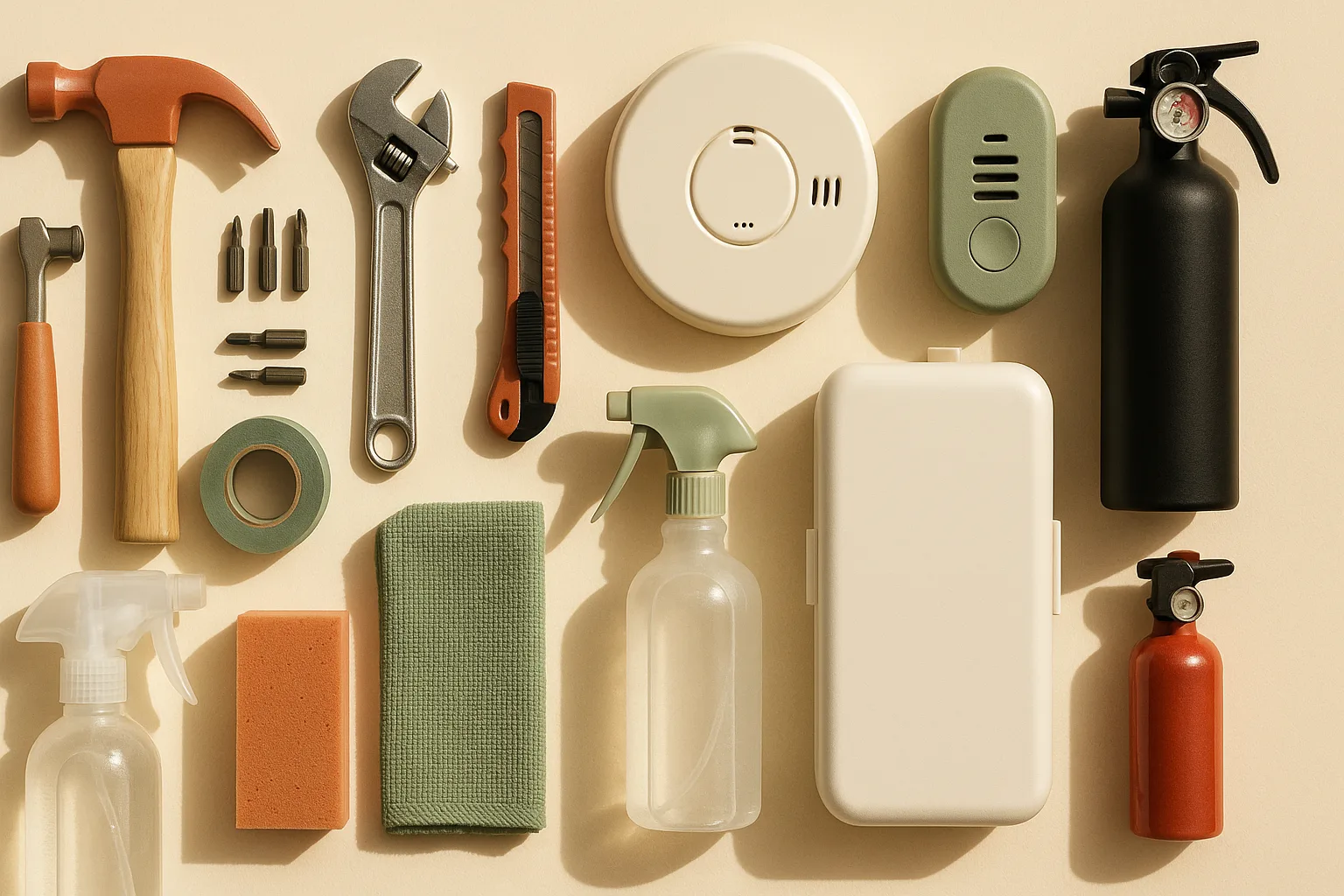
Tools: You will use a screwdriver to tighten cabinet hardware or assemble furniture on the day the movers leave. A hammer hangs the picture you need to make the place feel like home that first night. An adjustable wrench handles a loose faucet connection before it drips on your stuff.
Cleaning supplies: The previous occupants are gone, but their grime is not. A bottle of multi-surface cleaner, paper towels, and trash bags let you clean kitchen counters, scrub the bathroom, and start emptying boxes before a single cabinet is lined.
Safety items: Ready.gov states plainly: "Install smoke, carbon monoxide, and natural gas alarms and test them monthly." Alarms and a fire extinguisher are not optional — they are the floor, not the ceiling, of home safety. For a safety-products affiliate example, a Kidde combination smoke and carbon monoxide detector is a practical pick when the home needs both functions covered in one unit.
Must-buy now: the essentials you will use on day one
These are the items worth buying before the movers arrive, or stopping for on the way to the new place. Each one has a specific job on move-in day.
Safety — non-negotiable: - Smoke alarms — NFPA placement rules require one inside each bedroom, outside each sleeping area, and on every level including the basement; buy only where gaps exist. - CO alarm — CPSC requires one on each level and outside sleeping areas. Do not install in attics or basements unless those spaces have a sleeping area. - Fire extinguisher — Keep one accessible in the kitchen. Check whether the home already has one before purchasing. - First-aid kit — Boxes get dropped, fingers get cut during unpacking. A basic kit lives in the bathroom from day one.
Tools: - Screwdriver set — Tighten loose hinges, assemble flat-pack furniture, adjust outlet covers - Hammer — Hang things, drive picture hooks, seat furniture legs - Adjustable wrench — Tighten a loose faucet supply line or showerhead
Cleaning supplies: - All-purpose cleaner — One bottle of Clorox Clean-Up or a similar multi-surface cleaner covers kitchen and bathroom surfaces on day one - Paper towels — High volume, immediate need; buy a 6- or 12-pack - Trash bags — Packing materials multiply fast; have a box of kitchen-size bags ready - Gloves — Cleaning a toilet or scrubbing under a sink without them is unpleasant and avoidable
Pro Tip: Stop at a Target or Walmart on the way to the new place and grab a small starter bundle: one bottle of all-purpose cleaner, one roll of paper towels, a box of trash bags, and a pair of disposable gloves. That $15 purchase handles 90% of the first day's cleanup.
Buy within 30 days: items that help after the move settles
Once you have slept in the place a few nights, the real gaps show up. These items matter, but buying them before move-in often means buying the wrong size, the wrong style, or something you already have buried in a box.
- Mop or Swiffer-style floor cleaner — After the first week of foot traffic, you will know whether the floors are hardwood, tile, or vinyl and which tool fits
- Broom and dustpan — Verify first; many units have one in a closet
- Sponges and scrub pads — One pack is enough; buy more once you know the kitchen's cleaning demands
- Tape measure — Needed before furniture orders, not necessarily before the movers arrive
- Pliers — Useful for stuck knobs, tight connections, and miscellaneous fixes; not usually urgent on day one
- Utility knife — Great for breaking down boxes, but a pocket knife handles the immediate need while you settle in
- Laundry detergent — Only needed once the washer is confirmed working and loaded
Postponing these buys also reduces the chance of duplicating what arrives in boxes from your old place. Unpack first, then fill gaps.
Optional later: what new homeowners can skip at first
These items belong on a long-term list, not a move-in-day list. Buying them immediately creates clutter and sometimes duplicate spending.
- Power drill — Useful for homeowners eventually, but hand tools cover 90% of day-one needs
- Socket wrench set and hex keys — Home Depot's advanced homeowner guide lists these, but they are not needed until you have a specific task that requires them
- Torpedo level — Handy for hanging shelves straight; not a day-one emergency
- Specialty cleaning products (oven cleaner, grout cleaner, wood polish) — Buy these once you have done the first full cleaning pass and know what each surface actually needs
- Bulk cleaning supply stock — One of each item is enough to start; bulk buys before you know your usage pattern often expire or take up space
Starter tool kit for first-time homeowners
A practical starter kit covers two groups: the core repair trio and the support tools. You do not need a 268-piece set on day one — you need the right seven items. Lowe's Kobalt household tool sets and similar bundled kits are a reasonable way to get most of these in one purchase without overbuying specialty bits.
Cost Snapshot: A solid starter tool kit (screwdriver set, hammer, adjustable wrench, tape measure, pliers, utility knife, flashlight) runs $40–$80 purchased individually, or $50–$100 as a packaged household set at Home Depot or Lowe's.
Home Depot's homeowner tool guide lists the basics as tape measure, ball peen hammer, screwdriver, adjustable wrench, utility knife, torpedo level, hex keys, socket wrench set, and personal protective equipment, which is exactly why a starter kit should center on the core repair trio and then add support tools as you actually need them.
AffiliateProductCard-style starter picks: - Screwdriver set — A compact set with Phillips and flathead tips handles hinge screws, outlet plates, and furniture assembly without taking up drawer space. - Hammer — A standard 16-oz claw hammer is the easiest way to hang art, drive small nails, and pull them cleanly when you make a mistake. - Adjustable wrench — One medium-size wrench covers loose supply lines, showerheads, and quick furniture fixes better than a drawer full of mismatched wrenches. - Tape measure — The bundled Kobalt set includes one, which is useful before sofa delivery, curtain rods, or rug orders. - Pliers — Pliers in a compact set save you from buying a separate specialty tool for the first small repair that comes up. - Utility knife — A retractable blade opens boxes fast and keeps packing material under control. - Flashlight — A dedicated LED light is better than your phone when the breaker trips or you need both hands free.
Screwdriver set, hammer, and adjustable wrench: the core repair trio
These three tools handle the most common first-home repairs. Home Depot's homeowner tool guide lists all three explicitly among its must-have basics, and for good reason — they show up constantly.
Screwdriver set: On move-in day, you will use it to tighten the screws on a wobbly cabinet hinge, swap out a light switch plate, or assemble a bed frame. A set with both Phillips and flathead heads in two or three sizes covers nearly every household screw you will encounter. A 6-piece set from a name brand like Stanley or Craftsman costs around $15–$20 and handles everything a first home throws at you. Skip the 40-piece specialty driver bit set for now — you do not know yet what you need.
Hammer: Most people use a hammer within the first 24 hours of moving in. Hanging a mirror, tapping a furniture connector into place, or simply driving a nail for a coat hook — it comes up immediately. A standard 16-oz claw hammer (the claw end removes nails cleanly) is the right choice for home use. Avoid novelty or lightweight hammers; they make the work harder.
Adjustable wrench: A single 10-inch adjustable wrench replaces an entire socket set for most minor household tasks. If the bathroom faucet has a slow drip from a loose supply line nut, this tool fixes it in two minutes. If the showerhead leaks at the connection, an adjustable wrench tightens it. One wrench in a medium size is better than three mismatched fixed wrenches.
Watch Out: Do not buy a cheap no-name adjustable wrench — the jaw slips under torque and rounds off fittings. Stick with Channellock, Crescent, or Stanley for a tool you will use for years.
Tape measure, pliers, utility knife, and flashlight: the support tools
These four items fill in the gaps that the core repair trio cannot. Most renters who are moving from a previous apartment may already own some of these in smaller form — check your boxes before buying.
Tape measure: Every furniture order, rug purchase, and curtain rod decision requires one. Home Depot notes that a tape measure "allows you to take measurements quickly and conveniently" — obvious, but worth having before you order a sofa that does not fit through the door. A 25-foot tape measure covers any room in a standard home.
Pliers: Needle-nose pliers handle small fittings, stubborn knobs, and loose wire connections. Slip-joint pliers handle larger tasks. If you are buying just one, slip-joint pliers cover more scenarios. These are a 30-day buy unless you know you have a specific plumbing or assembly task waiting.
Utility knife: The single most useful tool for unpacking. It cuts packing tape cleanly, opens cardboard boxes without tearing everything inside, and scores materials for small projects. A standard retractable utility knife with a few extra blades costs under $10 at any hardware store. Renters often already own a box cutter — check before buying.
Flashlight: The circuit breaker trips, the power goes out during a storm, or you need to check inside a dark utility closet. A basic LED flashlight handles all of it. A headlamp is even better for tasks that require two free hands. If your phone has a bright flashlight, that covers emergencies — but a dedicated flashlight with fresh batteries is a meaningful upgrade for a first home.
Basic cleaning supplies for a new house or apartment
Stock the minimum before unpacking. One container of each item is enough to cover move-in-day cleanup; you can restock once you know the home's actual demands. Home Depot's starter cleaning bundles pair paper towels and trash bags together precisely because they are consumed together in high volume during a move, and the all-purpose cleaner category is a distinct move-in shopping need rather than an optional extra.
Day-one cleaning supply list:
| Item | What you need | Move-in use |
|---|---|---|
| All-purpose cleaner | One 32 oz spray bottle | Counters, sinks, appliance surfaces |
| Paper towels | 6–12 roll pack | High-volume wipe-down tasks |
| Trash bags | One box (kitchen-size) | Packing debris, empty boxes |
| Sponges | One pack (2–4 count) | Scrubbing sinks and appliances |
| Mop or broom | One of each, or verify first | Floors after movers leave |
| Cleaning gloves | One pair | Bathroom scrubbing, chemical contact |
Kitchen and bathroom cleaning supplies that prevent day-one messes
Clean the kitchen and bathroom before anything goes into them. Cabinets, drawers, counters, sinks, and the toilet bowl all need a pass regardless of how clean the home looked during a showing.
One bottle of a disinfecting multi-surface cleaner — Clorox Clean-Up is a consistent performer — "tackles tough stains and odors on a variety of hard, nonporous surfaces" and disinfects in one step. That covers kitchen counters, the stovetop exterior, bathroom tile, and the toilet exterior without switching products. Buy one bottle to start. The goal is a targeted first-pass clean, not a full-house stocking event.
A pack of sponges and paper towels handles the physical scrubbing. Keep gloves on for the bathroom — a pair of disposable nitrile gloves or a reusable rubber pair makes the difference between a quick clean and a task you keep putting off.
Pro Tip: Wipe out every kitchen cabinet and drawer before you put dishes or food in them. It takes 15 minutes with paper towels and all-purpose cleaner and saves you from discovering crumbs or grease later.
Floor, laundry, and general cleanup items to keep on hand
Floors take a beating during a move. Cardboard debris, dirt tracked in by movers, and packing foam end up everywhere. A broom and dustpan handle the immediate mess; a mop handles it after the boxes are cleared. If the home already has a broom in a utility closet, use that first and buy your own preferred option within the first week.
Floor and laundry basics (30-day window):
- Broom and dustpan — Verify first; buy if missing
- Mop — A flat microfiber mop (like an O-Cedar EasyWring or a Swiffer WetJet) works on hardwood, tile, and vinyl; skip if the home has wall-to-wall carpet
- Laundry detergent — Buy only after confirming the washer works and you have done a test load
- Dryer sheets or wool dryer balls — Nice to have; not day one
A lot of these items can be borrowed for the first week if you have local family or friends. Borrow a mop, do one cleaning pass, then decide what you actually want to own long-term. Buying a $40 mop before you know your floor type often means buying the wrong one.
Home safety items every first-time owner should install or test
The most important thing to buy for a new home is functional smoke alarms. Everything else on the safety list follows from there. The CPSC puts it directly: "Install a working smoke alarm on every level of your home, outside sleeping areas, and inside bedrooms." The NFPA recommends smoke alarms inside each bedroom, outside each sleeping area, and on every level of the home, including the basement, while CPSC guidance says CO alarms should be installed on each level of the home and outside sleeping areas. A fire extinguisher and first-aid kit round out the baseline. These are not aspirational — they are day-one necessities.
Safety priority hierarchy:
- Smoke alarms — every bedroom, every level, outside sleeping areas
- CO alarms — every level, outside sleeping areas
- Fire extinguisher — kitchen accessible
- First-aid kit — bathroom or kitchen drawer
Do not spend on safety extras (smart alarms, interconnected systems, whole-home fire suppression) until the basics are confirmed in place.
Smoke alarms and carbon monoxide alarms: where they belong
Placement matters. NFPA specifies that smoke alarms belong inside each bedroom, outside each sleeping area, and on every level of the home including the basement. On levels without bedrooms, NFPA places them in the living room, den, or near the stairway to the upper level. Mount them on the ceiling or high on a wall — and at least 10 feet from the stove to reduce false alarms from cooking.
CPSC guidance for CO alarms requires one on each level of the home and outside sleeping areas. Do not install CO alarms in attics or basements unless those spaces include a sleeping area — CO alarm placement is different from smoke alarm placement.
Homeowners may need to install new alarms or replace outdated ones (smoke alarms older than 10 years should be replaced). Renters should press the test button on every existing alarm on move-in day and notify the landlord in writing if any fail to function — that creates a paper trail that protects your lease and your safety. If alarms are missing from required locations, request installation before sleeping in the unit.
Watch Out: Combination smoke/CO alarms (like the Kidde Combination Smoke & Carbon Monoxide Detector, around $30–$40) handle both functions in one unit, but read the placement rules carefully — the right location for both alarms simultaneously is outside sleeping areas and on each level, which is where these combos make the most sense.
Fire extinguisher and first-aid kit: the emergency basics
A fire extinguisher belongs in the kitchen — mounted or stored where you can grab it without opening a cabinet. An ABC-rated dry chemical extinguisher (the Kidde Pro 210 or First Alert HOME1 are widely available at Home Depot and Lowe's for $25–$50) handles wood, paper, fabric, grease, and electrical fires. Check the gauge on move-in day if one is already present; a needle in the green zone means it is charged and ready. If the extinguisher is already mounted in the right place and the gauge is green, do not buy a duplicate.
A basic first-aid kit lives in the bathroom cabinet or a kitchen drawer. During unpacking, cuts, scrapes, and pinched fingers happen regularly. An adequately stocked kit (the Johnson & Johnson All-Purpose First Aid Kit at around $20 covers the basics) handles those without a trip to the drugstore.
Watch Out: Do not mount a fire extinguisher inside a cabinet. It needs to be visible and reachable in the 10 seconds it takes for a grease fire to go from manageable to out-of-control.
Renter vs homeowner checklist: what you can skip in a rental
This is the section most broad competitor lists miss entirely. Renters and homeowners have fundamentally different priorities, and conflating them causes renters to overspend on items that either duplicate what the landlord provides or violate the lease.
| Category | Renter | Homeowner |
|---|---|---|
| Smoke/CO alarms | Verify existing devices; request fixes in writing | Install or replace if missing or outdated |
| Fire extinguisher | Check if one is provided; buy if not | Purchase and mount on day one |
| Tool kit | Compact portable set; no need for large drill or socket set | Full starter set plus plan for power tools later |
| Cleaning supplies | Minimal portable basics; avoid bulk | Stock appropriately for the space |
| Wall hardware | Avoid permanent anchors; use removable strips | Anchor as needed |
| Major appliances | Skip — typically landlord-provided | Verify what is included; buy only what is missing |
The core difference is simple: renters protect the deposit by staying portable and avoiding lease violations, while homeowners build toward a long-term setup that can absorb more tools, anchors, and replacement parts over time.
Rental essentials that protect your deposit and simplify move-out
For a rental, a compact portable tool kit is smarter than a large household set. Lowe's Kobalt starter sets include screwdrivers, pliers, tape measure, utility knife, and a hammer in a carry case that moves with you apartment to apartment. That is genuinely useful. A 268-piece socket set is not.
Renter-safe essentials shortlist: - Compact screwdriver set (6–10 pieces, Phillips and flathead) - Hammer (16 oz claw) - Tape measure (25 ft) - Utility knife - All-purpose cleaner, paper towels, trash bags, sponges, gloves - First-aid kit
Skip or verify first: - Large power drill (check lease; wall anchors may be restricted) - Smoke/CO alarms (verify landlord-provided devices; request in writing if missing) - Mop (often left by previous tenant; confirm before buying) - Bulk cleaning supplies (one of each item covers the first month)
Read the lease before hanging anything or altering fixtures. Many leases allow small picture hooks; some prohibit wall anchors entirely. Command strips and removable adhesive hooks handle most display needs without lease risk.
Homeowner extras that make sense only after move-in
Homeowners have more latitude and more long-term need, but the same staged-buying logic applies. Do not buy specialty tools before you have a task that requires them.
Home Depot's extended homeowner tool list includes torpedo levels, hex keys, and socket wrench sets beyond the starter core — all legitimate eventually, but none of them needed until a specific project requires them.
Homeowner-only list (buy after week one): - Power drill/driver — worth owning, but not on day one - Torpedo level — buy when you hang the first shelf - Socket wrench set — buy when you have plumbing or mechanical work - Hex keys (Allen wrench set) — buy when furniture assembly requires them - Stud finder — needed before mounting anything heavy on drywall - Caulk gun — needed for bathroom or window sealing projects
Watch Out: Do not buy a cordless drill before you own a screwdriver set. A drill is faster, but a good screwdriver set handles 90% of first-home tasks and does not require a battery charge.
First-home shopping priorities when appliances are already included
When a home comes with appliances — refrigerator, dishwasher, washer/dryer, range — a significant chunk of what appears on generic first-home checklists either is not needed or needs a different version than the list assumes. The key move is to verify before spending.
Home Depot's cleaning supply categories confirm that cleaning needs exist regardless of appliance inclusion — but the quantity and type depend heavily on what surfaces and appliances are actually in the home. A gas range needs a different cleaner than an induction cooktop. A home without a dishwasher needs dish soap on day one in a way that a home with one does not.
What to buy only if the home does not already provide it
Use this as a go/no-go decision list before checkout. For each item, confirm it is actually missing or broken before adding it to your cart.
Appliance and fixture verification checklist:
- [ ] Smoke alarms — present, tested, and correctly placed per NFPA? If yes, skip. If no, buy.
- [ ] CO alarms — present, tested, on each level and outside sleeping areas per CPSC? If yes, skip. If no, buy.
- [ ] Fire extinguisher — in kitchen, gauge in green? If yes, skip. If no, buy.
- [ ] Refrigerator — included and cooling? If yes, skip buying. If no, rent, borrow, or buy.
- [ ] Washer/dryer — included? Affects whether you need a laundromat plan on day one.
- [ ] Broom/mop — in the utility closet? If yes, use it first week while you decide what you want long-term.
- [ ] First-aid kit — left by previous owner or your own boxes? If no, buy before unpacking.
- [ ] Trash can — present in kitchen? If no, a $10 basic bin serves immediately.
NFPA and CPSC guidance assumes alarms should already be present in compliant homes — if they are not, add them immediately, not within 30 days.
How to use this checklist by budget and urgency
Stage your purchases into three windows and you will spend less, buy the right things, and avoid the common mistake of buying items you already have or do not actually need in that space.
Day one — spend $75–$150 on confirmed gaps only: - Safety: smoke alarm(s), CO alarm(s), fire extinguisher, first-aid kit — only where missing - Tools: screwdriver set, hammer, adjustable wrench - Cleaning: all-purpose cleaner, paper towels, trash bags, gloves
First 30 days — spend $50–$100 as needs become clear: - Mop, broom/dustpan (if not present) - Tape measure, pliers, utility knife, flashlight - Sponges, laundry detergent (after washer confirmed working)
Later — spend based on specific projects: - Power drill, torpedo level, socket set, hex keys - Specialty cleaning products (oven, grout, wood polish) - Bulk cleaning supply restocks
Home Depot and Lowe's both sell starter kits that bundle the day-one tools into one purchase — that approach works well if you are starting from zero. If you have any tools from a previous place, unpack first and fill only the real gaps.
Pro Tip: Take a photo of every room on move-in day — including the location of existing smoke alarms, CO alarms, the fire extinguisher, and any appliances that came with the home. That photo record protects you in a rental dispute and reminds you exactly what was already there if you forget six months later.
Sources & References
- Angi — First Home Essentials Checklist — Broad first-home shopping overview used as primary competitive reference
- NFPA — Installing and Maintaining Smoke Alarms — Authoritative placement guidance for smoke alarms in US homes
- NFPA — Smoke Alarms Overview — Mounting height and distance-from-stove requirements
- CPSC — Carbon Monoxide Alarm Information Center — CO alarm placement requirements by level and sleeping area
- CPSC — Fire Safety Information Center — Smoke alarm and fire extinguisher safety guidance
- Ready.gov — Life-Saving Skills Toolkit — Federal guidance on installing and testing home safety alarms
- Home Depot — Must-Have Tools for Homeowners — Core tool list for first-time homeowners
- Home Depot — All-Purpose Cleaners Category — Cleaning product reference for move-in supplies
- Home Depot — Cleaning Starter Bundle — Paper towels and trash bags as bundled starter cleaning essentials
- Home Depot — Microfiber Cloth and Cleaner Combo — Clorox Clean-Up multi-surface cleaner product reference
- Lowe's — Kobalt 268-Piece Household Tool Set — Starter household tool kit reference
- Lowe's — Kobalt 267-Piece Homeowner Tool Set — Additional starter tool kit reference
Keywords: smoke alarm, carbon monoxide alarm, fire extinguisher, first-aid kit, all-purpose cleaner, paper towels, trash bags, sponges, mop, broom, utility knife, adjustable wrench, tape measure, pliers, screwdriver set