Tonal vs Tempo Studio vs adjustable dumbbells: quick verdict for garage gyms
For a garage gym, Tempo Studio wins on installation flexibility, Tonal wins on compact footprint and guided coaching, and a quality adjustable dumbbell setup wins on total cost and zero subscription drag. Which one is right for you comes down to four questions: Can your wall handle a mount? Are you renting or do you own? How much do you want to spend in year one? And do you want machine-guided resistance or real free weights?
Here is every variable on one table before you read further.
| Tonal | Tempo Studio | Adjustable Dumbbells | |
|---|---|---|---|
| Upfront price | $2,995 | From $2,495 | Varies by retailer and package |
| Monthly membership | $49/mo | $39/mo | $0 |
| 12-month commitment | Required from install date | Required with purchase | None |
| Installation | Wall-mount, professional | Freestanding, no anchoring | None |
| Footprint | Wall space + ~7 sq ft floor | 3 sq ft (6 ft workout clearance) | Flexible, ~20–30 sq ft |
| Training style | Machine resistance, AI coaching | Free weights + AI coaching | Free weights, self-directed |
| Best for | Compact, coached strength training | Renter/garage, real weights + tech | Budget-conscious, modular builds |
Pro Tip: If your garage walls are unfinished or you're unsure about stud spacing, Tempo Studio skips that problem entirely. Tonal requires studs spaced 16–24 inches apart — check before you buy.
How we compared Tonal, Tempo Studio, and adjustable dumbbells
Most comparison articles stop at brand philosophy and floor footprint. That leaves out the decisions that actually cost you money: total first-year ownership, what happens if your garage wall won't accept a mount, and whether a smart-gym subscription makes sense once you account for 12 months of mandatory fees on top of equipment cost.
The framework here covers five factors:
- Total first-year cost — equipment, shipping or delivery, installation, accessories, and 12 months of membership where required
- Footprint and wall constraints — actual square footage needed, plus whether your garage wall structure is compatible
- Resale value — because a $3,000 machine you sell in two years has a different true cost than one you can't move
- Training style fit — machine resistance with AI load adjustment versus real free weights versus self-directed lifting
- Installation tolerance — whether you can or want to anchor hardware to your garage wall
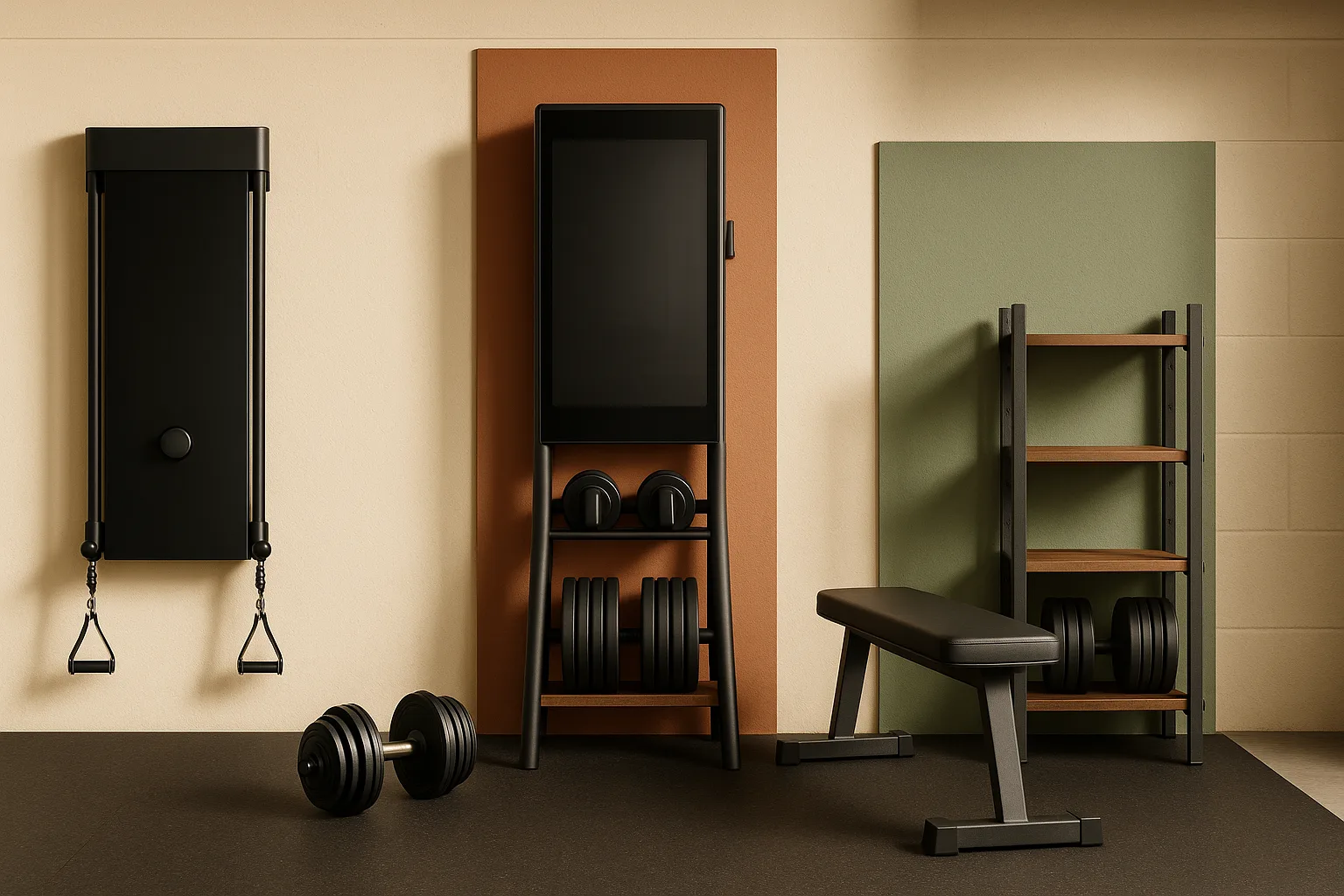
As PopSugar's direct comparison frames it, Tonal is "a wall-mounted smart gym with adjustable arms" while Tempo Studio is "a freestanding system" — that single physical difference cascades into every other buying consideration for a garage setup.
Tonal pricing, membership, and wall-mount requirements
Tonal's all-in first-year cost is higher than its $2,995 sticker price once you add delivery, installation, accessories, and mandatory membership fees.
Per PopSugar's Tonal review, the base unit retails at $2,995 — but that figure doesn't include delivery and installation fees, and if you want to use Tonal's cable-based resistance workouts fully, you'll also need the Smart Accessories Bundle (which adds handles, a rope, a bar, and a bench). Per Digital Trends' Tonal vs Tempo analysis, the membership runs $49 per month. Tonal's own FAQ states "Tonal membership is required for the first 12 months after your installation date." — that's a contractual obligation, not optional.
CostBreakdown — Tonal, Year One: - Unit: $2,995 - Delivery + professional installation: ~$250–$500 (varies by market and installer) - Smart Accessories Bundle: ~$500 (handles, rope, bar, bench-style accessory) - Membership (12 months × $49): $588 - Estimated Year One total: ~$4,333–$4,583
Watch Out: Tonal specifies it can be installed on most walls with wood or metal studs spaced 16–24 inches apart. Garage walls with non-standard stud spacing, masonry block, or unfinished drywall may require additional framing work before installation — that cost isn't in the base quote.
The wall-mount requirement is the defining constraint for a garage gym. Unlike a basement or a carpeted spare room, many garages have unfinished walls, OSB sheathing, or block construction. Before ordering, confirm stud type, spacing, and whether your garage drywall is fire-rated — some attached garages require 5/8-inch Type X drywall, which installs differently than standard half-inch board. If your wall needs new framing, budget an additional few hundred dollars and a contractor visit before Tonal's installer arrives.
For buyers who can clear those installation hurdles, Tonal's cable-based resistance system with AI-adjusted load is genuinely difficult to replicate with free weights alone. The machine handles progressive overload automatically, which matters if you're training without a partner or coach.
Tempo Studio pricing, shipping, and freestanding footprint
Tempo Studio's freestanding design makes it the more practical smart-gym choice for a garage, especially if wall anchoring is off the table.
Tempo Studio starts at $2,495, with package tiers that bundle different weights, benches, and accessories. The membership runs $39 per month for the whole household, and Tempo's shop page notes a 12-month membership commitment comes with the purchase of a Tempo Studio. Tempo offers "30-Day Hassle-free Trial" and "White Glove Delivery" on its shop page, per the Tempo shop page — those terms and the included delivery meaningfully lower the perceived risk of a $2,500+ purchase.
CostBreakdown — Tempo Studio, Year One: - Unit (base tier): $2,495 - White-glove delivery/in-home assembly: Included in package (verify at checkout for your ZIP code) - Membership (12 months × $39): $468 - Estimated Year One total: ~$2,963+
Pro Tip: Tempo's white-glove delivery option handles in-home assembly. For a garage gym, that means a crew positions the cabinet and ensures it's set up correctly — no stud-finding, no drilling, no drywall anchors.
The physical footprint is one of Tempo Studio's genuine strengths: the cabinet itself occupies just 3 square feet of floor space, though Tempo specifies you need 6 feet of clearance between yourself and the unit during workouts. In a one-car or two-car garage, that's entirely workable — the cabinet tucks against a wall and the workout zone in front of it stays clear.
FreestandingSetup note: Where Tonal requires you to commit a wall section permanently (holes, anchors, weight-bearing hardware), Tempo Studio sits on the floor. For renters, condo owners with garage-use rights, or homeowners who might sell and take the equipment with them, that distinction matters. You can relocate Tempo without patching drywall.
On warranty: Tempo covers the Studio itself for three years. The included accessories — bench, squat rack, weight plate holder, kettlebell, and heart rate monitor — carry a 12-month warranty from the date of delivery, per Tempo's warranty page. Read the accessory warranty carefully before deciding whether to add the extended coverage tier.
Why adjustable dumbbells are the lowest-cost modular option
A well-chosen adjustable dumbbell setup eliminates subscription costs entirely and scales with your training without locking you into a single platform.
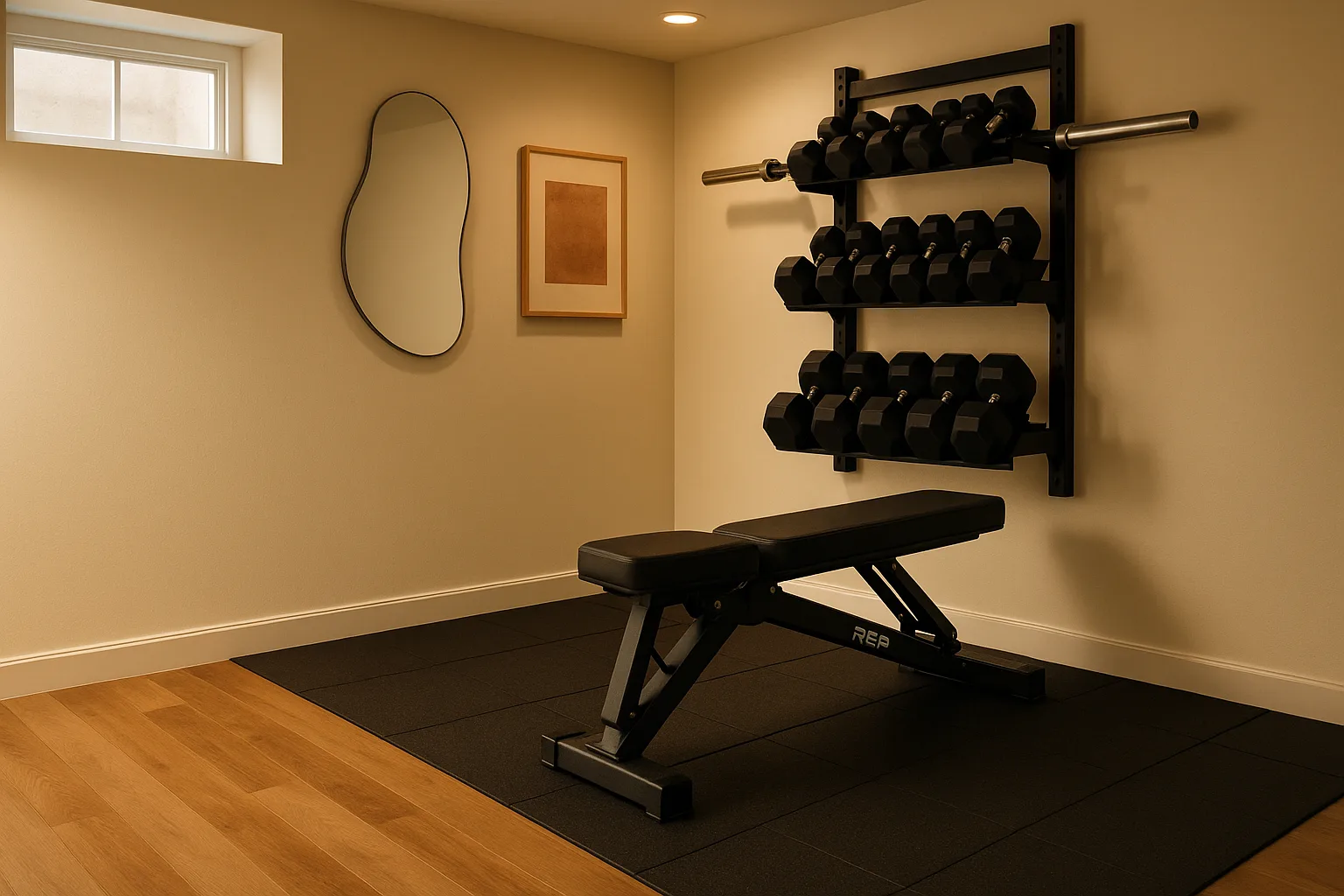
The core kit is simple: a pair of adjustable dumbbells, a flat or adjustable bench, and a vertical dumbbell storage rack. This setup requires no installation, no membership, and no contractual commitment. You can start with a lighter set and add weight capacity over time — or add a barbell, pull-up bar, or resistance bands as your program evolves — without buying into a new ecosystem. If you want a smart home gym affiliate-style recommendation without the platform lock-in, the adjustable path is the cleanest fit.
Recommended starter path (AffiliateProductCard-style): - Adjustable dumbbells affiliate: Look for a set that matches your current pressing, rowing, and squat pattern rather than chasing a single headline number. Brands such as Bowflex, POWERBLOCK, and CAP Barbell are common starting points. - Adjustable bench: Choose a bench with a stable base and enough adjustment positions for incline pressing, seated shoulder work, and split-stance training. - Storage rack: A vertical dumbbell stand or small weight tree keeps the floor clear and reduces trip hazards on a concrete garage floor.
Pro Tip: The right adjustable dumbbells set should feel simple to move, lock securely, and cover the range you actually use for rows, presses, and lunges without turning your garage into a parts bin.
Modularity note: The dumbbell path's real advantage isn't just upfront price — it's that every dollar you spend on equipment holds independent value. Your bench works with barbells if you add them later. Your dumbbells work without electricity, without WiFi, without a subscription being active. If a smart-gym company discontinues its platform (and this has happened in the connected fitness space), your hardware doesn't become a paperweight. Adjustable dumbbells from established manufacturers have a healthy used market on Facebook Marketplace and Craigslist, and they don't depend on a login screen to remain useful.
First-year ownership cost: Tonal vs Tempo Studio vs dumbbells
Tonal's first-year cost runs roughly $4,300–$4,600 all-in. Tempo Studio lands around $2,963 at the base tier. A solid adjustable dumbbell setup can stay far below the smart-gym tier, with the exact figure depending on the dumbbells, bench, and rack you choose.
This is the section most comparison articles skip. Here is the full side-by-side breakdown based on verified pricing from cited sources.
| Cost Category | Tonal | Tempo Studio | Adj. Dumbbells |
|---|---|---|---|
| Equipment | $2,995 | $2,495 | Varies by retailer and package |
| Delivery/shipping | ~$250–$500 | Included (white glove) | Varies |
| Installation | ~$0–$200 (varies) | $0 (freestanding) | $0 |
| Accessories | ~$500 (bundle) | Varies by package tier | Varies by setup |
| 12-mo. membership | $588 ($49 × 12) | $468 ($39 × 12) | $0 |
| Estimated Year 1 total | ~$4,333–$4,583 | ~$2,963–$3,200 | Not stated |
Pro Tip: The membership gap between Tonal and Tempo amounts to $120 per year at published rates. Over three years, that's $360 in Tempo's favor from membership alone — before accounting for the lower equipment entry price.
Breakeven callout: If you currently pay $80/month for a commercial gym membership, you're spending $960 per year. A dumbbell setup recoups its cost in under nine months of cancelled gym fees, with no ongoing obligation. Tempo Studio's $2,963 year-one cost breaks even at roughly 37 months of cancelled $80/month memberships. Tonal's $4,333+ year-one cost requires over 54 months — more than four years — to break even against a gym membership at that rate, and that calculation assumes you actually cancel the gym.
The subscription fees matter because they compound. A Tonal owner paying $49/month over five years spends $2,940 on membership alone — nearly the cost of a second Tonal unit. Tempo's $39/month over five years adds $2,340. Adjustable dumbbell owners spend $0.
Watch Out: Both Tonal and Tempo require a 12-month membership commitment from the time the unit is activated. If you buy in December expecting light use through the holidays, you're still on the hook through the following December. Factor the full first-year membership cost into your purchase decision regardless of how often you plan to use the machine early on.
Space, noise, and garage setup realities
Your garage's wall structure, floor surface, and noise situation all factor into which system makes practical sense.
SpaceAndNoiseChecklist:
Tonal: - Requires a wall section of approximately 7 feet tall and 4 feet wide to be fully usable, per Tonal's installation guidance - Needs studs at 16–24 inches apart — wood or metal both work, but masonry requires special anchoring hardware - The arms fold flat against the wall when not in use, so floor clearance can be managed around other equipment - No weight dropping — resistance is cable-based and electronic; noise is low, which suits shared-wall garages or attached garages adjacent to living space
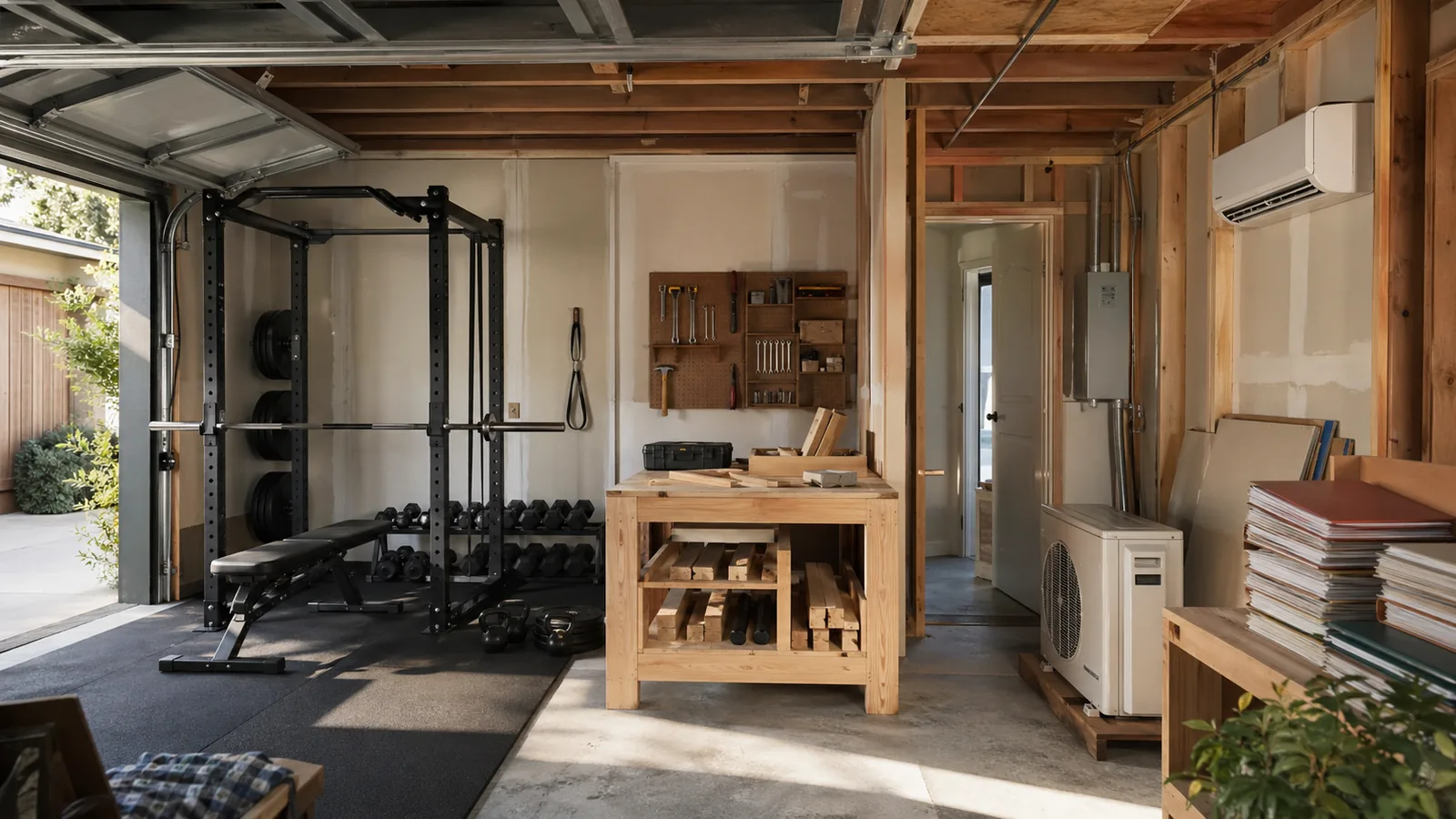
Tempo Studio: - Cabinet footprint is just 3 square feet, but plan for 6 feet of clear floor space in front of the unit during use - Free-weight-based: plates, kettlebells, and dumbbells are real iron, which means dropping weights is possible — especially under fatigue - A rubber stall mat can be useful under the workout zone to protect concrete and give the floor a bit more forgiveness during training - Better suited for detached garages; if your garage shares a wall or ceiling with a bedroom, the sound of dropped plates will be noticeable
Adjustable dumbbells: - No fixed footprint — the rack tucks into a corner and the bench positions wherever you need it - Adjustable dumbbell shells (especially selectorized types like Bowflex SelectTech) are not designed to be dropped and will break if you drop them regularly; if your training involves failure sets with heavy loads, a fixed-weight backup set or barbell-based setup is worth having - Concrete floors are hard on both equipment and joints; a couple of stall mats under your workout area can make the floor more comfortable - Total noise profile is user-dependent — controlled reps are quiet; sloppy drops on concrete are not
Watch Out: Selectorized adjustable dumbbells like the Bowflex SelectTech 552 are specifically not rated for dropping. If you train to failure regularly and expect to drop weights, either choose a set with solid construction tolerances or budget for a separate set of fixed dumbbells for your heaviest working sets.
Who should buy Tonal for a home gym
Tonal is the right choice if your garage wall can handle the mount, your training is primarily strength-focused, and you want a system that removes the guesswork from progressive overload.
Best For — Tonal: - Homeowners with a finished or framed garage wall and studs at standard 16–24 inch spacing - Lifters who want AI-guided load adjustment and structured programming without designing their own workouts - People who prefer a completely silent resistance system (no clanging, no dropping) — ideal for attached garages or early-morning sessions near sleeping family members - Buyers who can absorb $4,300+ in year-one cost and plan to use the machine consistently enough to justify the $49/month subscription long-term - Anyone who values the Tonal platform's coaching library and real-time form feedback more than the feel of free weights
Tonal 2 is the brand's current connected strength platform, and its cable-based resistance simulates a wide range of exercises, but it is not a free-weight experience. If your training includes barbell squats, heavy deadlifts, or Olympic lifts, Tonal won't replace a rack and barbell. It excels at upper-body and cable-style resistance work with smart progression — the system adjusts load in real time based on performance, which is a genuine differentiator for solo training.
Who should buy Tempo Studio instead
Tempo Studio fits the garage gym buyer who wants real weights with smart coaching — and doesn't want to drill a single hole.
Best For — Tempo Studio: - Anyone in a rented garage or shared space where wall mounting is not permitted or not practical - Lifters who want the feel of actual plates, kettlebells, and barbells (not cable resistance) while still getting AI rep-counting and form coaching - Buyers who want to potentially move the unit — to a new home, a different room, or back to a seller — without patching drywall - Households where multiple people at different strength levels will train; the $39/month household membership is per-household, not per-user - Buyers who want a lower year-one cost than Tonal without giving up the smart-gym experience entirely
The freestanding cabinet design is Tempo Studio's central practical advantage for a garage. You position it where it makes sense, run through the 6-foot clearance requirement in front of it, and you're training. White-glove delivery handles setup. The 30-day hassle-free trial gives you real-world testing time before you're committed beyond the return window.
Where Tempo Studio falls short: the free-weight component means you'll be loading and unloading plates, which takes more time per set than Tonal's push-button load change. And the risk of rough handling on concrete requires a simple floor-protection plan to keep the setup in good shape.
Who should stick with adjustable dumbbells
A dumbbell-based setup beats both smart gyms on total cost if you're budget-conscious, don't need guided programming, or want the flexibility to train without a monthly fee.
Best For — Adjustable Dumbbells: - Buyers who want no ongoing financial commitment - Renters who move frequently and need equipment that packs up without depreciation or damage concerns - Beginners building a training habit — you don't need a $3,000 smart gym to get in shape with dumbbells and a bench - Experienced lifters who already know how to program their own training and don't want to pay a subscription for coaching they won't use - Anyone who wants the freedom to pair their equipment with any fitness app, YouTube channel, or self-designed program without being locked into a single platform's content library
The honest trade-off: adjustable dumbbells do not auto-adjust load or track reps and sets automatically. If accountability features and guided progressions are what keep you consistent, the $39–$49/month smart-gym subscription may pay for itself in adherence alone. Self-directed training requires more discipline. Know yourself before committing to the lowest-cost path.
Used-market resale value and ownership risk
Tonal has documented secondary-market demand, which meaningfully affects its true cost of ownership for anyone who might sell within two to four years.
Tonal units appear regularly on Facebook Marketplace, OfferUp, and Craigslist, often at significant discounts from retail — which tells you two things simultaneously: there is real demand for used Tonal hardware, and buyers can sometimes acquire a unit well below the $2,995 list price. For a cost-conscious buyer, purchasing a used Tonal with remaining warranty or an extended protection plan is worth investigating before buying new.
Watch Out: Tonal's platform is subscription-dependent. A used Tonal still requires an active $49/month membership to function. Verify whether the seller's account and membership transfer or whether you're starting a new subscription from scratch — this affects the true cost of a used purchase.
On the sell side, if you buy Tonal new and decide to exit within two years, you can likely recover a meaningful portion of the equipment cost through resale. That softens the all-in first-year cost if you treat the purchase as a finite experiment rather than a permanent installation — though you'll still have wall holes to patch if the machine comes down.
ResaleValueNote: - Tonal: Has a secondary market; resale demand is real. Electronics-heavy hardware depreciates, but the brand's recognition helps. Resale is easier than for obscure or discontinued brands. - Tempo Studio: Freestanding design makes physical resale simpler (no wall repair), but the smart-gym secondary market is smaller and more volatile than Tonal's. - Adjustable dumbbells: Fixed-weight dumbbells hold value well; selectorized sets like Bowflex SelectTech depreciate moderately but sell reliably on the used market. A set of well-maintained adjustable dumbbells from a name brand typically finds a buyer without much friction.
For a basic dumbbell setup, resale risk is negligible — the equipment has intrinsic value that doesn't depend on a platform staying online or a company staying solvent.
Which home strength setup is best for your garage gym
Match your situation to one of these scenarios and you'll have your answer.
| Your situation | Best choice |
|---|---|
| Homeowner, finished garage wall, stud spacing confirmed, want guided strength training | Tonal |
| Renter or garage with unfinished walls, want real free weights + AI coaching | Tempo Studio |
| Budget under $1,500 or no interest in monthly subscription | Adjustable dumbbells |
| Want to move equipment to a new home within 2 years | Tempo Studio or dumbbells |
| Early morning training near sleeping family, attached garage | Tonal (silent cable resistance) |
| Heavy lifter who drops weights regularly | Tempo Studio with stall mats, or dumbbells rated for drops |
| Want to try before committing | Tempo Studio (30-day trial) |
| Lowest all-in five-year cost | Adjustable dumbbells |
Next steps: - If you're buying Tonal: Confirm stud spacing and wall type in your garage before placing the order. Call a contractor or use a stud finder to verify 16–24 inch spacing and confirm the wall material. Then check Tonal's current pricing and financing options at tonal.com. - If you're buying Tempo Studio: Check the current package tiers and delivery options at shop.tempo.fit. Confirm white-glove delivery is available in your ZIP code and order two or three 4×6 mats for the workout zone before delivery day. - If you're building a dumbbell setup: Start with an adjustable set that covers your working weight range, a quality bench, and a rubber mat for the floor. Check current options directly from manufacturers or retailers where inventory and pricing fluctuate regularly.
Garage gym FAQ on Tonal, Tempo Studio, and adjustable dumbbells
Which is better, Tonal or Tempo Studio?
Neither is objectively better — the right answer depends on your garage setup. Tonal is better for compact, guided strength training in a space with compatible wall structure; Tempo Studio is better for free-weight training in any garage where wall mounting is undesirable or impossible. Tempo Studio's lower year-one cost (~$2,963 base vs. ~$4,333+ for Tonal) is also a meaningful factor for most buyers.
Is Tonal worth it for a garage gym?
Tonal is worth it if your garage wall can handle the mount (studs at 16–24 inches apart, per Tonal's installation page) and you'll consistently use the coaching platform that the $49/month membership covers. If your garage wall requires additional framing work or you're uncertain about the installation, the upfront cost and logistical complexity tip the scale toward Tempo Studio or a dumbbell setup instead.
How much space do Tonal and Tempo Studio need?
Tempo Studio occupies just 3 square feet of floor space but requires 6 feet of clear space between you and the unit during workouts. Tonal is wall-mounted and needs approximately 7 feet of wall height and around 4 feet of width, plus floor clearance in front of the arms during use. Both need roughly the same amount of active workout space — the difference is whether that space is tied to a wall or a floor position.
Are adjustable dumbbells enough for a home gym?
For most people, yes — especially beginners and intermediate lifters. A pair of adjustable dumbbells paired with a bench covers hundreds of exercises and supports genuine strength progress without a subscription fee. The limitation is that they don't auto-track reps, don't adjust load mid-set, and don't provide coaching — so self-directed programming and consistency are more on you. If guided training keeps you accountable, a smart-gym subscription may be worth the cost; if you train well independently, adjustable dumbbells will serve you for years.
Sources & References
- PopSugar: Tonal vs Tempo Comparison
- Digital Trends: Tonal vs Tempo
- Tonal Installation Page
- Tonal FAQ
- Tempo Studio Product Page
- Tempo Shop
- Tempo Warranty Page
Keywords: Tonal 2, Tempo Studio, adjustable dumbbells, bench, weight storage rack, wall mounting, professional installation, freestanding smart gym, membership fee, first-year ownership cost, used market resale value, garage gym, stall mats, home strength training, smart home gym, subscription fitness