How much does lawn mower repair cost in the US?
Cost Snapshot: Most lawn mower repairs in the US run $75–$550 including parts, according to LawnStarter's 2026 pricing guide. Labor typically runs $55–$135/hr, with some shops charging up to $170/hr. Diagnostic and pickup fees can push the final bill well above the headline range.
That range covers the majority of small engine repair jobs a suburban homeowner encounters — a belt swap, a blade replacement, a starter fix, or a seasonal tune-up. The bill can climb significantly once you get into transmission or engine work, which is why understanding what drives the cost matters before you hand over your mower.
Labor is the biggest variable in any service call. A shop charging $55/hr and a mobile tech charging $135/hr can produce very different invoices for the exact same job. Add a diagnostic fee and a pickup charge — both common — and your $80 belt replacement quote can look quite different on the final invoice. The sections below break out exactly what each line item costs, job by job.
What lawn mower repair costs include: parts, labor, and service fees
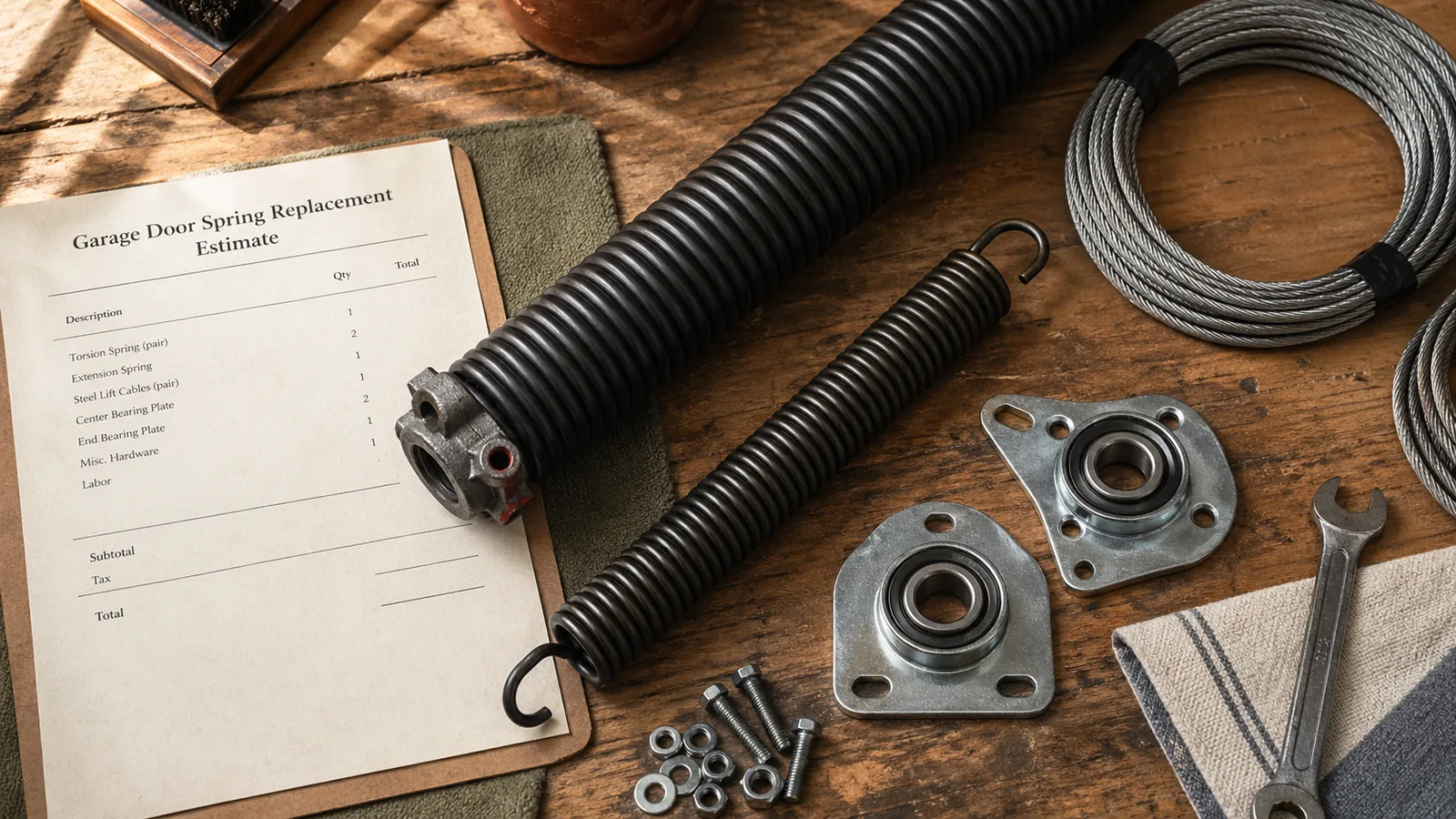
A lawn mower repair invoice typically has four to five separate charges, not one. Homeowners who only look at the headline repair price often get surprised at pickup. Here's what each line item actually costs:
Cost Breakdown: - Diagnostic fee: $35–$90. Many shops charge this just to assess the problem. Some waive it if you approve the repair — always ask upfront. - Labor: $55–$135 per hour, up to $170/hr at premium shops or for specialized equipment. - Transport/pickup: $30–$100 if the shop retrieves and returns your mower. Mobile techs who come to your driveway often build this into their labor rate instead. - Parts markup: Shops typically mark up parts 20–40% over their cost. An OEM belt that lists for $18 wholesale might appear on your invoice as $28. - Tune-up (if needed alongside the primary repair): $85–$350. A tune-up covers fresh oil, a new spark plug, air filter, and blade sharpening. If your mower hasn't been serviced in two or three seasons, many shops will flag this as a recommended add-on.
The practical implication: a lawn mower repair service quoting "$95 for a belt" may actually bill $185 once diagnosis, transport, and a long-overdue tune-up are included. Get a written, itemized estimate before authorizing any work. Ask specifically whether the diagnostic fee applies toward the repair total if you approve it — at most reputable small engine repair shops, it does.
Labor rates for lawn mower repair shops and mobile service calls
Shop labor for lawn mower and small engine repair runs $55–$135 per hour nationally, with some specialist technicians or premium dealers charging up to $170/hr. Mobile service calls — where a tech drives to your home — typically land in the $85–$135/hr range because of travel overhead, even though you save the pickup fee.
Regional Cost Note: Expect to pay toward the top of the labor range in the Northeast (Connecticut, Massachusetts, New York, New Jersey), where shop rates for small engine repair often exceed $120/hr. In the South and West — Texas, Georgia, Arizona, the Carolinas — the same job frequently runs $55–$90/hr. The Midwest sits in the middle. Parts prices are more nationally consistent because most shops order from the same distributors, so the regional gap narrows on parts-heavy jobs.
Independent dealers authorized by brands like Honda, Toro, or Husqvarna often charge more than independent small-engine shops, but they stock OEM parts and can handle warranty work. Big-box service centers (Home Depot, Lowe's) subcontract repairs and turnaround times can stretch to two or three weeks during peak season (April through June). Local independent shops are usually faster and often cheaper for out-of-warranty work.
Diagnostic fees and pickup charges that raise the final total
Two fees catch homeowners off guard most often: the diagnostic charge and the pickup-and-delivery charge.
Fee Callout: - Diagnostic fee: $35–$90 — charged to assess and identify the problem before any repair begins - Pickup and delivery: $30–$100 — charged when the shop retrieves your mower and returns it - Combined exposure: If both apply and you're in a higher-cost metro area, these two line items alone can add $100–$190 before a single wrench turns
The most important question to ask your lawn mower repair service before dropping off the mower: "Is the diagnostic fee credited toward the repair if I approve the work?" Most shops say yes — but not all. If you decline the repair after diagnosis, expect to pay the full diagnostic fee. Pickup charges are usually non-negotiable once the truck has run; ask about them before scheduling retrieval.
How much does belt replacement on a lawn mower cost?
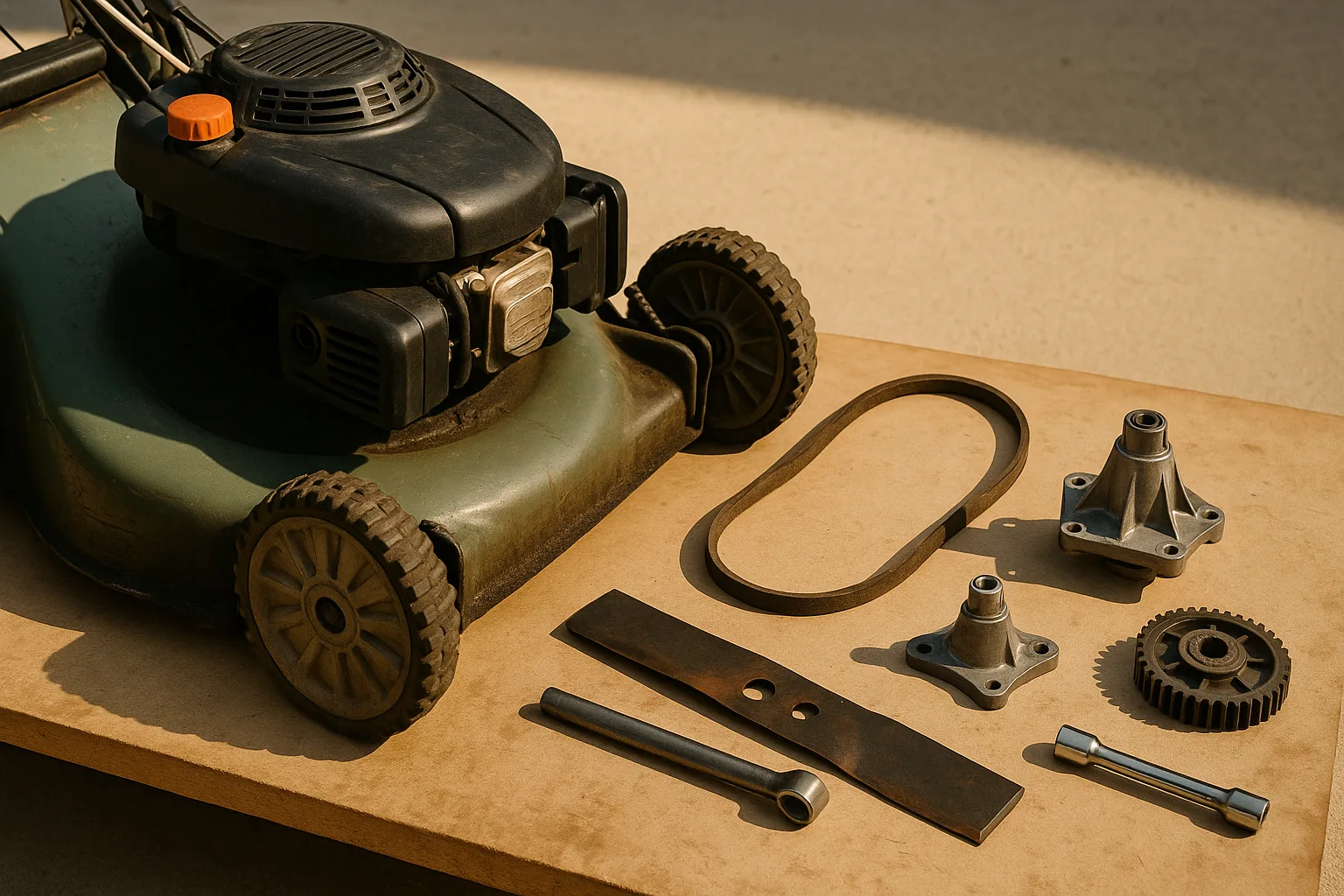
Belt replacement is one of the most common lawn mower repair service calls, and it's also one of the most affordable. Installed, a belt replacement typically runs $35–$150, parts and labor included, per LawnStarter's 2026 data. The part itself — a standard drive belt or deck belt — usually costs $10–$35 depending on brand and mower model.
Part + Labor Block — Belt Replacement: - Belt part cost: ~$10–$35 (OEM) or $8–$20 (aftermarket) - Labor to install: 30–60 minutes at shop rates - Total installed: $35–$150 - When it stacks: If pulleys are worn or misaligned, add $30–$75 for pulley service
The caveat is stacking. A worn belt rarely fails in isolation on a mower with 200+ hours on it. If the pulleys are grooved, the tensioner is loose, or the transmission shows signs of wear, the technician will flag those as additional repairs. That's when a $75 belt job becomes a $300 estimate. On an older mower already showing drivetrain fatigue, that stacking pattern is the signal to start thinking about replacement rather than chasing individual parts.
The good news: on a mower that's three to five years old and otherwise sound, a belt replacement is a straightforward repair that extends useful life meaningfully. For lawn mower parts affiliate buyers like belts, OEM parts from the mower manufacturer (Honda, Toro, Husqvarna, Cub Cadet) are worth the small premium because aftermarket belts sometimes differ in length or thickness enough to cause slippage under load.
Drive belt replacement on self-propelled mowers
A self-propelled mower that runs but won't move forward is almost always a drive-system problem — and the first thing a tech checks is the drive belt. The installed cost is the same $35–$150 range as other belt jobs, but self-propelled mowers add two complications that can push the bill toward the higher end: access difficulty and pulley alignment.
| Symptom | Most Likely Cause | Typical Repair Cost |
|---|---|---|
| Mower runs, won't move at all | Broken or jumped drive belt | $35–$100 installed |
| Mower moves but slips under load | Worn or stretched belt | $50–$120 installed |
| Drive speed is erratic or jerky | Belt + tensioner wear | $75–$150 installed |
| One wheel drives, other doesn't | Cable or pulley issue | $60–$130 |
On most Honda HRN, Toro Recycler, and Husqvarna HU700 models, accessing the drive belt requires removing the rear cover and working around the transmission pulley — a 45–75 minute job that requires the right pulley alignment on reassembly. A misaligned pulley after a DIY belt job causes the new belt to wear through in a season instead of three.
DIY vs Pro: Replacing a drive belt on a self-propelled mower is doable if you're comfortable with basic disassembly and have a pulley alignment reference (the service manual or a YouTube walkthrough specific to your model number). If you're not sure about pulley tension, pay the shop rate — a misaligned reinstall will cost you another belt within a year.
When a belt repair is cheaper than replacing the mower
For most belt failures, repair wins easily. At $35–$150 installed, a belt job costs a fraction of even the most affordable push mowers. The math changes when belt failure is a symptom of broader drivetrain wear.
The threshold rule: If your total repair estimate — including the belt, any pulley work, and any other items the tech flags — reaches 50% or more of the price of a comparable new mower, get replacement quotes before approving the repair. A self-propelled mower comparable to a Honda HRN216VKA (21-inch deck, GCV170 engine, steel deck, twin MicroCut blades) retails around $450–$550 new. If a belt-plus-pulley-plus-cable repair quote comes in at $250 on a seven-year-old machine, a new mower starts looking like a better investment.
For riding mowers, the math is more forgiving because the replacement cost is much higher. A $150 belt repair on a machine worth $2,500 is an obvious keeper. The threshold rule becomes critical only when transmission or engine work enters the picture.
How much does blade sharpening or blade replacement cost?
Blade work is the least expensive category in mower repair — and the most frequently neglected. Push mower blade sharpening can cost as little as $5 at a shop that does it as an add-on during a tune-up, per LawnStarter's pricing data. A full blade replacement runs $25–$35 per blade including installation.
Blade Cost Breakdown: - Blade sharpening (push mower): $5–$20 - Blade sharpening + balancing: $10–$25 - Blade replacement (per blade, installed): $25–$35 - Blade parts only (DIY): $12–$22 for standard 21-inch blades; OEM blades for Honda HRN216VKA twin MicroCut blades run $25–$40/pair retail
At $25–$35 per blade installed, blade replacement is almost always worth doing rather than limping through a season on a dull or damaged blade. A dull blade tears grass rather than cutting it cleanly, leaving ragged tips that turn brown, stress the lawn, and invite disease. Sharpening once a season — or every 25 hours of mowing — is the single cheapest lawn care maintenance step.
For lawn mower parts affiliate buyers doing this themselves: OEM blades (Honda 72531-VYO-000, Toro 59534P, Husqvarna 532 40 67-12 equivalents) run $15–$30 online and install in under 15 minutes with a socket wrench.
Signs a mower blade needs sharpening instead of replacing
Sharpening is the right call when the blade edge is just dull — no bends, no cracks, no impact dents. Replacing is the right call when the blade has any of the following:
- Visible bends or waves along the cutting edge (from hitting a rock, root, or hidden debris)
- Cracks or chips anywhere on the blade body — a cracked blade is a projectile hazard
- Impact dents deeper than 1/8 inch at the blade tip
- Significant thickness loss from repeated sharpenings — when a blade gets noticeably thinner than a new blade, balance becomes unreliable
- Bent sail (the curved-up rear edge on mulching blades) — a bent sail reduces lift and mulching effectiveness even if the cutting edge is intact
Watch Out: Before inspecting or removing any mower blade, disconnect the spark plug wire on gas mowers or remove the battery pack on electric mowers like a Ryobi 40V model. The blade can spin if the engine turns over accidentally during removal — this is a serious injury risk.
Imbalance is a specific culprit that causes vibration without obvious blade damage. A blade that's sharpened unevenly — more metal removed from one end — vibrates at operating speed, stressing the deck spindle bearings and the crankshaft. A blade balancer (a $5–$8 cone-type cone at any hardware store) confirms balance after sharpening before you reinstall.
How many blades should you replace on a riding mower deck?
Most riding mowers run two or three blades depending on deck width. A 42-inch deck typically uses two blades; a 54-inch deck typically uses three. When one blade is damaged badly enough to replace, inspect all blades on the deck — if one has hit something hard, the others were spinning at the same time and may have stress damage that isn't immediately visible.
Blade Count Callout: - Push mower (21–22 inch): 1 blade — $25–$35 to replace - Self-propelled mower (21–22 inch): 1 blade (most models); some wider-deck models run 2 — $25–$70 total - Riding mower 42-inch deck: 2 blades — $50–$70 total parts; $100–$140 installed - Riding mower 54-inch deck: 3 blades — $75–$105 total parts; $130–$195 installed
You don't need to replace all blades every time. Replace only what's actually damaged. But if the blades are more than three to four seasons old and you're already paying a shop to swap one, replacing the full deck set makes sense — the incremental parts cost is low and you avoid the same job again next season.
How much do wheel-drive and transmission repairs cost?
Drive System Cost Breakdown: - Wheel-drive cable adjustment: $35–$75 (labor only, usually) - Drive belt replacement (self-propelled): $35–$150 installed - Wheel-drive gear/axle repair: $80–$200 - Hydrostatic transmission flush: $140–$320 - Transmission replacement (riding/ZT mower): $625–$2,500
Drive-system repairs are where mower repair costs jump sharply. A hydrostatic transmission flush runs $140–$320. A transmission replacement runs $625–$2,500, making it the single most expensive common repair on a riding mower, per LawnStarter's 2026 guide. These are the numbers that flip the repair-or-replace decision.
The wide range in transmission replacement ($625–$2,500) reflects the difference between a basic gear-drive transmission on an entry-level riding mower and a hydrostatic transaxle on a zero-turn. Hydrostatic transmissions (which use hydraulic fluid pressure to vary speed rather than mechanical gears) are more expensive to rebuild or replace but deliver smoother operation. When a hydrostatic transmission fails — not just gets contaminated fluid — the replacement cost routinely exceeds $1,000 in parts alone before labor.
Why self-propelled mowers stop moving
A self-propelled mower that runs but won't propel itself is one of the most common service calls a small engine repair shop handles. The root cause falls into one of four categories, and the cost of repair varies significantly depending on which one:
- Broken or slipped drive belt — The belt snapped, stretched beyond tension, or jumped off a pulley. This is the cheapest fix: $35–$150 installed. Check this first.
- Drive cable stretched or snapped — The cable connecting the drive bail (the lever you squeeze) to the transmission has lost tension or broken. Cable replacement runs $45–$110 installed.
- Pulley or tensioner worn — If the belt looks intact but the mower still slips, the tensioner pulley may be worn smooth or the pivot arm bent. Add $30–$75 to the belt job.
- Transmission failure — The internal gears or friction wheel inside the transmission are worn beyond adjustment. This is the expensive path: $150–$300+ for wheel-drive transmission repair or replacement on a walk-behind mower.
[Image: Diagnostic flowchart — self-propelled mower no-drive symptom, belt to cable to pulley to transmission]
Always ask the shop to confirm which of these four is the actual cause before approving work. A misdiagnosis that sends you straight to transmission replacement when the belt was the issue is an expensive mistake.
When transmission replacement costs more than the mower is worth
Transmission replacement on a riding mower runs $625–$2,500. On a zero-turn, you're often at the high end of that range or beyond it. Before approving that repair, apply the half-cost rule.
Repair-or-Replace Rule: If a transmission replacement quote approaches 50% or more of the retail price of a comparable new mower, get replacement quotes first. A new entry-level riding mower (42-inch deck, 18–19 HP, Briggs & Stratton or Kohler engine) retails in the $1,400–$2,200 range. If a transmission replacement is quoted at $900 on a seven-year-old machine worth $800 used, the math clearly points to replacement.
For zero-turns, which retail from $2,500 (entry residential) to $8,000+ (commercial), larger transmission repairs can still be justified if the frame, engine, and deck are sound. A $1,500 hydrostatic transaxle replacement on a machine worth $4,000 in good condition is a defensible repair. A $2,000 transmission job on a $2,800 ZT mower is not.
How much do deck spindle, starter, and engine repairs cost?
Cost ranges in this section are from LawnStarter's 2026 repair cost data. Three repairs — deck spindle replacement, starter replacement, and engine rebuilds — represent the upper end of the national repair range and the point where replacement conversations become urgent. Here's what each one costs and what it means for the mower's future.
- Deck spindle replacement: $60–$125 per spindle on riding mowers
- Starter replacement: $95–$250
- Hydrostatic transmission flush: $140–$320
- Engine rebuild (riding mower): $860–$2,700
Any of these repairs appearing on the same invoice alongside transmission work means the total bill is likely approaching or exceeding $1,000 — the point where replacement quotes are mandatory, not optional.
Deck spindle replacement costs on riding mowers
A deck spindle is the shaft assembly that the cutting blade mounts to. When a blade hits a hard object at speed — a buried stump, a thick root, a metal stake — the spindle can bend, crack the housing, or destroy the spindle bearings. The symptoms are a blade that doesn't spin level, excessive vibration during cutting, or an uneven cut that no amount of deck leveling fixes.
Spindle replacement on a riding mower typically runs $60–$125 per spindle, parts and labor included. That's a reasonable repair on its own. The catch is that spindle failures often accompany blade damage — if you're already paying for blade replacement at $25–$35 per blade plus spindle work at $60–$125, a two-spindle deck on a 42-inch mower can run $150–$250 just for the deck service. That's still well within the range of keeping a sound machine running.
For lawn mower parts affiliate DIYers: spindle assemblies for common platforms (Husqvarna, Craftsman/AYP decks, Cub Cadet) are available for $35–$65 online. Installation requires removing the blade, unbolting the spindle housing, and pressing in new bearings or swapping the full assembly — a 30–60 minute job per spindle if you're comfortable with basic mechanical work.
Starter replacement, hydro flush, and engine rebuild pricing
| Repair | Typical Cost Range | When It Makes Sense |
|---|---|---|
| Starter replacement | $95–$250 | Almost always worth it; cheap vs. replacement |
| Hydrostatic flush | $140–$320 | Standard maintenance; extend trans life |
| Engine rebuild (riding) | $860–$2,700 | Only if machine is otherwise excellent |
Starter replacement at $95–$250 is one of the clearest repair-vs-replace decisions: it's cheap, the fix is reliable, and a starter failure doesn't indicate broader engine wear. On a mower that runs well once started, a failed electric starter is a bolt-on fix. Replace it without hesitation.
A hydrostatic fluid flush at $140–$320 is closer to maintenance than repair. Hydrostatic transmissions use hydraulic oil that degrades over time — contaminated fluid causes sluggish response, overheating, and eventually seal failure. If your shop recommends a flush as preventive service, it's a legitimate recommendation. If they're recommending it alongside a transmission complaint, confirm whether fluid contamination is the actual cause — a flush won't fix a mechanically failed transmission.
Engine rebuilds at $860–$2,700 are a category-by-category decision. On a basic entry-level riding mower worth $1,200 used, an $860 engine rebuild doesn't make sense. On a commercial zero-turn with a Kawasaki FX or Kohler Command Pro engine that retails for $12,000 new, a $2,700 rebuild is a reasonable investment. For residential machines, the threshold rule applies hard: if the engine rebuild quote approaches half the cost of a comparable new mower, buy the new mower.
Is it worth fixing a lawn mower or buying a new one?
The repair-or-replace decision depends on four variables: what type of mower it is, how old it is, what the repair actually costs, and what a comparable replacement costs today. There's no universal answer, but the framework is consistent.
| Mower Type | Replacement Cost Range | Repair Worth It If... |
|---|---|---|
| Push mower (gas) | $200–$500 | Repair < $150 and mower < 5 yrs old |
| Self-propelled (gas) | $350–$700 | Repair < $250 and mower < 7 yrs old |
| Riding mower | $1,400–$3,500 | Repair < 50% of replacement cost |
| Zero-turn mower | $2,500–$8,000+ | Repair < 50% of replacement cost |
| Mower Type | Example New Replacement | Example Repair Ceiling |
|---|---|---|
| Push mower (gas) | Honda, Toro, or Troy-Bilt 21-inch model at $200–$350 | Keep repairs under about $100–$150 |
| Self-propelled (gas) | Honda HRN-series, Toro Recycler, or Husqvarna 21-inch model at $350–$700 | Keep repairs under about $200–$250 |
| Riding mower | 42-inch residential rider at $1,400–$2,200 | Keep repairs under 50% of replacement cost |
| Zero-turn mower | Residential ZT at $2,500–$5,000+ | Keep repairs under 50% of replacement cost |
The 50% rule is the practical standard: if any single repair — or a combination of repairs on the same machine — approaches half the cost of replacing the mower with a comparable model, get a replacement quote before signing off. At that point you're not just paying for the current repair; you're betting that the rest of the machine won't produce more expensive surprises in the next 12 months.
Repair-or-replace thresholds for push mowers and self-propelled mowers
Push mowers and basic self-propelled mowers are inexpensive enough that the calculus tilts toward replacement faster than you might expect.
A basic 21-inch gas push mower retails for $200–$350. If a blade sharpening, belt swap, or carburetor cleaning keeps that mower running for $35–$100, the repair is clearly worth it. But if a seized engine, failed transmission, or corroded deck pushes the repair quote above $150 on a six-year-old $280 mower, a new mower is the smarter buy.
Self-propelled mowers cost more to replace ($350–$700 for quality models), so they have more repair headroom. A drive belt replacement, wheel-drive cable job, or starter fix at $50–$200 is worth doing on a machine that's otherwise sound. The threshold rule applies when drive system repairs and engine work start stacking: if a self-propelled mower needs a new transmission plus a carburetor rebuild plus fresh blades, total that estimate and compare it to what a new Honda HRN216VKA or comparable model costs today.
For mowers older than eight to ten years regardless of type, factor in that OEM parts availability narrows and shops often substitute aftermarket parts — which affects long-term reliability.
Repair-or-replace thresholds for riding mowers and zero-turn mowers
Riding mowers justify larger repairs because the replacement cost is so much higher. A $300 repair on a $2,500 machine is an obvious keeper. The decision gets harder when the invoice climbs toward $800–$1,200.
- Routine maintenance and minor repairs (belts, blades, spindles, starters, hydro flush): Repair. These are expected maintenance items on any machine used regularly.
- Transmission replacement ($625–$2,500): Apply the half-cost rule. If the transmission quote is $900 and a comparable replacement mower is $1,800, that's right at the threshold — factor in mower age and condition before deciding.
- Engine rebuild ($860–$2,700): Repair only if the machine is mechanically sound in all other respects and the engine rebuild cost is well under 50% of replacement. On commercial-grade zero-turns, this often makes sense. On residential-grade riding mowers over eight years old, it often doesn't.
For zero-turns specifically: brand-specific transaxle availability matters. Hydro-Gear ZT-3100 and ZT-3400 transaxles (common on residential zero-turns) run $500–$900 in parts alone. If your shop can source the specific unit and has experience with that platform, a transaxle rebuild is often more reliable than a transmission swap using a generic substitute.
Are electric lawn mower repairs more expensive?
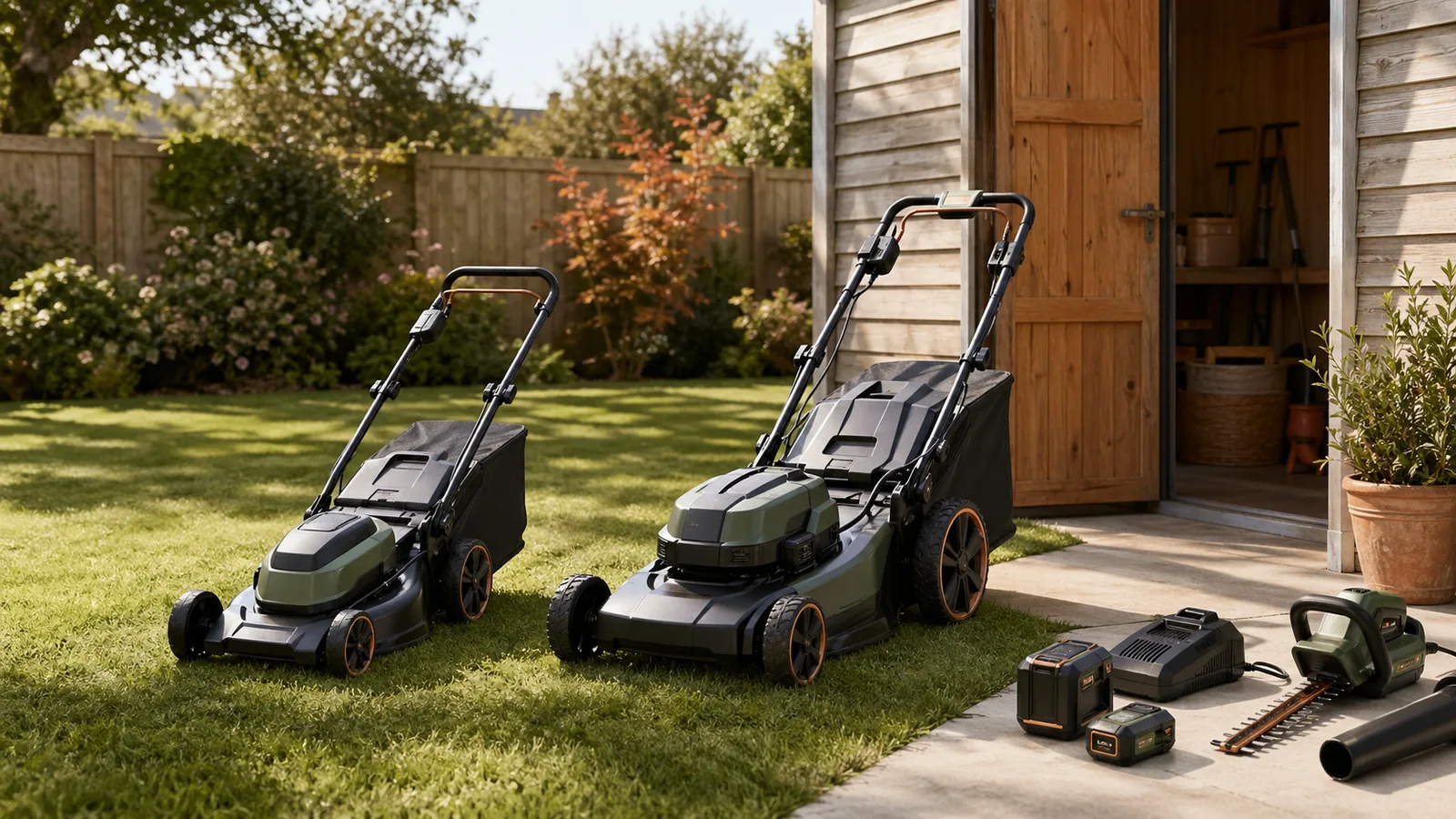
Electric mower repairs — covering battery-platform mowers like the Ryobi 40V lineup, EGO 56V, and Greenworks 80V — can cost more in practice for one specific reason: far fewer shops service electric motors and battery-management systems compared to gas small engines.
A blade replacement on a Ryobi 40V mower costs the same $25–$35 as on any push mower — the blade is just a blade. But if the brushless motor controller fails, the battery pack won't charge, or the PCB develops a fault, your options narrow quickly. Not all small engine repair shops service electric drivetrains. Ryobi directs warranty and out-of-warranty service to Authorized Service Centers, which are not as geographically dense as general small-engine shops. Ryobi's warranty requires an Authorized Service Center, proof of purchase, and the defective parts to be returned within the warranty period.
The practical advice: before buying a battery-platform mower, check that an authorized service center for that brand is within a reasonable distance of your home — not just for warranty work, but for out-of-warranty repairs in years four through seven. If you're in a rural area or a smaller metro, gas mower serviceability may remain a meaningful advantage.
What to ask a lawn mower repair service before you approve work
Getting a fair deal from a mower repair shop comes down to asking the right questions before you authorize anything. Here's the checklist:
- What is your labor rate per hour? Get the number before the work starts.
- Is the diagnostic fee credited toward the repair if I approve the work? At most shops, yes. Confirm it.
- Do you have the parts in stock or on order, and are OEM or aftermarket options available? Ask whether the needed belt, blade, spindle, or transaxle can be sourced quickly.
- What's your estimated turnaround time? During peak season, two to four weeks is common. If you need the mower for weekly maintenance, that timeline matters.
- Are used or refurbished parts available for major components? For expensive items like deck spindle assemblies or transaxles on older machines, used parts can cut the bill significantly. Ask about this specifically for any repair over $200.
Always confirm that the shop is a licensed or authorized service center for your mower brand if you have any warranty coverage remaining. Unauthorized repairs can void manufacturer warranties on newer machines.
When to request a written estimate and replacement options
For any repair over $150, request a written, itemized estimate before work begins. A legitimate lawn mower repair service will provide one without hesitation. The estimate should list labor hours, labor rate, each part by name and part number, and all service fees.
For transmission or engine work, ask the shop to also provide a replacement option alongside the repair quote. This isn't adversarial — any good tech understands the question. Tell them: "I'd like to see the repair quote and also what a comparable replacement would cost, so I can make an informed decision." Some shops partner with equipment dealers and can give you a ballpark on a replacement unit. Others will direct you to a retailer. Either way, having both numbers in hand is the only way to make an honest repair-or-replace call.
FAQ about lawn mower repair costs
How much does it cost to repair a lawn mower?
Most lawn mower repairs cost $75–$550 including parts, per LawnStarter's 2026 pricing guide. Simple jobs like blade sharpening or belt replacement fall well below that midpoint. Major work like transmission replacement ($625–$2,500) or engine rebuilds ($860–$2,700) exceeds it. Labor runs $55–$135/hr nationally, with Northeast shops often at the higher end and Southern and Western shops typically at the lower end.
How much does it cost to replace a lawn mower belt?
Belt replacement on a lawn mower typically runs $35–$150 installed, including parts. The belt itself costs $10–$35 (OEM). Labor is 30–60 minutes at shop rates. If pulleys or tensioners also need attention, budget up to $150 at the top of the range.
How much does it cost to sharpen or replace a mower blade?
Push mower blade sharpening can cost as little as $5 at a shop that does it as an add-on during a tune-up, per LawnStarter's pricing data. Blade replacement runs $25–$35 per blade installed. For DIY buyers, OEM blades can cost $15–$30 online, and lawn mower parts affiliate sourcing is worth it when you want the exact length and thickness for your deck.
Why is my self-propelled mower not moving?
The four most likely causes in order of frequency and cost: (1) broken or slipped drive belt — $35–$150 to fix; (2) stretched or broken drive cable — $45–$110; (3) worn tensioner pulley — $30–$75 added to a belt job; (4) internal transmission failure — $150–$300+ on a walk-behind. Start with the cheapest diagnosis first. A shop can usually identify the cause during a $35–$90 diagnostic.
Are electric lawn mower repairs more expensive?
Not for blade work, which costs the same regardless of power source. For drivetrain and electrical faults, electric mower repairs can be more expensive or harder to complete because fewer small engine repair shops service brushless motors and battery-management systems. Ryobi requires Authorized Service Centers for warranty work, and Ryobi's service-center locator is less widely distributed than general small-engine shops. Check service center availability in your area before assuming an electric mower fault is a quick fix.
Sources & References
- LawnStarter Lawn Mower Repair Cost Guide (2026) — Primary source for all national price ranges used in this article: labor rates, diagnostic fees, belt/blade/spindle/transmission/starter/engine rebuild costs
- Honda HRN216VKA Product Page — Specifications for Honda HRN216VKA: GCV170 engine, 21-inch cutting width, 16-gauge steel deck, twin MicroCut blades
- Ryobi Service and Repair — Ryobi authorized service center information and warranty service requirements
- Ryobi Authorized Service Centers — Locator for Ryobi warranty service; confirms that warranty work requires an Authorized Service Center, proof of purchase, and defective parts
Keywords: LawnStarter 2026 pricing guide, small engine repair, self-propelled mower drive system, hydrostatic transmission, deck spindle, starter motor, push mower blade sharpening, blade replacement, drive belt replacement, diagnostic fee, pickup and delivery fee, labor rate per hour, electric mower repair, Honda HRN216VKA, Ryobi 40V mower