Fixing one small area of pet damage almost never stays one small fix. A scratched floor leads to stain matching, a chewed baseboard leads to paint touch-ups on the adjacent wall, and a drywall hole from an anxious dog can require texture work that costs as much as the patch itself. The real number — the all-in total for a house with all three problems — is what most cost guides skip. This one doesn't.
How much does pet damage repair cost overall?
A house with scratched hardwood floors, a handful of drywall holes, and chewed baseboards in a couple of rooms will typically cost between $300 and $2,500 to repair, depending on whether each fix stays cosmetic or expands into matching, refinishing, or replacement work.
Cost Snapshot: - Low end (~$300–$600): Small cosmetic repairs — a few light floor scratches handled with filler and a touch-up kit, one or two small drywall patches, and minor baseboard fill-and-paint. Much of this is DIY-able. - Mid range (~$600–$1,500): One room of floor refinishing or several board replacements, multiple drywall patches with texture matching, and baseboard replacement in one or two runs. Handyman or specialist labor required. - High end (~$1,500–$2,500+): Multi-room hardwood refinishing, larger drywall cut-outs with skim coat and repaint, and full baseboard replacement across multiple rooms including removal, paint, and disposal.
The DIY-vs-pro dividing line runs here: surface cosmetic fixes (small chew marks, light scratches, nail-hole-sized drywall dings) are reasonable weekend projects. Warped boards, widespread floor scratching, structural drywall damage, or any repair that requires floor repair professionals to match finishes across a room all need a licensed trade or experienced handyman service. Drywall repair with texture matching is the easiest to underestimate — it looks simple until you're trying to replicate orange peel on a ten-year-old wall.
Pet damage repair cost by type: hardwood, drywall, and baseboards
No two pet damage jobs cost the same because the pricing drivers are completely different across surfaces. Hardwood costs hinge on whether you can spot-sand or whether you need to match stain across a room. Drywall costs hinge on hole size and texture complexity. Baseboard costs hinge on whether you can fill the damage or whether the profile is so chewed up that replacement is the only clean option.
| Damage Type | Low | Mid | High | Key Cost Driver |
|---|---|---|---|---|
| Scratched hardwood | $75–$200 | $300–$800 | $1,000–$2,500+ | Spot sand vs. board replace vs. full refinish |
| Drywall hole(s) | $100–$200 | $300–$500 | $600–$1,000+ | Hole size, count, texture matching |
| Chewed baseboard | $50–$150 | $200–$500 | $600–$1,500+ | Fill/paint vs. full run replacement |
Fixr reports the average cost to repair drywall — multiple holes and cracks in a single room using patches and compound — runs about $350. That's a useful mid-range anchor, and it is specifically the average for multiple holes and cracks in one room, but it assumes a clean patch with no texture matching and no adjacent repainting. HomeAdvisor's 2025 drywall repair data puts the full range from around $100 to over $1,000 depending on scope. As HomeAdvisor says, "This cost guide will help you understand how drywall repair costs vary with repair types, the extent of damage, labor rates, and other variables." The spread is that wide because "drywall repair" covers everything from a toothpaste-and-spackle fix to a multi-panel cut-out with skim coat and prime.
Scratched hardwood floor repair cost: spot sanding, board replacement, or refinishing
Light scratches that haven't broken through the finish layer are the cheapest fix. A contractor or handyman can spot-sand and recoat a small area for $75–$200 in labor plus roughly $20–$60 in materials (sandpaper, stain, polyurethane). The catch is blending — even a perfect repair can look like a patch if the sheen or color doesn't match the surrounding floor.
Board replacement costs more because it involves carefully removing damaged boards without disturbing adjacent ones, sourcing matching lumber, and finishing to blend. Expect $200–$500 per board when labor, materials, stain, and finish are all included. Multiple boards push quickly into the $800+ range.
Full-room refinishing — sanding the entire floor flat, restaining, and applying new finish coats — is the nuclear option, but it's sometimes the only way to get a uniform result. According to Angi's hardwood floor repair cost guide, refinishing costs vary significantly by room size, wood species, and condition of the existing finish. As Family Handyman notes, "one of the trickiest parts of a wood restoration project is finding stain to match," and that is why some paint stores and home centers offer inexpensive sample packets of stain for testing before you commit.
Line-item cost breakdown for a mid-range hardwood repair:
- Labor (spot sanding + recoat, one room): $150–$400
- Replacement boards (if needed, per board): $5–$25 in materials; varies by species
- Stain: $15–$40 per quart
- Polyurethane finish: $20–$50 per quart
- Orbital sander rental (if DIY): $40–$60/day
- Color-matching fee (if pro tests multiple stain samples): $25–$75 added to labor
- Tinted polyurethane (for concealing pet stains under finish coat): adds $15–$30 in materials
Family Handyman recommends testing stain colors and urethane on scrap floorboard pieces before committing to a repair — and notes that even the same stain can look noticeably different on a new board versus an aged floor. Budget for at least two or three sample tests. Many paint stores and home centers sell inexpensive stain sample packets specifically for this reason, which keeps the color-matching trial cost modest.
Watch Out: If your floor has pet urine that has soaked through the finish, a surface recoat will not eliminate the stain or odor. That's a different repair scope — covered below.
Drywall hole repair cost: small patch, larger cut-out, and texture matching
A small hole — think a door-handle dent or a spot where a dog wore through the drywall paper — costs $100–$200 for a professional patch using mesh tape and joint compound. That price assumes the hole is under about 4 inches in diameter, the wall is accessible, and no texture matching is required.
Once you cross into larger holes (6 inches or more), a proper California patch or cut-out-and-backer repair is the right approach. This adds time, a second coat of compound, and more sanding. Cost rises to $250–$500 for a single larger patch. Multiple holes in one room — a realistic scenario if a dog spent time in a laundry room or mudroom — push toward the Fixr average of about $350 for repairing multiple holes and cracks in a single room using patches and compound.
Texture matching is where costs quietly climb. If your walls have orange peel, knockdown, or skip-trowel texture, a plain smooth patch will be visible from across the room. Replicating those textures requires either a spray texture can (DIY option, results vary) or a pro who can match the pattern and blend it. HomeAdvisor maintains a separate drywall texturing cost guide because this adds meaningful scope beyond a basic patch.
As HomeAdvisor notes, "This cost guide will help you understand how drywall repair costs vary with repair types, the extent of damage, labor rates, and other variables." That is the polite way of saying that a handyman service quote and a drywall contractor quote for the same hole can differ by $200 or more depending on their overhead and how they price texture work.
Labor vs. materials split for drywall repair:
- Materials (mesh patch, compound, primer, paint): $20–$60 for a small hole DIY; $40–$100 for a larger cut-out patch
- Labor (handyman, small hole): $80–$150
- Labor (contractor, larger cut-out + texture match): $200–$500+
- Texture-matching add-on: $50–$150 depending on wall area that needs blending
Chewed baseboard repair cost: fill and paint versus replace the trim
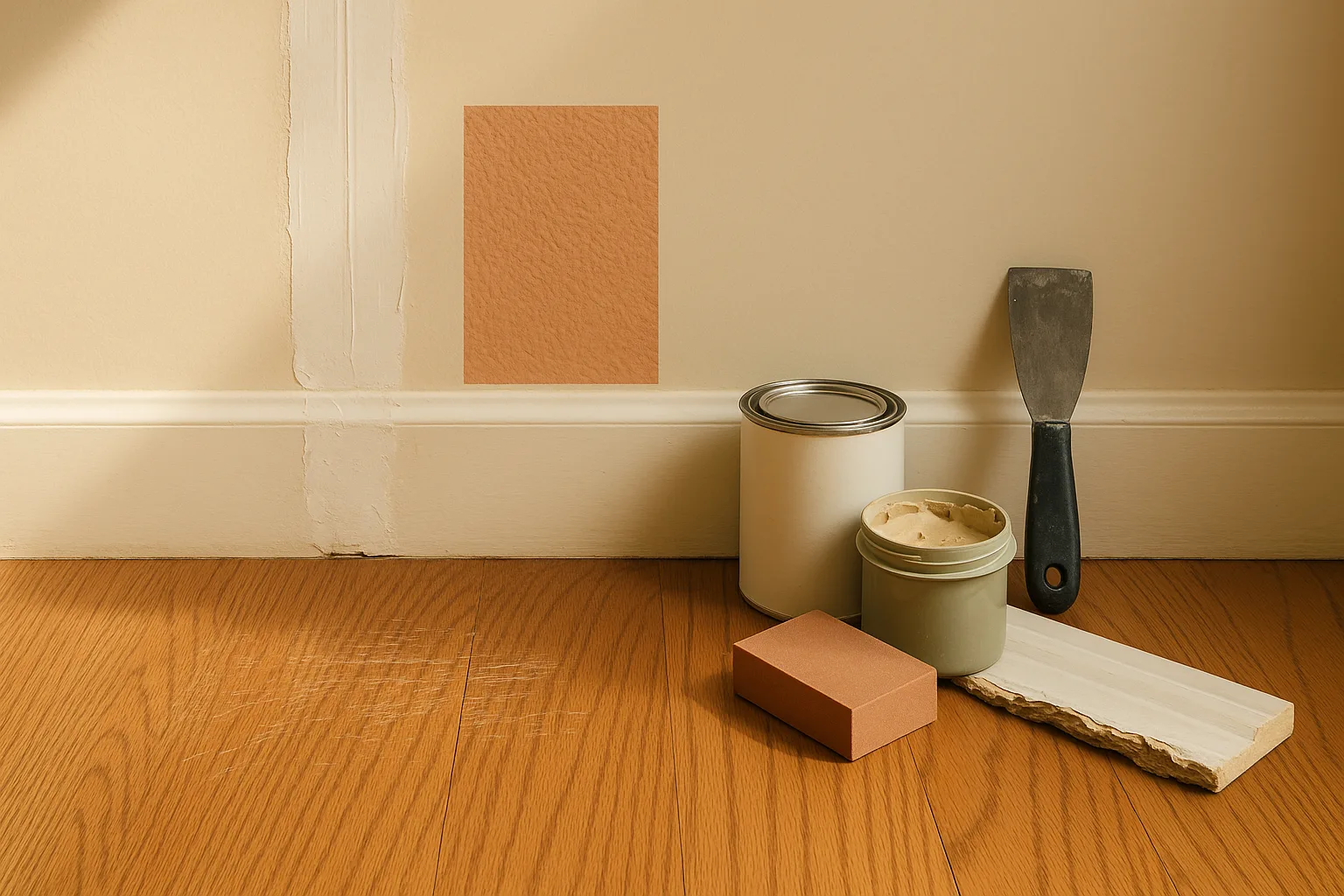
Minor chew damage — surface gouges, small bite marks, gnawed corners — can often be filled with wood filler or two-part epoxy filler and sanded smooth before repainting. This is the lowest-cost path: $50–$150 in materials and a few hours of your time, or $100–$250 if a handyman handles it.
When the damage is deep, structural, or cosmetically too far gone to fill cleanly, you're replacing trim. HomeAdvisor's baseboard installation guide puts replacement cost at $5.70 to $9.00 per linear foot including materials and labor. A standard room might have 40–60 linear feet of baseboard, putting full-room replacement at $230–$540 at that rate.
Angi's 2026 baseboard installation data shows a wider professional range of $800 to $2,250 for larger projects — the spread driven by trim profile complexity, wood species, and whether you need a trim carpenter versus a general handyman. Simple colonial-style MDF baseboard installs at the low end; ornate solid-wood profiles with matching shoe molding install at the high end.
Per Angi's budgeting guidance, your baseboard budget should also include removal, painting or staining services, wall repairs behind the removed trim, and debris disposal. Those line items alone can add $150–$400 to what looks like a simple replacement job.
Pro Tip: If only one section of baseboard is chewed, replace just that run rather than the whole room — but only if you can still source the same profile. Home Depot and Lowe's stock several dozen common profiles. If yours is a custom or older style, matching it is harder and may push you toward replacing the full room for a consistent look.
What makes pet repair costs climb fast?
Individual pet damage repairs look manageable on paper. The problem is that each one has a built-in cost multiplier that activates the moment your repair needs to match something existing.
Cost-factor checklist:
- Urine staining beneath the floor finish — surface scratches are cosmetic; urine that has soaked through the finish into the wood grain requires a different repair strategy (see below) and costs significantly more
- Matching older wood species or stain — as Family Handyman puts it, "one of the trickiest parts of a wood restoration project is finding stain to match," particularly on floors that have aged and shifted in color over years
- Damaged corners and edges on drywall — outside corners are reinforced with metal or plastic bead; when a dog chews through a corner, the bead may need replacing before patching, adding materials and time
- Repainting adjacent walls or trim runs — a fresh drywall patch with new paint rarely matches the surrounding wall exactly; touching up the whole wall, or at minimum feathering paint to a corner break, adds a half-day of painter time
- Multiple trades required — a combined job with hardwood floor repair, drywall repair, and baseboard replacement may require a floor specialist, a drywall contractor, and a trim carpenter; coordinating three separate pros means three minimums and three scheduling gaps
- Texture matching on walls — orange peel and knockdown textures can be difficult for a generalist to match; a mismatched texture patch stands out more than the original hole
Pet urine, hidden moisture, and odor under hardwood finish
Surface scratches from nails are a refinishing problem. Urine stains that have soaked through the finish are a chemistry and penetration problem — and the repair cost reflects that difference.
When refinishing pet-stained hardwood, a standard clear polyurethane topcoat will not conceal dark urine stains in the wood grain. Family Handyman documents a technique of applying tinted polyurethane under the finish coat specifically to mask pet stains that won't sand out. This adds a material cost and requires precise color calibration so the tinted layer blends with the surrounding floor finish. It's a legitimate and effective approach — but it is not the same repair as fixing a scratch, and it should not be quoted or priced the same way.
Matching older wood, stain, paint, and sheen
Color matching is the single most consistent source of budget surprises in pet damage repair. It affects floors, trim, and walls simultaneously.
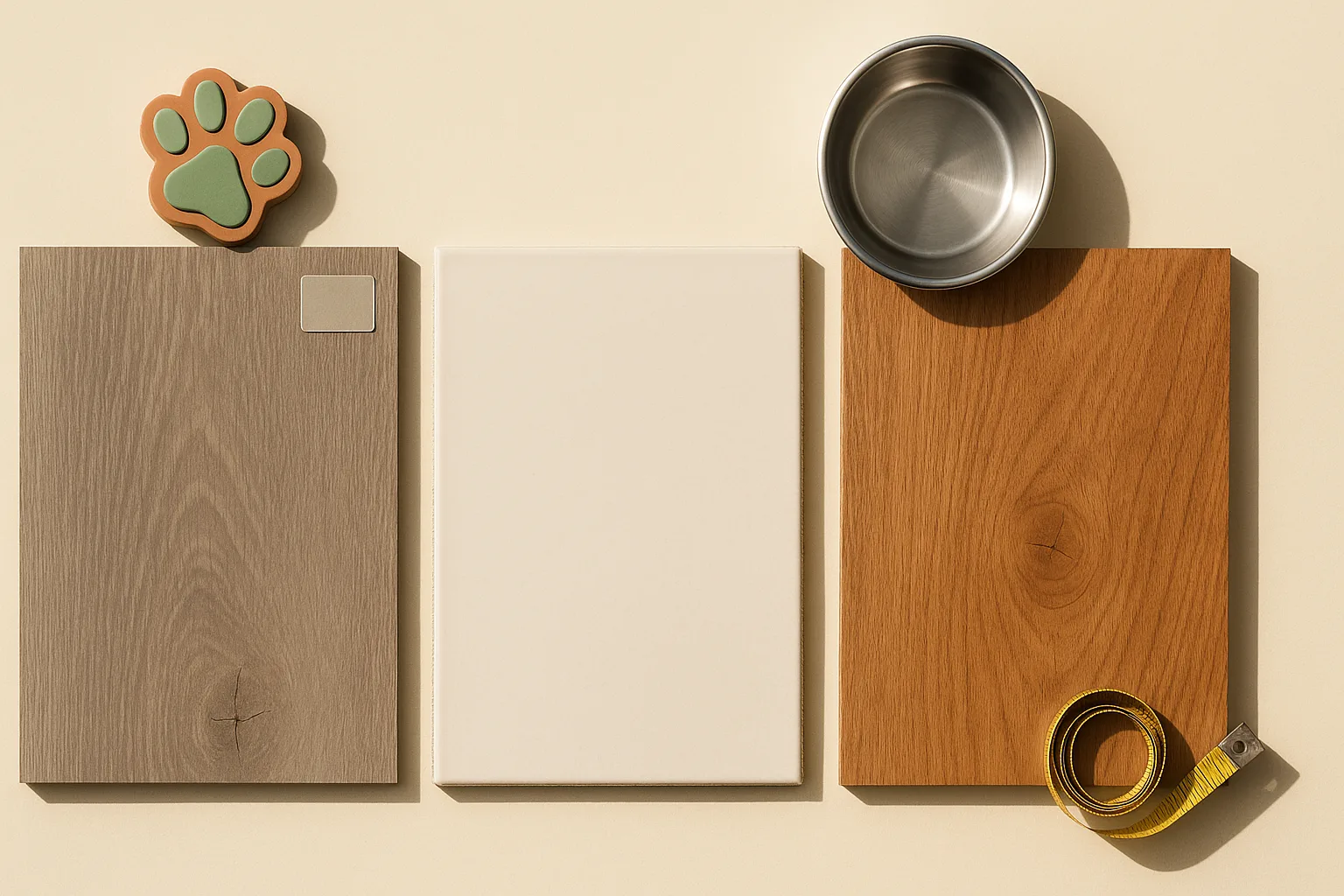
For hardwood floors, Family Handyman recommends testing multiple stain colors and urethane options on actual scrap floorboard pieces before starting the repair — because even the same stain product from the same manufacturer can produce a noticeably different result on a new board versus an aged floor that has been walked on, UV-exposed, and cleaned for years. Some paint stores and home centers offer inexpensive stain sample packets that make this testing cheap to do before you commit to the quart.
For trim and baseboards, paint sheen matters as much as color. Baseboards are typically painted in semi-gloss or satin. If the existing paint has faded or if a different sheen was used during a previous touch-up, fresh paint will look different — even if the color formula is correct. The fix is usually to repaint the entire run of trim to one natural break point (an inside corner, a doorframe).
For walls adjacent to drywall patches, the same logic applies. Fresh paint rarely matches aged paint exactly, and patched areas can show a slightly different texture even after paint. Painting wall-to-wall between corners is usually the cleaner result and typically only adds $50–$100 in paint and an extra hour of labor.
A handyman service that does a lot of residential repair work will often have relationships with local paint stores that can do spectrophotometer color matching from a chip or swatch — worth asking about before assuming you need to repaint an entire room.
Texture, corners, and adjacent-surface repainting on drywall and trim
Drywall damage near corners, inside or outside, costs more than damage on a flat open wall. Outside corners have metal or vinyl corner bead that must be removed, replaced, and re-mudded if a dog has chewed through it. Inside corners require a clean feathered edge on the patch — harder to achieve than a flat surface repair.
As HomeAdvisor explains, "This cost guide will help you understand how drywall repair costs vary with repair types, the extent of damage, labor rates, and other variables." The contractor guidance from HomeAdvisor adds that hole count, accessibility, and how neatly the opening is cut all affect price. A jagged hole with torn paper and a chewed corner bead costs more to fix cleanly than a hole cut with a utility knife by a plumber.
Repair-scope checklist — flag these items before getting quotes:
- [ ] Is the damage on a flat wall surface, or at a corner?
- [ ] Does the wall have texture (orange peel, knockdown, skip trowel)?
- [ ] Is the damaged area near the ceiling line (harder access, more risk of drips)?
- [ ] Will the patch require priming and painting a full wall face, or just the repair area?
- [ ] Does adjacent trim need to be repainted to match fresh wall paint?
- [ ] Is there baseboard immediately below the drywall damage (removal may be needed to patch properly)?
Each "yes" on that list is a potential scope add-on. A drywall repair professional or handyman service can tell you upfront which of these apply — but you'll get a more accurate quote if you can answer these questions before they arrive.
When is repair cheaper than replacement?
Repair wins when the damage is localized, the finish can be matched, and the surrounding materials are in good shape. Replacement wins when the damage is widespread, matching is impractical, or the cumulative repair cost approaches the cost of starting fresh.
| Scenario | Recommended Approach | Reason |
|---|---|---|
| 1–3 light scratches, intact finish | Spot sand + recoat | Cheap, fast, low match risk |
| 4–10 scratches, finish worn | Board replacement + color match | Fewer than a full floor |
| Scratches across entire room | Full-room refinishing | Matching impossible, even finish result |
| 1–2 small drywall holes, flat wall | Self-adhesive patch + paint | DIY-viable |
| Multiple holes or one large hole | Professional cut-out patch | Compound layers, texture needed |
| Structural drywall damage | Cut-out + replacement panel | Patch won't hold long-term |
| Minor baseboard chew, fillable | Wood filler + repaint | Fast and inexpensive |
| Deep chew, missing profile sections | Full run replacement | Filler won't hold shape |
| Mismatched old trim profile | Full room replacement | Partial match visible at corners |
For drywall, the threshold is grounded in the pricing spread: Fixr's about $350 average for multiple holes and cracks in a single room sits alongside HomeAdvisor's scope range of around $100 to over $1,000. That range is why a repair that starts as a patch can quickly become a cut-out and repaint once texture, access, or hole count changes.
Hardwood: spot repair versus full-room refinishing
Spot repairs make sense when scratches are isolated, the existing finish is in reasonable overall condition, and the stain color can be matched within a reasonable tolerance. A floor repair professional can usually tell you within the first five minutes of inspection whether the floor can be blended.
The threshold for full-room refinishing is when:
- Scratches cover more than roughly 20–30% of the floor surface — at that point, a spot repair will leave you with a patchwork of new and old finish zones
- The existing finish is thin from years of wear and cleaning — adding a fresh topcoat to a degraded base will peel sooner
- Stain matching fails on scrap samples — if you and the contractor test three or four stain formulas and none get within visual range of the existing color, a full-room sand-and-restain is the only clean solution
Family Handyman's guidance on board replacement makes this clear: stain testing on actual scrap pieces is the qualifying test. If you can't match it on a scrap, you can't match it on the floor. When that happens, the method often shifts from spot repair to a broader refinishing or concealment approach, including Family Handyman's tinted polyurethane technique for pet stains under the finish coat.
Drywall: patch versus cut-out and replacement
Small patches — holes up to about 4 inches in diameter, limited to one or two spots — are worth repairing. A self-adhesive mesh patch backed with joint compound holds well and costs under $20 in materials. A handyman service can make this fix in under an hour.
Larger holes or many holes in one area argue for a cut-out-and-backer repair, where you cut the damaged section to a clean rectangle, install wood or metal backing, and tape and mud a new drywall piece into the opening. This is a better long-term fix than trying to bridge a large hole with compound alone. HomeAdvisor's contractor guidance notes these jobs range from around $100 to over $1,000 depending on scope, with the high end reflecting multi-panel replacements with texture and repaint. Hole size, number of openings, accessibility, and how neatly the opening is cut all move the quote.
DIY vs Pro: A single hole under 4 inches on a flat wall with no texture? DIY-viable with a $10 patch kit and a $6 can of joint compound. A hole over 6 inches, near a corner, or on a textured wall? Call a drywall repair professional or a handyman with drywall experience. HomeAdvisor says this cost guide will help you understand how drywall repair costs vary with repair types, the extent of damage, labor rates, and other variables, which is exactly why texture matching by a non-pro almost always looks off and a redo costs more than getting it right the first time.
Trim: repair the chewed edge or replace the whole run
Wood filler and two-part epoxy filler can handle a surprising amount of damage — deep gouges, missing chunks up to roughly a square inch — when the surrounding wood is structurally intact and the filler is properly shaped and sanded before painting. This approach works well for rounded profiles like ranch or colonial baseboard where the filler can be shaped to match.
The replacement threshold arrives when:
- Damage covers more than 12–18 inches of a single board, especially at a corner where the profile is visible from two angles
- The existing baseboard is a profile no longer stocked at retail, requiring special-order matching or routing
- A dog has returned to chew the same spot repeatedly and the cumulative damage is beyond fill depth
- The baseboard is original wood trim with a stain finish (not paint) — stained filler patches are nearly impossible to blend
At that point, HomeAdvisor's $5.70–$9.00 per linear foot for full replacement is the right frame. Per Angi's 2026 baseboard data, budget separately for removal of the old trim, wall touch-up behind the removed baseboard, repainting, and debris disposal — costs that don't show up in the per-linear-foot material number.
DIY versus hire a pro for pet damage repairs
Most homeowners can handle the cosmetic tier of pet damage repairs. The line between DIY and professional work is defined by two things: finish matching and structural integrity.
DIY vs Pro:
Safe to DIY: - Light surface scratches on hardwood (touch-up markers, scratch-fill products, small recoat areas) - Nail-hole to 2-inch drywall dings (spackle or pre-mixed compound, light sand, paint) - Minor baseboard chew marks with intact surrounding wood (wood filler, sand, prime, semi-gloss paint) - Fresh paint touch-ups on walls where you still have the original paint can
Call a professional for: - Hardwood scratches across more than one-third of a room's floor area - Any hardwood damage involving urine staining, warping, or odor that survives cleaning - Drywall holes larger than 6 inches or near corners, especially with texture walls - Structural drywall damage or holes that have been re-chewed after prior repairs - Baseboard profiles that need matching, trim carpentry at corners, or stained-wood finish matching - Any multi-surface job requiring floor repair, drywall repair, and baseboard work simultaneously — coordinate, or hire a handyman service that can manage all three
The cost argument for going pro is straightforward: HomeAdvisor's drywall repair data shows repair costs rising sharply when accessibility, texture, and scope increase, and HomeAdvisor's contractor guidance puts many jobs from around $100 to over $1,000 depending on scope. HomeAdvisor says this cost guide will help you understand how drywall repair costs vary with repair types, the extent of damage, labor rates, and other variables. A mishandled DIY patch that requires a pro to redo will cost more than the original pro job would have. Finish-matching errors on hardwood floors are particularly expensive to correct because sanding out a bad recoat means refinishing more surface area than the original scratch required.
DIY supplies budget: paint, caulk, putty, sanding supplies, and stain match products
Before you start a DIY pet damage repair, budget for supplies across all three surfaces. Underestimating materials is the most common reason a small job stretches into a second weekend.
DIY supplies checklist and estimated costs:
- Wood filler (minwax or similar): $6–$12 per tube
- Two-part epoxy filler (for deep baseboard damage): $15–$25
- Caulk (paintable, for trim gaps): $4–$8 per tube
- Spackle or pre-mixed joint compound (small tub): $8–$14
- Drywall mesh patch kit (4-inch or 6-inch): $8–$15
- Orbital sander or sanding block + 120/150/220 grit paper: $35–$60 (sander) or $5–$10 (paper only)
- Stain samples (2–4 sample packets): $3–$8 each — Family Handyman notes that paint stores and home centers often carry inexpensive sample packets specifically for matching
- Polyurethane finish (small quart): $20–$50
- Tinted polyurethane (if concealing pet stains under finish): $25–$55
- Primer (small quart): $12–$20
- Paint (matched quart from paint store): $20–$40; spectrophotometer color-matching fee at most stores is free or $5
- Painter's tape and drop cloth: $8–$15
Total DIY supplies budget: roughly $150–$350 for a full three-surface repair kit. The floor repair stain-testing step adds meaningful time but minimal cost — it's the step most DIYers skip, and it's the reason most DIY wood repairs look like a repair rather than a floor.
Pro Tip: Buy stain samples before buying a full quart. Test on actual scrap boards from the same wood species, let them dry completely under similar lighting conditions, and compare before committing to the quart.
How to vet a handyman, floor repair pro, or drywall contractor
Not every pet damage job requires the same trade. Hiring the wrong one costs you a round trip: the wrong pro quotes out of scope, you pay a trip fee, and you start over.
Contractor vetting checklist by scope:
Handyman service — right for: - [ ] Minor to mid-range drywall patches (under 12 inches, no specialty texture) - [ ] Baseboard fill-and-paint or simple baseboard replacement (standard profiles) - [ ] Small cosmetic hardwood touch-ups that don't require stain matching across the room - [ ] Multi-surface small repairs — they can often handle all three in a single visit - Ask: Do you do drywall texture matching? Can you show photos of prior baseboard finish work?
Floor repair specialist — right for: - [ ] Hardwood scratch repair involving stain and finish matching - [ ] Board replacement on strip or plank hardwood - [ ] Full-room refinishing or pet-stain remediation under the finish layer - Ask: What species and finish types have you matched before? Do you work with tinted polyurethane for stain concealment?
Drywall repair contractor — right for: - [ ] Holes over 6 inches in diameter - [ ] Textured walls requiring orange peel, knockdown, or skim coat matching - [ ] Structural damage, multiple-panel replacement, or water-adjacent damage - Ask: Can you match my existing wall texture? Will you prime and paint the repair or do I need a painter after you?
Universal vetting steps: - Verify they carry general liability insurance (ask for the certificate, not just a verbal confirmation) - Get at least two quotes for any job over $300 - Ask specifically whether their quote includes paint, primer, and finish materials — or materials only - Request references or portfolio photos of comparable finish-matching work
Pet-proofing upgrades that reduce future repair bills
The most cost-effective repair is the one you don't have to make. Use a simple prevention checklist so each surface gets the right protection before the next chew, scratch, or accident turns into a repair bill.
- Durable floor protection: use area rugs in high-traffic hardwood zones, and add felt pads under furniture legs so scratches do not start in the first place
- Trim protection: install clear corner guards on drywall corners, and consider a chew-resistant cap or strip on baseboards in the rooms your pet targets most
- Stain and odor cleanup habits: clean accidents promptly with an enzymatic cleaner so urine does not have time to soak into the finish or trim joints
- Finish protection on future projects: when floors are refinished, choose a tougher topcoat and ask the installer what maintenance schedule they recommend for pets and wet-mop cleaning
- Habit checks: inspect rugs, pads, and trim after a move, a new pet, or a renovation so small damage gets caught before it spreads
FAQ: pet damage repair costs
How much does it cost to repair scratched hardwood floors?
Costs range from under $100 for light spot-touch-up work to $2,500 or more for full-room refinishing, depending on the severity and spread of the scratches. Light scratches that haven't broken through the finish layer can often be addressed with touch-up kits or a professional spot recoat. Per Angi's hardwood floor repair cost guide, the repair approach — spot sanding, board replacement, or full refinishing — is the largest cost driver. Board-by-board replacement with stain matching typically runs $200–$500 per board including labor and materials.
How much does it cost to patch a hole in drywall?
A small hole (under 4 inches) patched by a handyman costs $100–$200. A larger cut-out repair on a flat wall runs $250–$500. Multiple holes in one room average around $350, per Fixr's drywall repair data. Add $50–$150 if texture matching is required. HomeAdvisor's 2025 drywall repair guide puts the full scope range from approximately $100 to over $1,000 when larger cut-outs, accessibility challenges, and texture work are included.
How much does it cost to replace baseboards?
Professional baseboard replacement costs $5.70 to $9.00 per linear foot including materials and labor, per HomeAdvisor's baseboard installation guide. Angi's 2026 data shows larger projects ranging from $800 to $2,250 total when style complexity, removal, painting, and debris disposal are factored in. A simple fill-and-paint cosmetic repair for minor chew damage costs $50–$250 and avoids replacement entirely.
Can you fix dog scratches in hardwood floors?
Yes, in most cases — but the result depends on whether the scratches have broken through the finish layer into the wood grain. Surface-level scratches in the finish coat can be sanded and recoated. Deeper scratches in the wood itself require stain, and as Family Handyman notes, "one of the trickiest parts of a wood restoration project is finding stain to match." Expect the repair to be visible to some degree unless full-room refinishing brings everything to the same baseline. Widespread scratching across a full room is usually better addressed with a full refinish than with individual spot repairs.
Is it cheaper to repair or replace damaged trim and flooring?
Repair wins for localized damage when finish matching is achievable. Replacement wins when damage is widespread, the trim profile is discontinued, stain matching fails, or the cumulative patch-and-repaint cost approaches the per-linear-foot replacement cost. For baseboards, once damage extends more than 18 inches or covers a corner, replacement of the full run is usually more cost-effective and visually cleaner. For hardwood, full-room refinishing becomes cheaper than patchwork repairs once scratches cover roughly a third or more of the floor surface.
Sources & References
- Angi: Hardwood Floor Repair Cost [2024 Data] — Primary source for hardwood repair cost ranges and spot vs. refinishing decision framework
- HomeAdvisor: Drywall Repair Cost Guide [2025 Data] — Primary source for drywall patch and cut-out repair pricing
- HomeAdvisor: Baseboard Installation Cost — Per-linear-foot cost data for baseboard replacement
- Angi: How Much Does It Cost to Replace Baseboards [2026 Data] — Project-level baseboard replacement cost ranges including removal, paint, and disposal
- Fixr: Drywall Repair Cost — Average cost benchmark for multiple holes and cracks in a single room
- HomeAdvisor: Drywall Texture Cost [2025 Data] — Cost adder reference for orange peel, knockdown, and skim coat texture matching
- HomeAdvisor: Who to Hire for Drywall Repair — Scope-based cost range ($100–$1,000+) and contractor selection guidance
- Family Handyman: How to Replace a Hardwood Floor Board — Board replacement methodology including stain-and-finish matching process
- Family Handyman: How to Remove Water Stains from Wood Furniture — Source for stain-matching difficulty and sample packet guidance
- Family Handyman: Hardwood Floor Pet Stains — Tinted polyurethane technique for concealing pet stains under finish coat
Keywords: Angi hardwood floor repair cost, drywall patch, orange peel texture, skim coat, board replacement, spot sanding, full-room refinishing, baseboard replacement, crown molding, trim carpentry, pet urine staining, color matching, caulk, putty, orbital sander