AI & ML
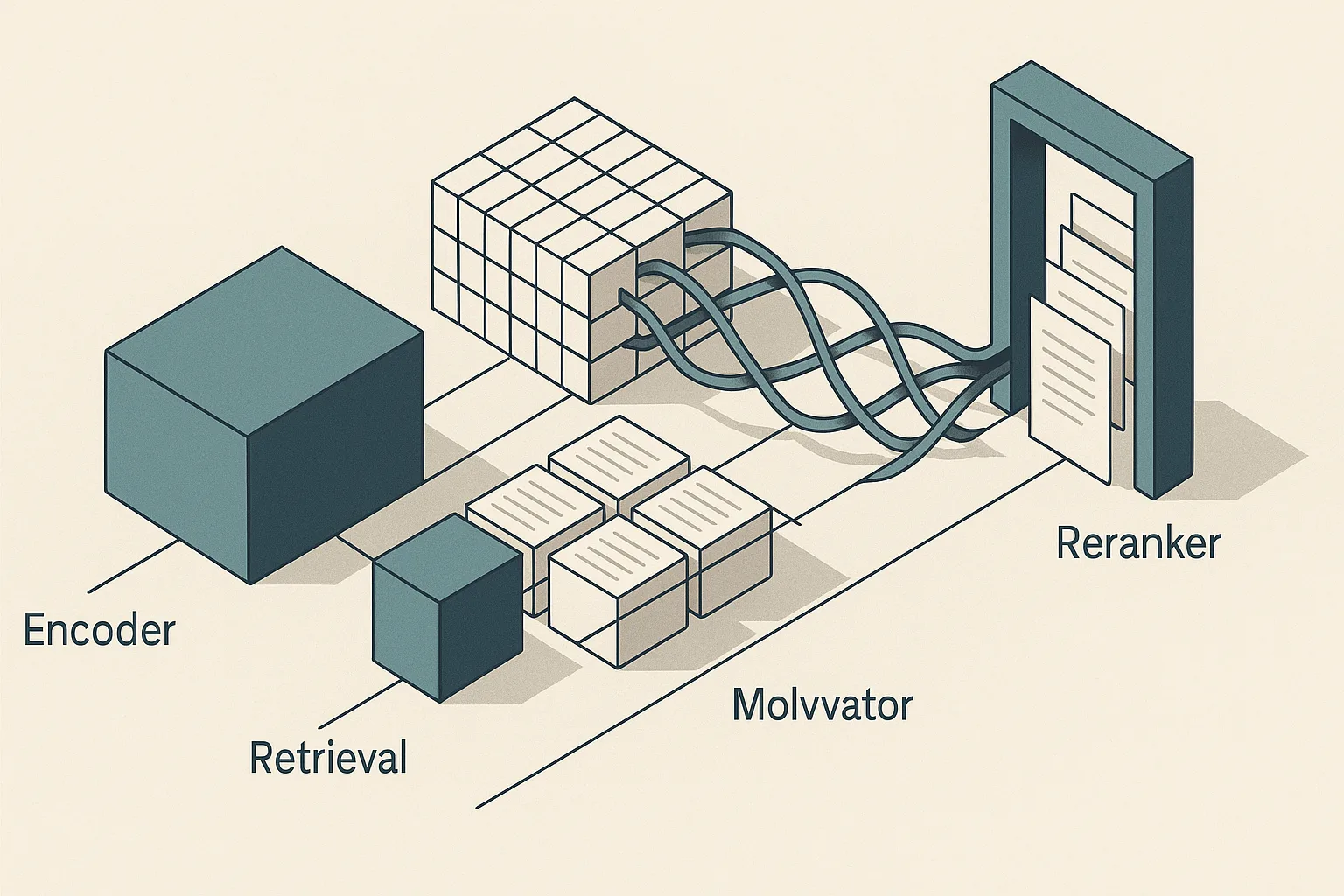
The reranker usually matters most in the search tool chain — recent production guidance says tool quality is dominated by reranking more than embedding dimension or retrieval method — but it pays for itself only when the incremental relevance lift justifies the 100–300ms tax and added infra/API spend, because faster systems can still be better on total cost if they avoid wasted search turns and lower downstream LLM context usage.
24 min read
AI & ML
LoRA works by freezing the base weight matrix and learning a low-rank update AB, and PEFT’s newer variants change the scaling or decomposition of that update: rsLoRA uses alpha/sqrt(r) instead of alpha/r to stabilize higher ranks, while DoRA splits magnitude and direction to improve low-rank performance.
22 min read
AI & ML
MoDeGPT compresses Transformer modules with joint low-rank decomposition, avoiding recovery fine-tuning while still reporting 90–95% zero-shot performance at 25–30% compression and up to 46% throughput gain — but the gains come from a training-free, module-level reformulation that is not the same as universally safe pruning for every layer or model family.
22 min read
AI & ML
LlamaIndex is the faster path for retrieval-heavy RAG because its purpose-built indexing/query abstractions reduce code volume by about 30-40% versus LangChain-style assembly, but LangChain/LangGraph becomes the stronger choice once the app needs stateful orchestration, checkpointing, and human-in-the-loop control.
17 min read
AI & ML
The real split is not “which tool has more metrics,” but whether you need RAG-specialist scoring (RAGAS), tracing-first monitoring (TruLens), pytest-native regression gates (DeepEval), or reference-free benchmark-style evaluation (Open RAG Eval) — but none of these can reliably tell you when the retrieved context is factually wrong versus merely topically similar.
22 min read
AI & ML
Curator tackles multi-tenancy by managing isolation and memory trade-offs so tenants can share vector infrastructure without blowing up tail latency, but the paper’s value is in the measured latency-vs-memory trade-off rather than claiming universal best-in-class ANN performance.
19 min read
AI & ML
GraphRAG works by converting enterprise text into entities and relations, then traversing a knowledge graph to assemble connected subgraphs before generation — the key advantage is multi-hop context fidelity, but the tradeoff is heavy ontology design, extraction errors, and slower traversal than plain vector search.
21 min read
AI & ML
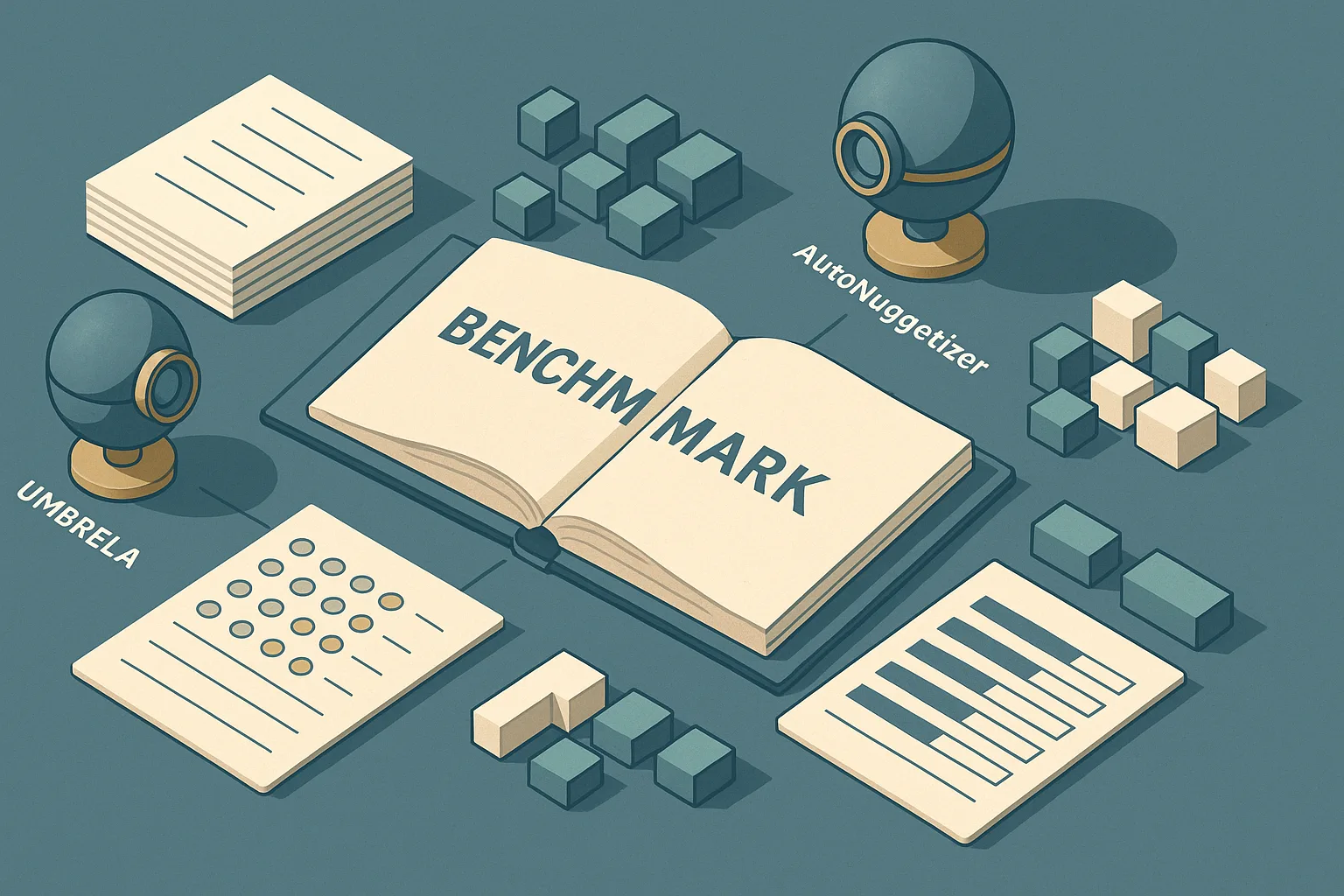
Open RAG Eval’s core contribution is that UMBRELA and AutoNuggetizer are designed to score RAG quality without golden answers or golden chunks — which makes large-scale benchmarking more practical, but also means the metric family is optimizing for scalable proxy evaluation rather than proving true factual correctness.
23 min read
AI & ML
Chunking often matters as much as the embedding model itself — the 2025 NAACL Vectara study tested 25 chunking configurations across 48 embedding models and found chunking choice can shift retrieval quality by up to about 9 percentage points on the same corpus — but you must benchmark end-to-end because retrieval recall and answer accuracy can move in opposite directions.
21 min read
AI & ML
Matryoshka representation learning trains embeddings so the prefix dimensions remain useful on their own — enabling truncation without retraining — but the trade-off is that lower dimensions preserve less signal, so the article must distinguish what the paper proves about truncation from what it does not prove about every downstream corpus.
19 min read
AI & ML
TensorRT-LLM’s large-scale expert parallelism adds online workload balancing and NVLink-aware communication kernels so MoE traffic can be redistributed dynamically across GPUs — but the architecture is tightly coupled to NVIDIA’s hardware and the load-balancing logic can trade lower imbalance for extra scheduling and communication complexity.
22 min read
AI & ML
BGE-M3 is designed as a single model that unifies dense, lexical, and multi-vector/ColBERT-style retrieval across 100+ languages and long inputs up to 8192 tokens — but its benchmark story is only meaningful if you read it alongside the reranker, because the model card shows reranking and multi-retrieval are complementary rather than interchangeable.
32 min read